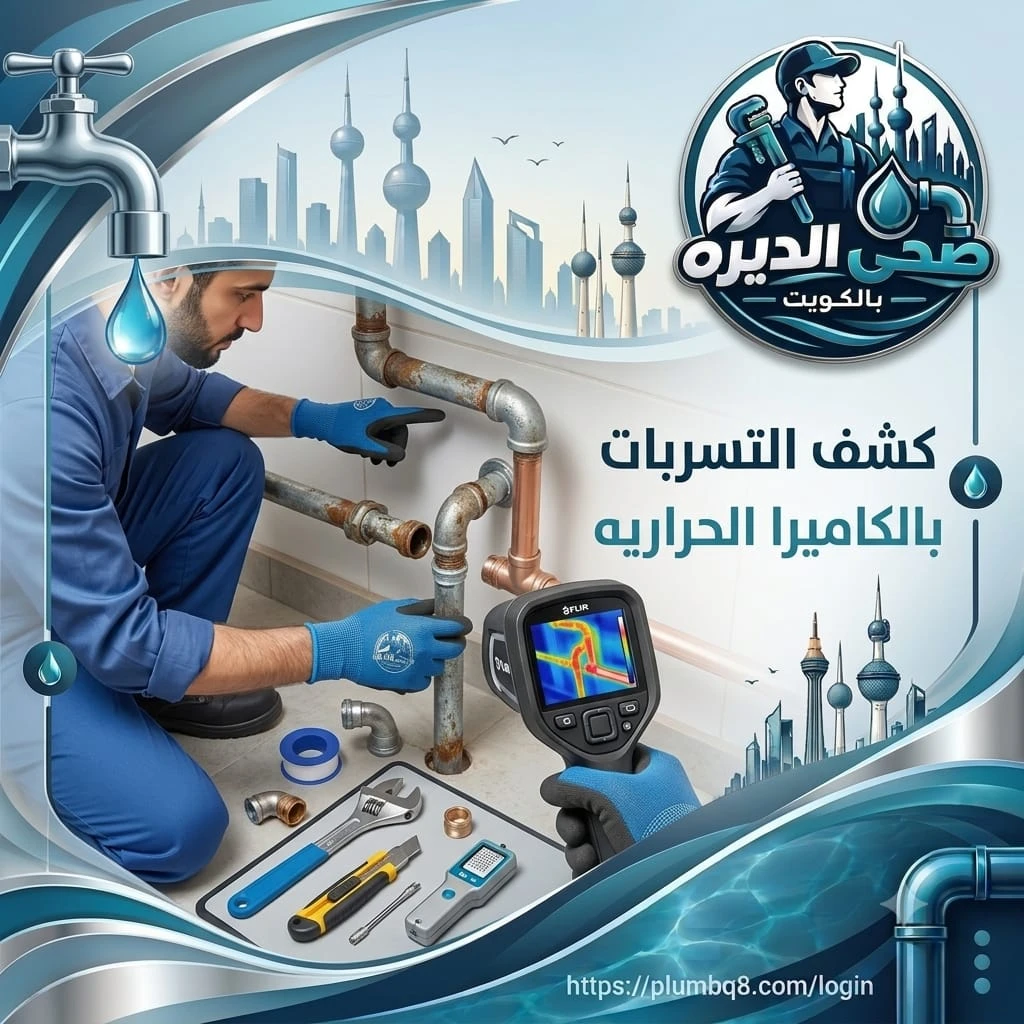
Thermal Camera Leak Detection in Kuwait
6 views
Detecting the temperature difference a leak causes behind walls and floors.
Thermal Camera Leak Detection
Water leaks inside walls or beneath floors may appear as damp patches, peeling paint, or discoloration of finished surfaces, while the actual water source remains unclear. Water may travel from the leak through plaster layers or cavities surrounding pipes before appearing on the surface, making the location of a damp patch alone insufficient to identify the damaged section. Thermal camera leak detection helps examine temperature distribution across surfaces and identify unusual thermal patterns that may be associated with moisture or water movement behind finished surfaces.
Sehi Al Deira provides thermal camera leak detection services in Kuwait, including inspecting walls, ceilings, and floors, tracing areas suspected of being affected by moisture, and identifying sections that require further inspection before repair work begins. The service involves reviewing the symptoms and environmental conditions, imaging suitable surfaces with a thermal camera, and analyzing temperature differences. Additional verification methods are used when necessary. A thermal camera does not see water directly inside a wall, and a temperature difference alone is not sufficient to prove that a leak exists or identify its precise source.
Thermal Camera Leak Detection
Thermal camera leak detection relies on identifying temperature differences across the surfaces of walls, floors, and ceilings. Moisture may affect how heat moves through building materials, while leaking water or evaporation may produce an area with a different thermal pattern from its surroundings. Analyzing these patterns helps identify locations that require further examination, particularly when signs of a leak are not clearly visible to the naked eye.
The service begins by reviewing the location of dampness, when it appears, and its relationship to water use. Surfaces suitable for imaging are then identified, along with environmental conditions that may affect the inspection results.
Sehi Al Deira provides thermal camera leak inspection services, taking into account the characteristics of walls and floors and the sources of heat and cooling within the property before interpreting thermal images.
A cool area on a wall may result from moisture within the building materials, but it may also be caused by air conditioning, differences in insulation, or an intact cold-water pipe behind the surface. Thermal patterns must therefore be compared with other symptoms rather than treating every cool patch as evidence of a leak.
A thermal camera measures thermal radiation emitted from the surface being imaged; it does not directly reveal what lies behind a wall. A leak may also remain undetected if temperatures are similar, the moisture is located deep within the structure, or the environmental conditions are unsuitable for imaging.
After a suspected area has been identified, a moisture meter or an appropriate water network test may be necessary to confirm the presence of a leak and establish its source before repairs begin.
Thermal camera leak detection services include:
-
Reviewing leak symptoms and identifying surfaces that require thermal inspection.
-
Imaging suitable walls, floors, and ceilings to identify temperature differences.
-
Comparing thermal patterns with surrounding areas and existing sources of heating and cooling.
-
Identifying areas suspected of containing moisture that require additional verification.
-
Explaining the inspection findings and their limitations before determining whether finished surfaces need to be opened or pipes repaired.
Water Leak Detection Using Thermal Imaging
Water leak detection using thermal imaging helps inspect surfaces that may be affected by water escaping from pipes, plumbing fixtures, or waterproofed areas. The problem may appear as a thermal change on a wall or floor before a visible damp patch expands. However, the appearance of the thermal signal is influenced by water temperature, surrounding materials, ventilation, and air-conditioning conditions.
The service begins by identifying the affected area and reviewing nearby water sources, such as supply and drainage pipes, plumbing connections, and shower areas.
Sehi Al Deira provides water leak detection using thermal imaging, analyzing surface images and relating them to pipe routes and visible signs to determine the required inspection area.
If an unusual thermal area appears near the route of a water pipe, it may be associated with heat transfer from water inside the pipe or with moisture in the surrounding materials. The two possibilities cannot be distinguished from the image alone without reviewing the operating conditions of the line and other symptoms.
The effects of a leaking supply pipe may resemble those of damaged bathroom waterproofing or water escaping from a drainage connection. The possible water source must therefore be identified before a treatment method is selected.
In cases where moisture is old or has partially dried, there may be no clear thermal difference during inspection. Direct sunlight or air-conditioning operation may also affect temperature distribution, making it necessary to consider imaging conditions when interpreting the results.
Water leak detection using thermal imaging includes:
-
Identifying affected surfaces and reviewing possible nearby water sources.
-
Imaging suitable areas and identifying thermal patterns that may be associated with moisture.
-
Distinguishing the thermal effects of intact pipes from indications that require leak investigation.
-
Considering the effects of air conditioning, sunlight, ventilation, and water temperature on the images.
-
Determining whether moisture measurements or water network testing are necessary to confirm the source of the problem.
Thermal Camera for Leak Detection
A thermal camera for leak detection is used to image temperature distribution across the surface of a wall, floor, or ceiling. It displays temperature differences in a thermal image that may help reveal areas difficult to distinguish through an ordinary visual inspection. The camera does not work like an X-ray device that reveals pipes behind walls; instead, it detects thermal radiation emitted from the external surface.
Using a thermal camera for leak detection begins by reviewing the characteristics of the surface being examined and nearby heat sources. A suitable imaging angle is then selected to allow the suspected area to be compared with adjacent sections.
Sehi Al Deira provides leak inspection services using thermal cameras, interpreting the images according to environmental conditions and the symptoms associated with the problem.
A thermal reflection may appear on a shiny surface or polished tile because of a heat source in the surrounding area. This reflection does not necessarily mean that the material's actual temperature has changed. The accuracy of temperature readings also varies according to surface properties and device settings.
A single color in a thermal image should therefore not be used to determine whether a leak exists. The displayed colors change according to the temperature range and imaging settings. What matters is reviewing the thermal pattern, its location, and its relationship to the water network and visible symptoms.
When thermal imaging results are insufficient to identify the moisture source, direct moisture measurement or an appropriate pipe test may be necessary rather than determining a repair point based on the image alone.
Steps involved in using a thermal camera for leak detection include:
-
Reviewing surface characteristics and sources of heating and cooling before imaging begins.
-
Selecting suitable imaging positions and angles to compare suspected areas with surrounding sections.
-
Identifying unusual thermal patterns without treating a color difference as independent proof of a leak.
-
Considering reflections, surface properties, and device settings when interpreting the images.
-
Using imaging results to guide further inspection and determine the repair area once the source has been confirmed.
Thermal Leak Detection Technician in Kuwait
Inspecting leaks with a thermal camera requires distinguishing normal temperature differences from indications that may be associated with water inside building materials. A cool area may appear because of air-conditioning operation or a thermal bridge in the wall, while another area may be associated with moisture resulting from a leaking pipe or damaged waterproofing.
A thermal leak detection technician in Kuwait begins by reviewing the symptoms, including the location of dampness, when it appears, and its relationship to bathroom, kitchen, or water network use. The affected area is then visually examined before thermal imaging begins.
Sehi Al Deira provides thermal camera leak detection services in Kuwait, reviewing pipe routes and possible water sources and analyzing thermal images in light of environmental conditions.
If an unusual thermal patch appears beneath a shower area, it may be associated with water escaping through damaged waterproofing or a supply or drainage connection. The appearance of the patch alone cannot establish the cause. The way the area is used must be reviewed, and an appropriate test of the suspected source may be necessary.
If a thermal indication appears near a cold-water pipe, it may result from the water temperature being transferred through the wall without any leak. The image should therefore be compared with actual signs of moisture and additional inspection findings when necessary.
It is also important to recognize that opening a wall or floor may be necessary to complete repairs after the source of the problem has been confirmed, even when the thermal inspection itself can be performed without breaking finished surfaces.
Services provided by a thermal leak detection technician in Kuwait include:
-
Reviewing the symptoms and identifying possible water sources in the affected area.
-
Visually inspecting surfaces and imaging them thermally according to environmental conditions.
-
Distinguishing patterns caused by normal temperature sources from indications suspected of being associated with moisture.
-
Determining whether moisture measurement or pipe or waterproofing testing is required to confirm the source.
-
Explaining the required repair area after the cause and location of the leak have been verified.
Identifying Moisture with a Thermal Camera
Moisture may accumulate inside walls or beneath flooring layers before becoming clearly visible on the surface. Water within building materials can affect temperature distribution, making thermal imaging a supplementary method for identifying areas that may contain moisture and require measurement or further inspection.
The service begins by reviewing visible signs, such as paint discoloration, swollen finishing materials, or a patch on the ceiling. The affected area is then imaged and compared with surrounding sections.
Sehi Al Deira provides thermal camera inspection services for areas suspected of containing moisture, taking into account that a temperature difference is not a direct measurement of the amount of water inside a wall.
A thermal image may show an affected area extending beyond the boundaries of the visible damp patch, helping identify the area that requires examination. However, this apparent extent may also be influenced by differences in building materials, insulation, or air movement.
The moisture percentage or depth cannot be determined from a thermal image alone. Verification may require a moisture meter suitable for the surface material, together with a review of the possible water source before a treatment method is selected.
Moisture within building materials also does not necessarily mean that a leak is still active at the time of inspection. Materials may remain damp after the source has been repaired or following an earlier exposure to water. Identifying an area containing moisture must therefore be distinguished from confirming an active leak.
Thermal camera moisture identification services include:
-
Reviewing visible signs of moisture and identifying surfaces that require imaging.
-
Comparing temperature distribution in the affected area with surrounding sections.
-
Identifying areas that may require additional moisture measurements to verify their condition.
-
Considering the effects of insulation, building materials, and ventilation on thermal patterns.
-
Distinguishing suspected moisture from a confirmed active leak before recommending repairs.
Thermal Imaging Inspection of Walls
Water leaks may leave signs on a wall in the form of peeling paint, swollen plaster, or discoloration of part of the finished surface, while the water source may be inside a concealed pipe or in an adjacent area. Thermal imaging inspection of walls helps examine surface temperature distribution and identify locations that differ from surrounding sections.
The service begins by reviewing the location of visible signs, possible pipe routes, and nearby water sources. The wall is then imaged from suitable angles.
Sehi Al Deira provides thermal imaging inspection services for walls to help identify areas suspected of being affected by moisture before an appropriate verification method is selected.
If an unusual thermal pattern appears around part of a wall, it may be associated with moisture inside the building materials or with a pipe of a different temperature behind the surface. It may also result from differences in insulation, sunlight exposure, or the effects of a nearby air-conditioning unit.
Thermal images should therefore be compared with visible moisture and the condition of other similar areas of the wall. A decision to open a wall should not be based on an isolated temperature difference.
The inspection may require moisture measurements or testing of a water line if the symptoms suggest an active leak. If the wall is damp because of an external source or damaged waterproofing, the treatment may differ from repairing an internal pipe.
Thermal imaging inspection of walls includes:
-
Reviewing signs of damage and moisture and possible pipe routes inside the wall.
-
Imaging the surface from suitable angles and comparing suspected areas with adjacent sections.
-
Considering the effects of sunlight, air conditioning, insulation, and building materials on temperature distribution.
-
Determining whether moisture measurement or water network testing is necessary to confirm the source.
-
Directing inspection or repair work toward the appropriate area after the cause of the problem has been verified.
Bathroom Leak Detection with a Thermal Camera
Signs of a bathroom leak may appear on an adjacent wall, the ceiling of the floor below, or flooring near the shower area. The water source may be a damaged supply connection, a drainage line, or a defect in the waterproofing of the floor or walls. A damp patch alone is therefore insufficient to identify the part responsible for the problem.
Bathroom leak detection with a thermal camera begins by reviewing the location of moisture and its relationship to the use of the shower, sink, or toilet. Visible fixtures and connections are then examined before suitable surfaces are imaged.
Sehi Al Deira provides thermal camera inspection services for bathroom leaks to help identify areas affected by water and direct further investigation toward the possible source.
If an unusual thermal area appears beneath the bathroom floor or on the ceiling of the room below, the image may help identify the extent of the affected area. However, it does not independently prove that damaged bathroom waterproofing or a broken pipe is responsible.
Distinguishing between possible sources may require testing the supply network, examining drainage connections, or performing an appropriate test of the waterproofed area, depending on when the leak appears and how the bathroom is used.
If water has accumulated on the tile surface or hot water was used immediately before imaging, the thermal image may be affected by the temperature of the surface water. Usage conditions must therefore be considered when interpreting the results.
Bathroom leak detection with a thermal camera includes:
-
Reviewing when moisture appears and how it relates to the use of bathroom fixtures.
-
Inspecting visible connections, shower areas, and drainage points to identify possible sources.
-
Imaging affected walls, floors, and ceilings and identifying unusual thermal patterns.
-
Determining the appropriate additional test to distinguish between supply leaks, drainage leaks, and damaged waterproofing.
-
Explaining the required treatment after verifying the water source rather than relying on the image alone.
Thermally Tracing the Path of Water Leaks
Leaking water may travel through cavities, joints, and layers of building materials inside walls or beneath floors, causing its effects to appear far from the source. Thermal imaging can sometimes reveal the extent of an area affected by moisture, but this extent does not necessarily represent the complete path taken by water inside the structure.
The service begins by reviewing the location of visible signs and possible water sources. Affected surfaces are then imaged, and thermal patterns are compared across the area.
Sehi Al Deira provides thermal inspection services to help trace areas that may have been affected by water movement, while determining whether additional verification methods are necessary to identify the actual source.
A thermal pattern may extend from a higher section of a wall to a lower area, indicating that a possible water source in the upper section should be examined. However, the direction of the thermal pattern alone is insufficient to confirm the direction of water movement because temperature distribution is also affected by insulation, ventilation, and the characteristics of building materials.
Beneath floors, water may travel under tiles before appearing at a joint or edge far from the leak. Imaging more than one surface may help determine the extent of the affected area, but it does not guarantee that every location through which the water has traveled will be visible.
Thermal images should therefore be considered alongside the findings from inspecting pipes, connections, and waterproofed areas. The repair point should not be determined solely by the shape of a thermal patch.
Services for thermally tracing the path of water leaks include:
-
Reviewing where moisture appears and identifying possible water sources in the area.
-
Imaging affected surfaces and comparing the extent of thermal patterns across them.
-
Identifying areas that may have been affected by water moving through building materials.
-
Considering the effects of insulation, ventilation, and different materials on the appearance of thermal patterns.
-
Determining whether further inspection is necessary to confirm the leak source before repairs begin.
Detecting Moisture Behind Walls
Moisture may remain behind a wall for some time before affecting the paint or plaster, particularly when water accumulates inside a cavity or travels through layers of building materials. The moisture may be associated with a concealed pipe leak, an external water source, or damaged waterproofing, making source identification an essential step before selecting a repair method.
The service begins by reviewing visible signs, their location, and when they appear. The area is then inspected thermally to identify locations requiring moisture measurement or water network testing.
Sehi Al Deira provides inspection services for moisture suspected of being present behind walls, using a thermal camera as a supplementary diagnostic method.
The camera may reveal an area with a different thermal pattern from adjacent sections, but this difference alone does not confirm that water is present behind the surface. The area may be affected by an intact cold-water pipe, differences in insulation, or a nearby heat source.
If additional verification confirms the presence of moisture, it may be necessary to determine whether it results from an ongoing leak or water remaining from an earlier problem. This may require reviewing the supply and drainage networks and external water sources, depending on the wall's location.
The damp patch should not simply be painted over or the finishing materials replaced before the moisture source has been identified and addressed. Concealing the visible sign does not resolve the reason water entered the building materials.
Moisture detection services for areas behind walls include:
-
Reviewing signs of moisture, when they appear, and their location in relation to water sources.
-
Inspecting the wall with a thermal camera to identify areas requiring additional verification.
-
Using moisture measurements or an appropriate test when necessary to confirm the presence and source of water.
-
Distinguishing, as far as possible, between moisture remaining from an earlier problem and an ongoing leak.
-
Determining the appropriate steps for treating the source before restoring damaged finishes.
Non-Destructive Leak Inspection with a Thermal Camera
Non-destructive leak inspection with a thermal camera helps examine surfaces and identify thermal patterns suspected of being associated with moisture before walls or floors are opened. It may help narrow the inspection area and reduce unnecessary exploratory work. However, this does not mean that the camera can confirm every type of leak or that repairing the damaged section can always be completed without opening finished surfaces.
The service begins by reviewing the symptoms and identifying surfaces suitable for imaging. The thermal images are then analyzed and related to pipe routes and possible water sources.
Sehi Al Deira provides thermal leak inspection services to help identify areas requiring additional verification before repair work is authorized.
If imaging reveals an unusual area that corresponds with the location of moisture and the route of a water line, this may help direct further inspection toward a smaller area rather than opening several sections of a wall without a clear basis.
However, similar patterns may result from differences in insulation, air-conditioning operation, or an intact water pipe. A thermal image alone should therefore not be treated as conclusive evidence of a leak.
Once the water source has been confirmed, repairing a concealed pipe may require a localized opening to access the damaged section. If the cause is damaged waterproofing or a visible connection, the treatment method may differ according to the problem's location and nature.
Non-destructive leak inspection with a thermal camera includes:
-
Reviewing leak symptoms and identifying surfaces suitable for thermal imaging.
-
Identifying unusual thermal patterns and comparing them with pipe routes and water sources.
-
Determining which areas require moisture measurement or additional testing to confirm the source.
-
Reducing unnecessary opening of finished surfaces when the inspection findings allow the problem area to be narrowed down.
-
Explaining whether treatment requires a localized opening after the cause and location of the leak have been identified.
Frequently Asked Questions About Thermal Camera Leak Detection
How does a thermal camera work for water leak detection?
A thermal camera detects temperature distribution across surfaces and may reveal unusual patterns associated with moisture or water movement behind finished surfaces. These findings help identify areas requiring further inspection, but the camera does not show water directly inside a wall or independently confirm that a leak exists.
Can a thermal camera detect water leaks without breaking walls or floors?
Thermal imaging can be performed on walls, floors, and ceilings without opening them and may help narrow the search for the water source. However, confirming the cause may require additional testing, and repairing a concealed pipe may require a localized opening once the damaged section has been identified.
Can a thermal camera see pipes inside walls?
A thermal camera does not directly see pipes behind walls. It measures thermal radiation emitted from the surface. The thermal effect of a hot- or cold-water pipe may become visible when environmental conditions allow it, but this does not necessarily reveal the pipe's shape or precise location.
Does every cool patch in a thermal image indicate a leak?
No. A cool area may result from air conditioning, differences in insulation, an intact cold-water pipe, or moisture. Environmental conditions and other symptoms must be reviewed, and an appropriate verification method should be used before the patch is considered evidence of a leak.
Can a thermal camera detect bathroom leaks?
Thermal imaging may help identify areas affected by moisture in bathroom walls, floors, or the ceiling of the floor below. However, it cannot independently determine whether the source is a supply pipe, drainage line, or damaged waterproofing. An appropriate test of the suspected source may be necessary.
Can a thermal camera pinpoint the exact location of a leak?
It may help narrow down the suspected area, but accurately locating a leak depends on the nature of the problem, the clarity of the thermal pattern, and the results of additional inspections. A decision to open a finished surface should not be based on the thermal image alone when the source has not been confirmed.
Can a thermal camera detect moisture behind walls?
Moisture inside a wall may produce temperature differences visible on its surface, but the camera does not directly measure the amount or depth of water. A suitable moisture meter or additional inspection may be necessary to verify the wall's condition.
Can a water leak be inspected with a thermal camera if there is no visible dampness on the wall?
An inspection can be performed when other indications exist, such as increased water consumption or a suspected leak in a concealed area. However, a clear thermal pattern may not appear if the leak is deep or temperatures are similar, making another diagnostic method necessary.
Is a thermal camera sufficient to identify the cause of moisture?
Not always. Moisture may result from a damaged pipe, drainage line, defective waterproofing, or an external source. Thermal imaging helps identify areas requiring inspection, while confirming the source requires reviewing the symptoms and using a test appropriate for the nature of the problem.
Request Thermal Camera Leak Detection from Sehi Al Deira
If dampness appears on walls or ceilings, or you notice peeling paint or discoloration of finished surfaces without knowing the water source, you can request Sehi Al Deira's thermal camera leak detection service to inspect affected surfaces and identify areas requiring additional verification before repairs begin.
Sehi Al Deira provides thermal camera leak detection services in Kuwait, from inspecting walls, floors, and bathrooms to identifying areas suspected of containing moisture and tracing the effects of water movement, with an explanation of the imaging findings, their limitations, and whether further inspections or repairs are necessary according to the nature of the problem.