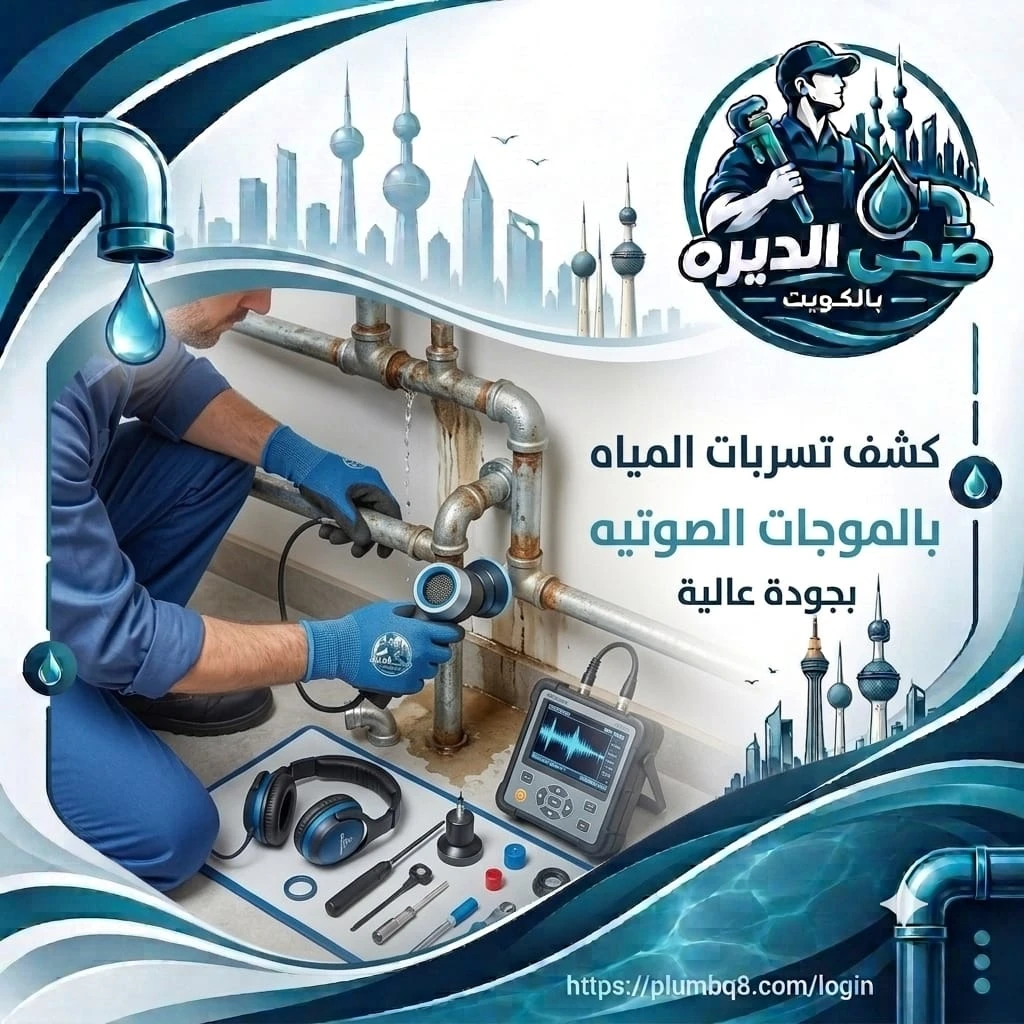
Acoustic Water Leak Detection in Kuwait
7 views
Pinpointing leaks in buried pipes with an acoustic listening device.
Acoustic Water Leak Detection
Water leaks may occur inside walls or beneath floors without visible water appearing on the surface. Instead, indirect signs may develop, such as increased water consumption, a continuous running-water sound, or dampness near the route of a water pipe. Identifying the leak based on these signs alone can be difficult because water may travel through cavities or beneath finishing materials before appearing somewhere other than its actual source. Acoustic water leak detection helps inspect pressurized water lines and identify sounds produced by water escaping from a leaking section, narrowing the search area and helping determine where further inspection or repair is needed.
Sehi Al Deira provides acoustic water leak detection services in Kuwait, including inspecting concealed pipes inside walls and beneath floors, tracing leak-related sounds, and identifying possible pipe damage using suitable listening equipment. The service begins by reviewing the symptoms and identifying the water network suspected of leaking. Acoustic measurements are then taken at appropriate points, and the detected signals are compared before the repair location is determined. Inspection effectiveness depends on the nature of the leak, water pressure, pipe material and depth, and surrounding noise levels. Some cases may require an additional inspection method to confirm the source.
Acoustic Water Leak Detection
Acoustic water leak detection works by capturing vibrations and sounds that may be produced when water escapes through an opening or crack in a pressurized pipe. These sounds travel through the water, the pipe wall, and surrounding materials. Specialized listening equipment may detect them at points near the pipe's route, even when the leak is concealed behind finished surfaces.
The service begins by identifying symptoms such as continued movement of the water meter after all water outlets have been closed, an unusual running-water sound, or dampness near the route of the plumbing. The suspected water network is reviewed before inspection begins because the nature of the sound varies according to water pressure and the condition of the line.
Sehi Al Deira provides water leak inspection services using acoustic listening equipment, selecting suitable inspection points according to the pipe route and the accessibility of connections and valves.
A leak-related sound may be clearly audible near one section of a pipe, but it may also travel through connections or structural elements to a point relatively far from its source. The repair location should therefore not be determined solely by the loudest sound detected at a single point without comparing measurements along the line.
In cases involving very small leaks, unpressurized pipes, or high background noise, the acoustic signal may not be sufficient to locate the source. Additional inspection or an appropriate network test may be required before deciding to open a wall or floor.
Acoustic water leak detection services include:
-
Reviewing leak symptoms and identifying the water network in which the fault may be located.
-
Selecting suitable listening points along accessible pipes and connections.
-
Capturing and comparing acoustic signals to narrow down the possible leak location.
-
Considering the effects of water pressure, pipe material, and surrounding noise on inspection results.
-
Determining whether additional testing is needed before repairs if the acoustic findings are inconclusive.
Water Leak Detection by Sound in Kuwait
A water leak inside a home may appear as a continuous running-water sound behind a wall, an unusual increase in water consumption, or a damp patch with no obvious source. The problem may be inside a concealed supply pipe, at a connection near a plumbing fixture, or in a section of the network running beneath the floor.
Water leak detection by sound in Kuwait begins by reviewing the visible signs and determining whether the leak is associated with a pressurized water line or another source, such as a fixture's drainage system or water entering from a wet area.
Sehi Al Deira provides water leak detection by sound in Kuwait, inspecting suspected water lines using listening equipment appropriate for the plumbing system and available access points.
If the sound of running water continues after faucets have been closed and appliances that consume water are confirmed to be off, this may indicate unintended water flow within the network. However, the sound alone does not prove that a concealed pipe is broken. It may also result from a faulty valve, toilet cistern, or another fixture connected to the water network.
Inspecting visible connections and valves before moving on to concealed pipes helps rule out nearby sources that may transmit sound through the plumbing. Acoustic signals are then compared at multiple points to identify the area requiring further examination.
Opening a wall at the first sign of dampness is not recommended without identifying the pipe's route and the possible water source. Water may travel behind finishing materials and appear far from the actual leak.
Water leak detection by sound in Kuwait includes:
-
Reviewing running-water sounds, dampness, and changes in water consumption to establish the inspection area.
-
Checking visible fixtures and valves before suspecting concealed pipes.
-
Inspecting water lines with acoustic listening equipment at suitable points.
-
Comparing acoustic signals along the line to identify the possible leak location.
-
Explaining whether further inspection is necessary when sound measurements are insufficient to confirm the water source.
Acoustic Water Leak Detection Device
An acoustic water leak detection device is used to capture sounds and vibrations associated with water escaping from pressurized pipes. The device may include a listening sensor placed on a suitable surface or near part of the water network, together with a means of amplifying the signal or filtering some surrounding noise to help distinguish leak-related sounds.
Using an acoustic water leak detection device begins by identifying the suspected line and its route, then selecting measurement points where signals can be captured without damaging connections or finished surfaces.
Sehi Al Deira provides leak inspection services using acoustic listening equipment appropriate for the water network, reviewing measurements at more than one point before determining the repair area.
A signal detected from a metal pipe may differ from one detected from a plastic pipe. Sound transmission is also affected by the pipe's depth and the materials surrounding it. A weak signal at a particular point does not therefore necessarily mean that the line is free of leaks.
Noise from pumps, household appliances, and water flowing through nearby pipes can affect signal clarity. Inspection may need to be performed at a quieter time, or a noise source may need to be switched off when this can be done safely, without disabling any system essential to the building's safety.
An acoustic device cannot independently locate every type of leak. A very slow leak or one occurring in an unpressurized line may not produce a clear sound, making another diagnostic method necessary in some cases.
Steps involved in using an acoustic water leak detection device include:
-
Identifying the pipe material, route, and suitable measurement points along the line.
-
Placing the listening sensor at points where signals associated with water movement can be captured.
-
Comparing signals at several locations rather than relying on a single reading.
-
Considering the effects of noise, pipe material, depth, and water pressure on sound clarity.
-
Determining whether the findings are sufficient to guide repairs or whether additional testing is required.
Locating Water Leaks Using Acoustic Technology
Locating water leaks using acoustic technology helps narrow the search area within a water network before walls or floors are opened. Visible signs, such as damp patches or peeling paint, may be far from the damaged section of pipe because water can travel through cavities and finishing layers before reaching a point where it becomes visible.
The service begins by reviewing the route of the pipes and accessible connections and valves. Acoustic measurements are then taken at different points along the suspected line.
Sehi Al Deira provides water leak location services using listening equipment, comparing acoustic signals and relating the findings to the pipe route and visible symptoms.
If the signal becomes stronger near a particular section of the line, this may help identify the area where the leak is likely to be located. However, sound can travel through the pipe body and connections to other locations. Measurements should therefore be reviewed at more than one point, and the loudest reading should not be treated as conclusive evidence of the damage location.
In some cases, accurately determining the repair location may require an appropriate pressure test or another method of verifying the suspected line, particularly when pipes run close together or pass through a wall containing several services.
The pipe's route must be identified before any finished surface is opened, taking into account concealed electrical wiring and other services that could be affected by repair work.
Acoustic water leak location services include:
-
Reviewing the water network's route to identify the line suspected of leaking.
-
Taking acoustic measurements at multiple points along the pipe and its connections.
-
Comparing signals to narrow down the area where damage may be present.
-
Verifying the findings through an additional method when necessary before determining where finished surfaces should be opened.
-
Establishing the repair area while considering the pipe's route and nearby concealed services.
Water Leak Detection Technician Using Acoustic Equipment
Inspecting water leaks with acoustic equipment requires distinguishing normal water-flow sounds from those that may be produced when water escapes from a damaged pipe. The sound of a running pump or water passing through a valve may travel to several parts of the network, making it insufficient to identify the source based solely on hearing running water.
A water leak detection technician using acoustic equipment begins by reviewing the symptoms, identifying when the sound occurs, and checking visible fixtures, valves, and accessible connection points before moving on to concealed pipes.
Sehi Al Deira provides water leak inspection services using acoustic listening equipment, selecting measurement points according to the water network's route and the type of plumbing.
If the running-water sound appears when a particular appliance is operating and stops when it is switched off, it may be associated with normal water flow during use rather than a continuous leak. However, if the sound persists when water consumption should have stopped, the network may need to be inspected and the connected fixtures checked.
Listening to pipes at different points may help identify the area where the signal becomes stronger. However, interpreting the findings requires consideration of water pressure, pipe material, surrounding noise, and the possibility of sound traveling through connections.
After narrowing down the possible leak location, it should be established whether the findings are sufficient to determine the repair point or whether additional testing is needed before opening a wall or floor.
Services provided by a water leak detection technician using acoustic equipment include:
-
Reviewing leak symptoms and identifying when sounds appear or water consumption changes.
-
Checking visible fixtures and valves to rule out running-water sounds unrelated to concealed pipes.
-
Selecting suitable listening points according to the network's route and pipe material.
-
Comparing acoustic signals and assessing the effects of water pressure and noise on the findings.
-
Determining the appropriate next step, whether repairing a visible connection or continuing the diagnosis of a concealed pipe.
Pipe Inspection Using Listening Equipment
Pipe inspection using listening equipment helps identify unusual sounds inside water lines, particularly when pipes are concealed behind walls or beneath floors. Sounds may travel through the pipe body to accessible points, such as valves or visible connections, allowing the line to be examined without exposing its entire route.
The service begins by identifying the water network requiring inspection and reviewing accessible connection points. Suitable locations are then selected for positioning the device's sensor and capturing signals.
Sehi Al Deira provides pipe inspection services using listening equipment, comparing sounds at more than one location to identify the section requiring further examination.
Listening at a valve or visible connection may capture a sound transmitted from a concealed section of pipe. However, the proximity of a sound to a measurement point does not necessarily mean that the leak is located there. Readings are therefore reviewed along the line while considering its route and material.
In networks containing pumps or several adjacent lines, normal operating sounds may overlap with leak-related signals. The inspection may require adjusting measurement conditions to reduce noise sources that can be safely switched off.
Pipes that do not contain pressurized water may also fail to produce an acoustic signal sufficient to detect certain leaks. The inspection method must therefore be selected according to the nature of the network rather than the presence of dampness alone.
Pipe inspection using listening equipment includes:
-
Identifying the lines requiring inspection and accessible points along pipes and valves.
-
Capturing acoustic signals at multiple locations along the water network.
-
Distinguishing possible leak-related sounds from normal operating sounds as far as possible.
-
Considering the effects of pipe material, water pressure, and noise sources on measurement results.
-
Identifying sections requiring further inspection when acoustic signals are insufficient to confirm a leak.
Detecting Leaks in Concealed Pipes by Sound
A leak may develop inside a pipe concealed behind a wall or beneath a floor without water appearing directly near the damaged section. The problem may later become visible as dampness, discoloration of finishing materials, or increased water consumption. However, these signs alone do not identify the leak's location because water may travel away from its source before reaching the surface.
Detecting leaks in concealed pipes by sound begins by reviewing the route of suspected water lines and inspecting visible connections. Listening equipment is then used at suitable points to trace signals associated with the leak.
Sehi Al Deira provides acoustic leak detection services for concealed pipes, narrowing the search area within lines that can be examined acoustically before determining whether finished surfaces need to be opened.
If the leak is located in a pressurized water pipe, it may produce a sound that can be detected from a point near the pipe's route. However, signal strength varies according to the size of the leak opening, water pressure, pipe depth, and surrounding materials.
Dampness visible on a wall may originate from another source, such as a nearby connection, damaged waterproofing, or a drainage line. The symptoms and type of network should therefore be reviewed before assuming that a concealed supply pipe is responsible.
When the inspection findings indicate a particular area, the pipe's route and other services inside the wall or floor should be verified before any localized opening is made for repairs.
Acoustic leak detection services for concealed pipes include:
-
Reviewing dampness and increased water consumption to identify the suspected water network.
-
Inspecting visible connections before examining concealed pipe sections.
-
Taking acoustic measurements at suitable points near the line's route.
-
Comparing signals to identify the area where the leak may be located.
-
Verifying the pipe's location before opening finished surfaces and determining whether further inspection is necessary.
Identifying the Source of Running-Water Sounds with Detection Equipment
Running-water sounds may be heard inside a wall or near a floor without any visible leak. The sound may result from normal water flow through a line, pump operation, a faulty valve, or a toilet cistern. Not every running-water sound should therefore be treated as evidence of a broken concealed pipe before the circumstances in which it occurs and its possible source have been identified.
The service begins by reviewing when the sound appears, whether it continues, and how it relates to the use of faucets, toilets, and appliances connected to the water network.
Sehi Al Deira provides running-water sound investigation services using suitable listening equipment, reviewing visible fixtures and suspected lines to determine the extent of the problem.
If the sound continues after normal water use has stopped, the network may need to be inspected to determine whether water is flowing continuously through a connection, valve, or damaged pipe. Acoustic signals can be compared at different points to help identify the possible source.
If the sound appears only when a pump operates or a faucet is opened, it may be associated with normal water movement inside the line. Nevertheless, an unusual sound or a sudden change in its intensity may require inspection of the associated connections and valves.
Running-water sounds can travel through pipes and structural elements, making them audible at a location different from their source. Listening equipment findings must therefore be considered alongside the water network's route and other symptoms before the repair point is determined.
Services for identifying the source of running-water sounds include:
-
Identifying when the sound appears and how it relates to water use or appliance operation.
-
Reviewing visible valves, connections, and fixtures that may produce a continuous sound.
-
Inspecting suspected lines using listening equipment at suitable points.
-
Comparing signals to identify the possible source while considering sound transmission through pipes.
-
Determining whether the sound is associated with normal flow or requires further leak investigation.
Non-Destructive Acoustic Leak Detection
Non-destructive acoustic leak detection helps inspect concealed pipes and narrow the search for a water source before walls or floors are opened. The aim is to reduce unnecessary exploratory work when the nature of the leak and network conditions allow a clear acoustic signal to be detected. However, this does not mean that repairing a damaged pipe can always be completed without opening finished surfaces.
The service begins by reviewing visible signs and inspecting accessible connections. The route of the suspected pipe is then identified, and acoustic measurements are taken at suitable points.
Sehi Al Deira provides leak inspection services using listening equipment to help identify the area where damage may be present before repair work begins.
If acoustic measurements indicate an area where the signal consistently becomes stronger in a manner consistent with the pipe's route and visible symptoms, this may help identify a smaller inspection or repair area instead of opening several sections of a wall without a clear basis.
However, if the signal is weak, affected by noise, or the leak is located in an unpressurized line, acoustic inspection alone may not be sufficient. Another test may be necessary to confirm the water source before a decision is made to open finished surfaces.
It is also important to distinguish between detection and repair. A leak may be located without breaking finished surfaces, while accessing and replacing or repairing the damaged section may require a localized opening according to the pipe's position and installation method.
Non-destructive acoustic leak detection services include:
-
Reviewing leak symptoms and identifying the line where damage may be present.
-
Using listening equipment to inspect pipes from suitable access points.
-
Comparing acoustic measurements to narrow down the possible leak location.
-
Determining whether additional testing is required if the findings are insufficient to confirm the source.
-
Explaining whether repairs require a localized opening after the damaged pipe's location has been identified.
Acoustic Detection of Water Leaks Inside Walls
Water may escape from a pipe concealed inside a wall and travel through plaster layers or cavities surrounding the plumbing before appearing on the finished surface. The problem may become visible as damp patches, peeling paint, or discoloration. However, the location of these signs does not necessarily identify the damaged section of pipe.
Acoustic detection of water leaks inside walls begins by reviewing the location of dampness and the possible route of water pipes. Visible connections are then inspected, and the type of network suspected of leaking is established.
Sehi Al Deira provides acoustic water leak inspection services for pipes inside walls, taking measurements at suitable points to identify the area that may contain the source of the leak.
If the leak is located in a pressurized supply pipe, the resulting sounds may travel through the pipe and wall to points where inspection equipment can detect them. However, sound clarity is affected by pipe depth and material, wall thickness, and noise from other lines.
Dampness inside a wall may originate from a source that cannot be diagnosed through sound alone, such as a leak from an unpressurized drainage line, damaged waterproofing, or water entering from an adjacent area. Not every damp patch should therefore be attributed to a broken supply pipe before the source has been verified.
After narrowing down the problem area, the pipe's route should be identified, and the possible presence of electrical wiring or other services inside the wall should be reviewed before any localized opening is made for repairs.
Acoustic water leak inspection services for pipes inside walls include:
-
Reviewing dampness and pipe routes to identify the lines requiring inspection.
-
Checking visible connections and valves to rule out nearby water sources.
-
Taking acoustic measurements near the route of the concealed pipe inside the wall.
-
Comparing signals while considering the effects of wall thickness, pipe material, and surrounding noise.
-
Determining whether further inspection or a localized opening is necessary after verifying the leak source and the route of concealed services.
Frequently Asked Questions About Acoustic Water Leak Detection
How does acoustic water leak detection work?
The method uses listening equipment to capture sounds and vibrations that may be produced when water escapes from a pressurized pipe. Signals are compared at different points along the line to help identify the area where the leak may be located.
Can water leaks be detected by sound without breaking the wall?
Acoustic inspection can be performed from suitable points without opening the wall when network conditions allow it. However, repairing the pipe after the damaged section has been located may require a localized opening to access it.
Can an acoustic device detect every type of water leak?
No. Inspection effectiveness depends on the nature of the leak, water pressure, pipe material and depth, and surrounding noise. A very slow leak or one occurring in an unpressurized line may not produce a clear sound, making another inspection method necessary.
Does the loudest sound detected by the device identify the exact leak location?
Not necessarily. Sound may travel through pipes, connections, and structural elements to points far from its source. Measurements should therefore be compared at more than one location and assessed alongside the line's route and visible symptoms.
Does a higher water bill mean there is a leak inside the wall?
An unusual increase in water consumption may indicate a leak, but it does not identify its location or prove that it is inside a wall. The cause may be a faulty valve, toilet cistern, or another fixture connected to the network. Possible sources should therefore be checked before concealed pipes are examined.
Can the source of a continuous running-water sound be identified?
Listening equipment may help identify the possible source, but visible fixtures and valves should first be reviewed. The relationship between the sound and water use or pump operation should also be established. Additional inspection may be necessary to confirm a leak, depending on the circumstances.
Can plastic pipes be inspected using acoustic equipment?
Some plastic pipes can be inspected using suitable listening equipment, but sound transmission through them differs from that of metal pipes. The results are also affected by water pressure, pipe depth, and surrounding materials, and the signal may be weaker in some cases.
What happens if the device cannot locate the leak?
If the acoustic signal is unclear or insufficient to identify the source, an additional test appropriate for the network may be necessary, or another possible source of dampness may need to be investigated. A wall or floor should not be opened based on inconclusive acoustic findings.
Is acoustic inspection enough to identify the cause of dampness inside walls?
Acoustic inspection may help when dampness results from a leak in a pressurized water pipe, but it cannot confirm every source of moisture. The problem may involve a drainage line, damaged waterproofing, or water traveling from another area, requiring an inspection method appropriate for the suspected source.
Request Acoustic Water Leak Detection from Sehi Al Deira
If you hear a continuous running-water sound inside a wall, notice an unusual increase in water consumption, or find dampness near the route of water pipes without knowing its source, you can request Sehi Al Deira's acoustic water leak detection service. Suitable listening equipment can be used to inspect the water network and identify the area where the leak may be located.
Sehi Al Deira provides acoustic water leak detection services in Kuwait, from inspecting concealed pipes and tracing running-water sounds to identifying possible leak locations inside walls and beneath floors, with an explanation of the inspection findings and whether additional testing or repairs are necessary according to the condition of the water network.