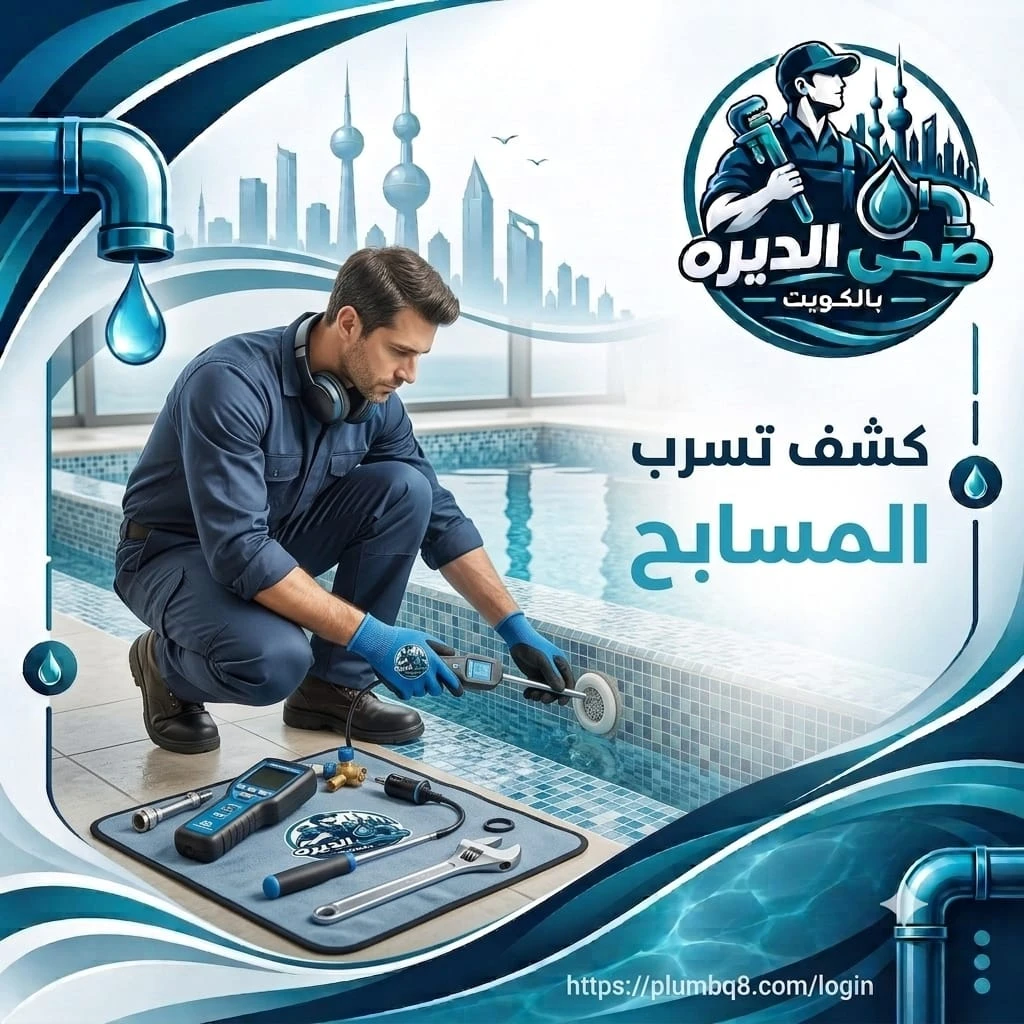
Swimming Pool Leak Detection in Kuwait
4 views
Locating pool leaks in the shell or the filter lines.
Swimming Pool Leak Detection
The water level in a swimming pool may drop unusually without an obvious source of water loss. In some cases, dampness may appear around the pool, near the pump room, or in areas surrounding the plumbing. The cause may be a leak in the pool structure, one of its fittings, or the pipe network. A falling water level may also be associated with evaporation, water escaping during use, or filter backwashing. A drop in water level alone is therefore not enough to conclude that the pool structure is cracked. Operating conditions must be reviewed, and the pool and its water network must be inspected to identify the source of water loss before a repair method is selected.
Sehi Al Deira provides swimming pool leak detection services in Kuwait, including inspecting pool structures, suction and return pipes, connections, and filtration equipment, identifying possible leak locations, and performing appropriate tests when necessary. The service begins by reviewing the rate of water loss, the condition of the pool, and its operating system. Visible components are then inspected to determine whether the loss is associated with the pool structure, plumbing, or a component of the water circulation system. The inspection and repair method depends on the pool type, finishing material, and possible leak location, while taking into account the safety of people and operating equipment.
Swimming Pool Leak Detection in Kuwait
A swimming pool leak may appear as a continuous drop in water level, dampness around the pool, or water accumulation near the equipment room. The signs may not be obvious if water escapes into the surrounding soil or from a concealed section of the pipe network. Identifying the source therefore depends on reviewing operating conditions and carrying out an appropriate inspection.
Swimming pool leak detection in Kuwait begins by reviewing the rate of water level decline and when it occurs. The pool structure, suction and return fittings, visible connections, pump room, and filtration equipment are then inspected.
Sehi Al Deira provides swimming pool leak inspection services in Kuwait, distinguishing between normal water loss and loss that may indicate damage to the pool structure or plumbing network.
Evaporation may increase during hot weather or when air movement is greater. Water levels may also fall because of frequent pool use or water discharged during filter backwashing. These factors should therefore be reviewed before every drop in water level is treated as evidence of a leak.
If water loss increases while the pump is operating compared with periods when it is switched off, the return lines, connections, and operating equipment may need to be inspected. If the level continues to fall while the pump is off, the pool structure, fittings, and water lines that remain connected to the pool may require examination.
These observations alone are not sufficient to identify the damaged component because different sources may produce similar patterns of water loss. The inspection findings are therefore used to select an appropriate additional test before repairs begin.
Swimming pool leak detection services in Kuwait include:
-
Reviewing the rate of water level decline and its relationship to temperature, pool use, and equipment operation.
-
Inspecting the pool structure, fittings, connections, and pump room.
-
Reviewing the filtration system, backwashing process, and visible sources of water discharge.
-
Selecting an appropriate test to distinguish between a leak in the pool structure and a leak in the pipe network.
-
Explaining the inspection findings and the required repair area after identifying the source of water loss.
Swimming Pool Water Leak Detection
Swimming pool water may leak from an area where a fitting joins the pool structure, a crack in the finish or structure, or a damaged connection in the water network. Water may travel into the surrounding soil or cavities without leaving a clear damp patch near the actual leak point.
The service begins by reviewing visible signs and the rate of water level decline. Components that can be inspected directly are then identified, such as suction and return fittings, swimming pool lights, pool edges, and operating equipment.
Sehi Al Deira provides swimming pool water leak inspection services, examining the areas where fittings join the pool structure and the connected water lines before determining the source of the problem.
A leak may appear near a return fitting because the area where it joins the pool structure is damaged, while the return line itself remains intact. In other cases, the fitting may be sound, but a concealed connection in its associated line may be responsible for the water loss.
Dampness outside the pool may also result from cleaning water, irrigation, or a nearby source rather than water escaping from the pool. Visible signs must therefore be considered alongside the rate of water loss and the results of appropriate tests.
When a leak is suspected in a submerged component, the inspection must be performed using a method suitable for the pool. Electrical fittings must not be tampered with or dismantled underwater.
Swimming pool water leak detection services include:
-
Reviewing the rate of water loss and visible signs around the pool.
-
Inspecting the areas where fittings and accessories join the pool structure.
-
Reviewing nearby connections, water lines, and operating equipment.
-
Distinguishing between leaks in the pool structure and leaks in connected lines.
-
Determining whether additional testing is necessary to confirm the leak location before repairs begin.
Swimming Pool Leak Inspection
Swimming pool leak inspection helps identify the component responsible for water loss, whether it is the pool structure, pipe network, or filtration and operating equipment. A leak may be slow and leave no visible sign, or it may occur only under certain operating conditions. Reviewing how the pool is used is therefore an important part of the diagnosis.
The service begins by reviewing the pool type, finishing material, equipment condition, and rate of water level decline. Accessible components are then inspected, and appropriate tests are selected.
Sehi Al Deira provides swimming pool leak inspection services, taking into account differences in inspection methods according to the pool type, pipe routes, and accessibility of the equipment.
If water accumulates inside the pump room, it may originate from a connection, valve, or part of the filtration equipment. However, water on the room floor does not independently prove that the pool is losing water through its structure or network, as other possible sources must be ruled out.
Inspecting the pool structure may require reviewing joints, areas where fittings connect, and visible damage to the finish. Not every surface crack should be treated as evidence of a crack that allows water to escape.
Water conditions, visibility, and safe access to submerged components must also be considered before any inspection inside the pool. Work near the pool's electrical components must not be performed without appropriate safety precautions.
Swimming pool leak inspection services include:
-
Reviewing the pool type, finish, operating system, and rate of water loss.
-
Inspecting accessible sections of the pool structure, fittings, connections, and filtration equipment.
-
Reviewing visible water sources inside the pump room and around the pool.
-
Selecting the tests required to isolate the component suspected of leaking.
-
Choosing a treatment method after confirming the source and nature of the damage.
Locating a Swimming Pool Leak
Water may appear outside the pool far from the actual leak point because it can travel through soil, building layers, or cavities surrounding the structure. Locating a swimming pool leak therefore involves relating visible signs to pipe routes, fittings, and inspection findings rather than selecting a repair point based on dampness alone.
The service begins by reviewing the pattern of water level decline and inspecting the pool structure and the areas where fittings connect. The component requiring additional testing is then identified.
Sehi Al Deira provides swimming pool leak location services, narrowing the search area before a decision is made to open finished surfaces or access concealed pipes.
If the water level falls and then stabilizes near the height of one of the pool fittings, this may indicate that the area should be inspected. However, it does not prove that the fitting itself is the source of the leak. The problem may be in a connected line or another component at the same level.
When a pipe network leak is suspected, testing individual lines separately may help identify the section requiring a localized inspection. Testing must be performed according to the network's specifications and in a way that does not expose pipes or fittings to unsuitable pressure.
Identifying the final damage location may require additional inspection after the suspected line has been isolated, particularly if the pipes are buried or run beneath finishes that are difficult to access.
Swimming pool leak location services include:
-
Reviewing the pattern of water level decline and the location of visible signs.
-
Inspecting fittings, accessories, joints, and areas suspected of being damaged.
-
Identifying the line or component that requires an independent test.
-
Narrowing the possible leak location before opening floors or finished surfaces.
-
Directing repairs toward the damaged area after verifying the source of water loss.
Swimming Pool Pipe Leak Detection
Swimming pools are connected to a network of pipes that carry water to the pumps and filters before returning it to the pool. Leaks may occur in a suction or return line, connection, or valve. The damaged area may be visible inside the equipment room or concealed beneath flooring or in the soil surrounding the pool.
Swimming pool pipe leak detection begins by reviewing the plumbing layout, if available. Visible connections are then inspected, and lines suspected of leaking are identified according to the symptoms and pump operating conditions.
Sehi Al Deira provides swimming pool pipe inspection services, distinguishing between leaks in lines and connections and problems associated with operating equipment.
A return line leak may become more apparent while the pump is operating because of pressure conditions within the network. A problem in a suction line may allow air to enter the system or disrupt pump operation without visible water escaping from the pipe.
However, air entering the system or a change in pump performance does not independently prove that a suction line is broken. It may also be associated with the water level, pump basket, or the sealing of certain connections. Accessible components must therefore be reviewed before a buried pipe is suspected.
When a particular line needs to be tested, it must be isolated appropriately, and the permitted pressure limits of the network components must be observed. High pressure should not be applied indiscriminately to locate a leak because it may cause additional damage.
Swimming pool pipe leak detection services include:
-
Reviewing the routes of suction and return lines and accessible connections.
-
Inspecting the pump room, valves, and filtration equipment for visible sources of water loss.
-
Reviewing how the symptoms relate to the pump operating or being switched off.
-
Determining whether the suspected line requires an independent test.
-
Selecting the repair area after identifying the damaged section of the network.
Swimming Pool Leak Detection Technician
Swimming pool leak inspection requires examining the pool structure, water network, and operating equipment as interconnected components because a falling water level may have more than one cause. Water loss may originate from an accessible connection, a concealed section of the pipe network, or damage where a fitting joins the pool structure.
A swimming pool leak detection technician begins by reviewing the symptoms, when they occur, the pool's condition, and its filtration system. Components requiring direct inspection or additional testing are then identified.
Sehi Al Deira provides swimming pool leak inspection services in Kuwait, selecting diagnostic steps according to the pool type, network components, and accessibility of the possible damage location.
If water loss is associated with a connection inside the pump room, the treatment may differ from repairing a buried pipe or a leak where a fitting joins the pool structure. The component responsible for the problem must therefore be identified before equipment replacement or opening finished surfaces is recommended.
It is also necessary to distinguish damage requiring a connection repair or replacement of a pipe section from a problem involving the pool structure or its waterproofing. Treating one component should not be assumed to stop water loss if another source has not been examined.
Safety precautions include reviewing the condition of electrical equipment, avoiding pump operation under conditions that could damage it, and not performing underwater inspections near electrical components that have not been made safe.
Services provided by a swimming pool leak detection technician include:
-
Reviewing the rate of water loss and the condition of the pool structure, pumps, and filters.
-
Inspecting accessible connections, fittings, and sections of the water network.
-
Selecting appropriate tests to isolate the leak source.
-
Explaining the difference between pipe repairs and treatment of damage to the pool structure or fittings.
-
Considering the safety of people and operating equipment during inspection and repair.
Swimming Pool Water Network Testing
Swimming pool water network testing helps determine whether water loss is associated with a suction or return line or a connection linked to the pool. The network may contain several lines, valves, and fittings, so individual sections may need to be tested separately to identify the component requiring repair.
The service begins by reviewing pipe routes and system components. Lines that can be isolated and tested according to their specifications are then identified.
Sehi Al Deira provides swimming pool water network inspection and testing services, taking into account different testing requirements according to the type of pipes, connections, and associated equipment.
An appropriate test of an isolated line may help verify whether it is sound or losing water, but it does not necessarily identify the exact damage location along its entire route. A line that shows evidence of a problem may require further inspection to narrow down the leak location.
The testing method and pressure limits must be selected according to the specifications of the network components. Filters, pumps, and fittings must not be exposed to pressure exceeding their permitted limits. Equipment must also be prevented from operating inappropriately while lines are isolated.
The problem may be in a connection or valve inside the equipment room rather than a buried pipe. Accessible components should therefore be reviewed before any exploratory work is carried out beneath flooring.
Swimming pool water network testing services include:
-
Reviewing network components and the routes of suction and return lines.
-
Identifying lines that require independent testing according to the symptoms.
-
Selecting a testing method appropriate for the specifications of the pipes and fittings.
-
Reviewing test results to identify the section requiring further inspection.
-
Protecting pumps, filters, and valves from unsuitable operating or pressure conditions.
Identifying the Cause of a Falling Swimming Pool Water Level
A swimming pool's water level may fall because of evaporation, use, or filter backwashing, or the loss may result from a leak in the pool structure or pipe network. The expected amount of water loss varies according to weather conditions and how the pool is operated. These factors must therefore be reviewed before a falling water level is treated as evidence of damage.
The service begins by reviewing the rate of water level decline during periods of use and inactivity, the condition of the filtration and filling systems, and visible sources of water discharge.
Sehi Al Deira provides services for investigating falling swimming pool water levels, reviewing operating conditions before identifying the component suspected of leaking.
Evaporation may increase as temperatures rise and air movement becomes greater, while frequent use may cause water to leave the pool. Filter backwashing also uses an amount of water that must be taken into account when assessing the drop in level.
If the water level continues to fall unusually after these factors have been considered, the pool structure, fittings, and pipe network may need to be inspected. Comparing conditions when the pump is operating and switched off may help guide the inspection, but it does not independently identify the leak source.
The automatic filling system, if present, must also be reviewed. Continuous water replacement may conceal the actual rate of loss, while a filling fault may cause a drop in water level that is not associated with a pool leak.
Services for identifying the cause of a falling swimming pool water level include:
-
Reviewing the rate of water level decline and its relationship to weather and pool use.
-
Inspecting the filtration system, backwashing process, and visible sources of water discharge.
-
Reviewing the automatic filling system, if present.
-
Comparing symptoms under different operating conditions to guide the inspection.
-
Determining whether the pool structure or pipe network requires testing when a leak is suspected.
Swimming Pool Water Loss Inspection
Swimming pool water loss inspection helps distinguish between a drop associated with operating conditions and loss that may result from an actual leak. The decline may be gradual and difficult to notice during everyday use, particularly if the pool has a filling system that automatically replaces lost water.
The service begins by reviewing the water level, its rate of change, and operating conditions. The pool structure, equipment, and visible connections are then inspected to identify the possible source of water loss.
Sehi Al Deira provides swimming pool water loss inspection services, selecting an appropriate test according to the pool type, operating system, and reported symptoms.
Comparing changes in the pool's water level with evaporation under suitable conditions may help determine whether water loss exceeds what is expected. However, the effects of pool use, rainfall, filling, and backwashing must be considered when interpreting the results.
The rate of water loss may also differ when the pump is operating compared with when it is switched off, helping identify components that require inspection. Nevertheless, this difference alone should not be treated as conclusive evidence of damage to a particular line without additional testing.
In some cases, there may be more than one source of water loss, such as a small connection leak alongside normal evaporation. The findings should therefore be reviewed together before the repair area is determined.
Swimming pool water loss inspection services include:
-
Reviewing the water level and its rate of decline under suitable operating conditions.
-
Considering evaporation, use, filling, and backwashing when interpreting the results.
-
Inspecting the pool structure, equipment, and connections for signs of leakage.
-
Determining whether the pool structure or a water line requires an independent test.
-
Explaining the possible source of water loss and the appropriate next step to confirm it before repairs begin.
Non-Destructive Swimming Pool Leak Detection
Non-destructive swimming pool leak detection helps inspect the pool structure, equipment, and visible connections and perform appropriate tests to narrow down the source of water loss before floors or finished surfaces are opened. The aim is to avoid unnecessary exploratory work when the nature of the problem allows the suspected component to be identified through inspection and testing.
The service begins by reviewing the rate of water loss and the condition of the pool structure and pipe network. Accessible components are then inspected, and tests that can be performed without opening finished surfaces are selected.
Sehi Al Deira provides swimming pool leak inspection services to help identify the area requiring repair, while explaining the limitations of the inspection findings before any decision is made to open flooring.
If testing indicates that a particular water line is responsible for the loss, this may help avoid opening areas through which the damaged pipe does not pass. However, identifying the exact damage location within a buried line may require additional inspection or a localized opening to access the section requiring repair.
If the leak originates from an accessible connection or fitting, the treatment may differ from a leak within the pool structure or beneath finished surfaces.
Performing leak detection without breaking finished surfaces does not mean that every repair can be completed in the same way. The need for a localized opening depends on the damage location, how the pipes or fittings were installed, and whether they can be accessed safely.
Non-destructive swimming pool leak detection services include:
-
Reviewing signs of water loss and identifying components that can be inspected without opening finished surfaces.
-
Inspecting the pool structure, fittings, connections, and visible operating equipment.
-
Performing appropriate tests to narrow down the suspected line or component.
-
Avoiding unnecessary exploratory openings when the results allow a smaller inspection area to be identified.
-
Explaining whether the repair requires a localized opening after the leak source has been confirmed.
Frequently Asked Questions About Swimming Pool Leak Detection
How can I tell if my swimming pool is leaking?
An unusual drop in water level or dampness around the pool or equipment room may indicate a leak. However, evaporation, pool use, and filter backwashing must be considered before a falling water level is treated as evidence of pool damage.
Does a falling swimming pool water level in hot weather mean there is a leak?
Not necessarily. Evaporation may increase with higher temperatures and greater air movement, and pool use may also contribute to water loss. If the level continues to fall unusually after these factors have been considered, the pool and its water network may need to be inspected.
Can the leak come from the pool pipes rather than the structure?
Yes. A leak may occur in a suction or return line, connection, or valve. The damaged area may be visible inside the equipment room or concealed underground. Inspecting the network and testing suspected lines helps identify the source of water loss.
Does a difference in water loss when the pump is on and off identify the leak location?
The difference may help direct the inspection toward particular network components, but it does not independently identify the leak location. Equipment and connections must be reviewed, and an appropriate test must be performed to confirm the damaged section.
Can a swimming pool leak be detected without breaking the flooring?
Many sections of the pool structure and network can be inspected, and appropriate tests can be performed without opening the flooring. However, if the damage is inside a buried pipe or another difficult-to-access component, a localized opening may be necessary for repairs after the problem area has been identified.
Does the water level stabilizing at a pool fitting mean that the fitting is leaking?
This may indicate that the area around the fitting and its connected line should be inspected, but it does not prove that the fitting itself is the source. Additional testing may be necessary to identify the component responsible for water loss.
Can the swimming pool filter cause water loss?
Water is discharged during filter backwashing, and a leak may also occur from a connection, valve, or damaged part of the filtration equipment. The operating system must be inspected to determine whether the loss is normal during a particular procedure or caused by a fault.
How is a swimming pool water network tested?
Pipe routes and network components are reviewed, and the line requiring an independent test is identified. The test is selected according to the specifications of the pipes and fittings, while avoiding unsuitable pressure and protecting pumps and filters from damage.
Can a swimming pool leak be repaired without completely draining the pool?
This depends on the leak location, nature of the damage, and required repair method. Some connections and equipment can be inspected without draining the pool, while other work may require lowering the water level or draining the pool according to repair and safety requirements.
Is dampness around a swimming pool conclusive evidence that it is leaking?
No. Dampness may result from pool use, cleaning, irrigation, or a nearby source. Visible signs must be considered alongside the rate of water loss and inspection findings before the source of the problem is determined.
Request Swimming Pool Leak Detection from Sehi Al Deira
If you notice an unusual drop in your swimming pool's water level, dampness around the pool structure, or water accumulating near the pump room, you can request Sehi Al Deira's swimming pool leak detection service to inspect the pool structure, pipe network, and operating equipment and identify the source of water loss before repairs begin.
Sehi Al Deira provides swimming pool leak detection services in Kuwait, from inspecting pool structures and suction and return pipes to testing the water network and locating leaks, with an explanation of the inspection findings and an appropriate treatment method according to the pool type, plumbing condition, and source of water loss.