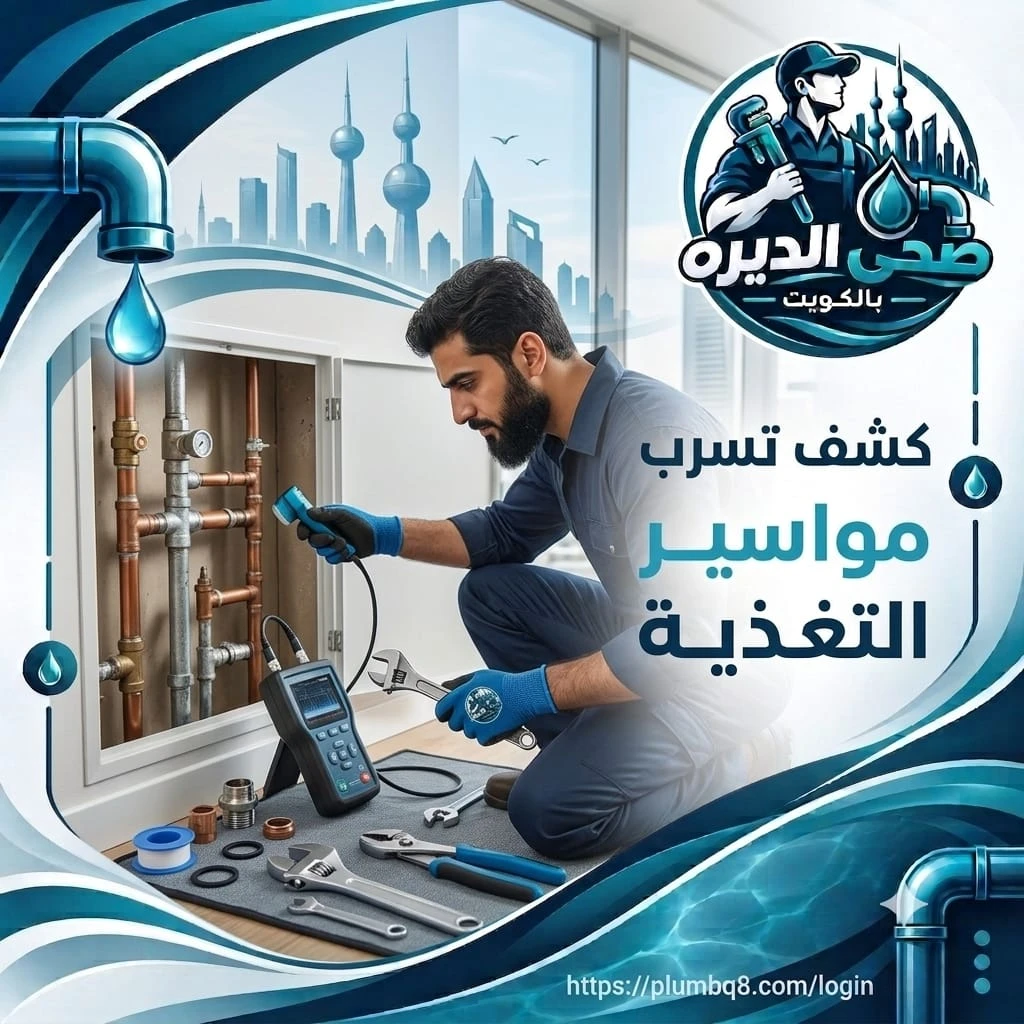
Supply Line Leak Detection in Kuwait
8 views
Finding leaks in cold- and hot-water supply lines before any breaking.
Water Supply Pipe Leak Detection
Water supply pipes may leak inside walls or beneath floors without water appearing directly at the damaged location. Homeowners may notice reduced water pressure, frequent pump operation, dampness on walls and ceilings, or an unusual increase in water consumption. Leaks may result from a damaged connection, a crack in a pipe, or damage to part of the network caused by stress or movement in the plumbing. The affected line and the source of water loss must therefore be identified before finished surfaces are opened or repairs begin.
Sehi Al Deira provides water supply pipe leak detection services in Kuwait, including inspecting main and branch water lines, hot and cold water pipes, and visible and concealed connections throughout the home. The service begins by reviewing the symptoms and the condition of the water supply network. Accessible components are then inspected, and appropriate tests are selected to isolate the line suspected of leaking. The inspection and repair method depends on the pipe material, location, and nature of the damage, while protecting the plumbing and minimizing unnecessary opening of finished surfaces.
Water Supply Pipe Leak Detection
Water supply pipes may leak from the pipe body, a connection, or a point where they connect to faucets, water heaters, or pumps. Water may accumulate away from the damaged location because it travels through walls or beneath floors, making the visible damp patch different from the actual leak point.
Water supply pipe leak detection begins by reviewing the visible symptoms and when they occur. Accessible connections are then inspected, and lines requiring additional testing are identified.
Sehi Al Deira provides water supply pipe leak inspection services, examining the water network as an interconnected system of lines, connections, and valves rather than assuming that a damp patch marks the location of a broken pipe.
If dampness appears near a faucet or water heater, it may originate from a visible connection, a concealed supply line, or a leak from an appliance connected to the network. Accessible components should therefore be inspected before a broken pipe inside the wall is suspected.
A continuing pressure loss in an isolated line may indicate a problem requiring investigation, but it does not independently identify the leak location. Additional detection methods may be necessary to narrow down the damaged area before repairs begin.
Water supply leaks must also be distinguished from moisture caused by drainage, waterproofing defects, or condensation, because repairing an intact pipe will not resolve a problem originating elsewhere.
Water supply pipe leak detection services include:
-
Reviewing signs of leakage, when they appear, and their relationship to water use.
-
Inspecting visible connections, valves, and plumbing fittings.
-
Identifying lines suspected of leaking and selecting appropriate tests.
-
Distinguishing water supply leaks from other sources of moisture.
-
Determining the repair area after verifying the source of water loss.
Water Supply Line Inspection in Kuwait
A water supply network consists of main and branch lines that deliver water to kitchens, bathrooms, water heaters, and plumbing fixtures. Leaks may occur in an accessible section or inside a concealed pipe behind finished surfaces. Water supply line inspection in Kuwait therefore involves reviewing the network layout, connection points, and symptoms associated with the problem.
The service begins by identifying the lines supplying the affected area. Valves, connections, and visible components are then reviewed before any tests are performed on concealed pipes.
Sehi Al Deira provides water supply line inspection services in Kuwait, taking into account differences in pipe materials, installation methods, and suitable operating limits for each network.
If dampness appears on a wall separating a bathroom from a kitchen, it may be associated with a supply line running through the wall or a connection serving a fixture on either side. The location of the damp patch alone is insufficient to identify the line responsible for the leak.
Reduced water pressure may also result from a partial blockage, a pump problem, or a valve that is not fully open rather than a leak. Network performance and water supply sources must therefore be reviewed before reduced flow is attributed to a broken pipe.
When a concealed line is suspected, testing a specific section of the network may help narrow the search area, provided that the test is performed according to the specifications of the pipes, connections, and associated equipment.
Water supply line inspection services in Kuwait include:
-
Identifying the main and branch lines connected to the affected area.
-
Inspecting visible valves, connections, and plumbing fittings.
-
Reviewing possible causes of reduced pressure or flow before assuming that a leak exists.
-
Selecting an appropriate test for the suspected line according to the network's specifications.
-
Explaining which section requires further inspection or repair after reviewing the findings.
Main Water Supply Line Leak Detection
The main water supply line delivers water to the household distribution network. A leak in this line may cause continuous water loss or reduced pressure at several points of use. The damaged section may be near the pump, tank, or a visible connection, or it may be concealed inside a floor or wall.
Main water supply line leak detection begins by reviewing the route of the line and its accessible sections. The inspection then determines whether water loss is associated with the main line or one of the branch lines connected to the network.
Sehi Al Deira provides main water supply line leak inspection services, reviewing valves, connections, and water supply sources before identifying the possible leak location.
Dampness may appear near the point where water enters the home, while its source may be a damaged connection or a nearby branch line. The main line's route and the network layout must therefore be reviewed rather than relying solely on where water accumulates.
If sections of the network can be isolated appropriately, the inspection findings may help determine whether water loss occurs in the main line or downstream of a branch connection. Isolation procedures must be performed without disabling essential equipment or allowing the pump to run dry.
The main line may also be connected to components with different operating limits. A pressure test must therefore not be applied indiscriminately to the entire network without reviewing the specifications of the pipes, connections, and equipment.
Main water supply line leak detection services include:
-
Reviewing the route of the main water supply line and its connection points within the network.
-
Inspecting visible connections, valves, and components near the water supply source.
-
Determining whether water loss is associated with the main line or a branch line.
-
Selecting a testing method suitable for the specifications of the line and its components.
-
Determining the repair area after verifying which section is responsible for the leak.
Water Supply Pipe Leak Detection Technician
Inspecting water supply pipe leaks requires distinguishing damage to the pipe body from problems involving connections, valves, and appliances connected to the network. Dampness around a water heater may result from a damaged connection, while another leak may be caused by a break in a concealed pipe inside a wall.
A water supply pipe leak detection technician begins by reviewing the symptoms, type of plumbing, and locations where water appears. Visible components are then inspected, and the line requiring additional testing is identified.
Sehi Al Deira provides water supply pipe leak inspection services in Kuwait, selecting diagnostic steps according to the pipe material, location, and network configuration.
If a leak is associated with an accessible connection, the treatment may differ from repairing a damaged section inside a wall. The location of the damage must therefore be identified before opening finished surfaces or replacing part of the network is recommended.
Leak symptoms may also resemble other problems, such as reduced pressure caused by a valve or pump, or dampness caused by a drainage leak. The type of fault should therefore not be determined from a single symptom without reviewing the other indications.
When network testing is necessary, the permitted pressure limits of pipes, connections, and connected appliances must be observed. Components unsuitable for the test must be isolated according to the system's requirements.
Services provided by a water supply pipe leak detection technician include:
-
Reviewing leak symptoms, pipe materials, and possible network routes.
-
Inspecting connections, valves, and appliances connected to the water lines.
-
Identifying the suspected line and selecting an appropriate verification method.
-
Distinguishing pipe damage from pressure problems and other sources of moisture.
-
Explaining the repair method after identifying the location and nature of the damage.
Locating a Broken Water Supply Pipe
A water supply pipe may break inside a wall or beneath a floor, allowing water to travel through building materials before appearing on the surface. The area affected by moisture may expand as the leak continues, but the boundaries of the damp patch do not necessarily indicate the location of the break or the extent of the damaged section.
Locating a broken water supply pipe begins by reviewing visible signs and the possible route of the line. Accessible connections are then inspected, and an appropriate test is selected to confirm whether the pipe is losing water.
Sehi Al Deira provides services for locating damaged water supply pipes, narrowing the search area before a decision is made to open a wall or floor.
If dampness appears beneath the route of a water pipe, it may originate from a break in the nearby section or a connection higher up the wall from which water has traveled downward. The line's route and connection points must therefore be reviewed before the repair location is determined.
Testing an isolated line may help confirm that it is losing water, but it does not necessarily identify the exact location of the break along the entire route. An additional detection method suitable for the network and environmental conditions may be used in such cases.
Identifying a suspected area does not necessarily mean that the pipe is broken. The cause may be a damaged connection or a leak from an appliance connected to it. The nature of the problem must be confirmed before a localized repair or replacement of a line section is selected.
Services for locating a broken water supply pipe include:
-
Reviewing signs of dampness and the possible route of the pipe.
-
Inspecting accessible connections and components before suspecting a concealed section.
-
Testing the suspected line when necessary to confirm water loss.
-
Narrowing down the damage location before opening finished surfaces.
-
Determining an appropriate repair method after verifying the nature of the damage.
Hot Water Supply Line Leak Detection
A hot water supply line may leak near the water heater, at a connection, or inside a concealed pipe leading to a bathroom or kitchen. The problem may appear as dampness on a wall or floor or a thermal change in an area through which the line passes. However, a warm surface alone does not prove that a leak exists.
Hot water supply line leak detection begins by reviewing the water heater's location, the plumbing route, and symptoms associated with hot water use. Accessible connections and valves are then inspected.
Sehi Al Deira provides hot water line leak inspection services, taking into account water temperature and the characteristics of pipes and connections before selecting an appropriate test.
Dampness may appear after hot water is used because of a leak from a connection or a line affected by particular operating conditions. However, the relationship between the problem and water heater operation is not enough to identify the damaged location, as the source may be one of the connected fixtures.
A thermal camera may help identify the effect of water temperature on the surface of a wall or floor when environmental conditions allow it. However, it does not directly see the pipe behind the finished surface or independently confirm that a leak exists.
When the line needs to be tested, the water temperature and operating limits of the pipes and connections must be considered. The water heater and associated components must not be exposed to an unsuitable test.
Hot water supply line leak detection services include:
-
Reviewing the relationship between leak symptoms and hot water use.
-
Inspecting water heater connections, valves, and visible fittings.
-
Identifying the suspected line's route and associated areas of dampness.
-
Selecting an inspection or testing method suitable for the network.
-
Determining the repair location after confirming the source of water loss.
Cold Water Supply Line Leak Detection
A cold water supply line may leak from a visible connection or a concealed section inside a wall or floor. Dampness may appear around the pipe or on a nearby surface, but some signs may result from water vapor condensing on the surface of a cold pipe rather than water escaping from inside it.
Cold water supply line leak detection begins by reviewing the location of dampness, when it appears, and the operating conditions of air conditioning and ventilation. Connections and accessible sections of the line are then inspected.
Sehi Al Deira provides cold water line leak inspection services, distinguishing actual leaks from condensation or moisture originating elsewhere.
If droplets appear on the exterior of a cold pipe in a humid location, they may be associated with condensation, particularly if there are no other indications of water loss. However, persistent dampness inside a wall or an unusual drop in the water level may require a more extensive inspection of the line.
Water may travel from a connection higher up a wall to a lower area, making the location of the damp patch different from the actual leak point. The line's route and connection points must therefore be reviewed before deciding where to open the finished surface.
When a concealed pipe is suspected, an appropriate test of an isolated line may help confirm water loss. An additional detection method may then be used, if necessary, to narrow down the damage location.
Cold water supply line leak detection services include:
-
Reviewing signs of dampness and the conditions in which they appear.
-
Distinguishing condensation on the pipe's exterior from water leaking out of it.
-
Inspecting connections, valves, and visible sections of the line.
-
Determining whether the suspected line needs to be tested.
-
Directing repairs toward the damaged section after confirming the water source.
Water Supply Pipe Pressure Testing
Water supply pipe pressure testing helps verify whether a specific section of the network can maintain pressure under suitable test conditions. The results may indicate water loss requiring further investigation, but they do not independently identify the leak location or prove that the cause is a break in the pipe body rather than a connection or valve.
Water supply pipe pressure testing begins by reviewing the pipe and connection types and the network's specifications. A section that can be isolated and tested appropriately is then identified.
Sehi Al Deira provides water supply line inspection and testing services, observing the permitted pressure limits of components connected to the network.
The testing method, medium, pressure, and duration must be selected according to the system's specifications and safety requirements. Appliances and components that should not be exposed to the test conditions must be isolated. High pressure must not be chosen indiscriminately in an attempt to make a leak appear more quickly.
Pressure readings may be affected by changes in water temperature, testing conditions, or air trapped inside the line. Results must therefore be interpreted according to the procedure used, and an isolated change should not be treated as conclusive evidence of a broken pipe.
If the results indicate abnormal pressure loss in a particular line, connections may need to be inspected or an additional detection method used to locate the problem before finished surfaces are opened.
Water supply pipe pressure testing services include:
-
Reviewing pipe and connection types and suitable operating limits.
-
Identifying the section requiring testing and isolating it safely.
-
Selecting a testing procedure according to network specifications and safety requirements.
-
Reviewing the results while considering conditions that may affect pressure readings.
-
Determining whether additional inspection is needed to locate a leak when abnormal pressure loss is detected.
Home Water Supply Network Inspection
A home water supply network includes main and branch lines, valves, and connections that deliver water to kitchens, bathrooms, water heaters, and plumbing fixtures. A leak in one of its components may cause dampness, reduced water pressure, or frequent pump operation, but these symptoms may also be associated with other operating problems.
Home water supply network inspection begins by reviewing the water source and how water is distributed throughout the property. Visible components are then inspected, and the area requiring additional testing is identified.
Sehi Al Deira provides home water supply network inspection services, reviewing lines, connections, valves, and the points where appliances connect to the network.
A leak may be limited to a connection behind a plumbing fixture, while its effects extend into an adjacent wall or floor. In other cases, dampness may originate from a drainage line or damaged waterproofing. The water source must therefore be identified before the supply network is repaired.
Reduced flow at a single point of use may be associated with a faucet, valve, or localized blockage. Reduced flow at several points may require reviewing the water supply source, pump, or main line. Reduced pressure alone is insufficient to confirm that a leak exists.
When a concealed line is suspected, the section requiring testing is identified according to the network layout and symptoms, avoiding the opening of several areas of the home without first narrowing down the problem.
Home water supply network inspection services include:
-
Reviewing the water source and distribution of main and branch lines.
-
Inspecting valves, connections, and fixtures connected to the network.
-
Distinguishing leak symptoms from other pressure and flow problems.
-
Identifying lines requiring additional testing.
-
Explaining the appropriate repair area after identifying the source of the problem.
Locating Leaks in Concealed Water Lines
Concealed water lines may run inside walls, beneath floors, or behind fixtures that are difficult to access. When a leak occurs, water may travel through building materials before appearing on the surface. The damp patch may therefore be located away from the damaged section, making it particularly important to narrow down the search area before opening finished surfaces.
Locating leaks in concealed water lines begins by reviewing visible signs and possible pipe routes. Accessible connections are then inspected, and an appropriate test is selected for the suspected line.
Sehi Al Deira provides concealed water line leak inspection services to help identify the damaged section and reduce unnecessary opening of finished surfaces when the findings allow it.
Acoustic detection methods may help identify signals associated with water escaping from a pressurized line under suitable conditions. Thermal imaging may also help identify areas affected by temperature differences or possible moisture. However, neither method can confirm every type of leak or identify its source precisely in every situation.
Detection results must be considered alongside pipe routes, network test findings, and visible signs. Sound can travel through building materials, while thermal patterns may result from intact pipes or differences in insulation.
After the damaged line has been identified, accessing the repair location may require a limited opening in the wall or floor. Performing the initial inspection without breaking finished surfaces does not mean that a concealed pipe can always be repaired without opening them.
Services for locating leaks in concealed water lines include:
-
Reviewing visible signs and possible pipe routes.
-
Inspecting accessible connections before suspecting a concealed section of the network.
-
Testing the suspected line when necessary to confirm water loss.
-
Using a suitable additional detection method to narrow down the leak location.
-
Determining whether a localized opening is necessary after verifying the source and location of the damage.
Frequently Asked Questions About Water Supply Pipe Leak Detection
How can I tell if my water supply pipes are leaking?
Persistent dampness, increased water consumption, frequent pump operation, or reduced pressure may indicate a leak. However, these signs do not independently confirm that the problem is in the water supply pipes. They may result from a visible connection, an appliance connected to the network, or another source of moisture.
Does reduced water pressure mean that a water supply pipe is broken?
Not necessarily. Reduced pressure may result from a pump problem, a valve that is not fully open, a partial blockage, or an inadequate water supply. These possibilities must be reviewed before reduced pressure is treated as evidence of a broken pipe.
Can water supply pipe leaks be detected without breaking walls or floors?
Visible connections can be inspected, lines can be tested, and suitable detection methods can be used to help narrow down a leak without initially opening finished surfaces. However, repairing a concealed pipe may require a localized opening after the damaged area has been identified.
How is a main water supply line leak located?
Connections, valves, and the route of the main line are reviewed to determine whether water loss occurs within it or in one of its branches. An isolated section of the network may need to be tested according to its specifications to confirm the leak source.
Can water leak from a connection rather than the pipe itself?
Yes. A leak may occur at a connection, valve, or point where a pipe connects to an appliance, even when the pipe body is intact. Accessible components should therefore be inspected before a break inside a wall is suspected.
Can a thermal camera detect a hot water line leak?
A thermal camera may help identify temperature differences on the surface of a wall or floor when environmental conditions allow it. However, it does not directly see the pipe behind the finished surface, and an unusual thermal pattern alone is insufficient to confirm a leak.
How can I distinguish a cold water line leak from condensation?
Droplets may form on the exterior of a cold pipe when water vapor condenses, particularly in humid areas. Suspected leakage from inside the pipe requires reviewing signs of water loss, inspecting connections, and performing an appropriate test when necessary.
Does a pressure test identify the location of a broken pipe?
A pressure test may help verify whether a specific section of the network is losing water, but it does not independently identify the location of a break or the type of damage. Additional inspection may be necessary to locate the problem before repairs begin.
Can all the pipes in a home be tested at the same pressure?
No. The testing method and pressure limits must be selected according to the pipe and connection types and the specifications of components connected to the network. Some appliances may need to be isolated before testing to protect them from unsuitable conditions.
Does dampness appearing away from a pipe's route rule out a leak in that pipe?
No. Water may travel through walls or beneath floors before appearing on the surface, so a damp patch may be located away from the actual leak point. Pipe routes and inspection findings must be reviewed before the repair location is determined.
Request Water Supply Pipe Leak Detection from Sehi Al Deira
If you notice unusual dampness inside your home, a continuing drop in water pressure, or frequent pump operation without an obvious cause, you can request Sehi Al Deira's water supply pipe leak detection service to inspect main and branch lines and connections and identify the source of water loss before repairs begin.
Sehi Al Deira provides water supply pipe leak detection services in Kuwait, from inspecting hot and cold water lines and household plumbing networks to testing pipes and locating concealed leaks, with an explanation of the inspection findings and an appropriate treatment method according to the plumbing type and the location and nature of the damage.