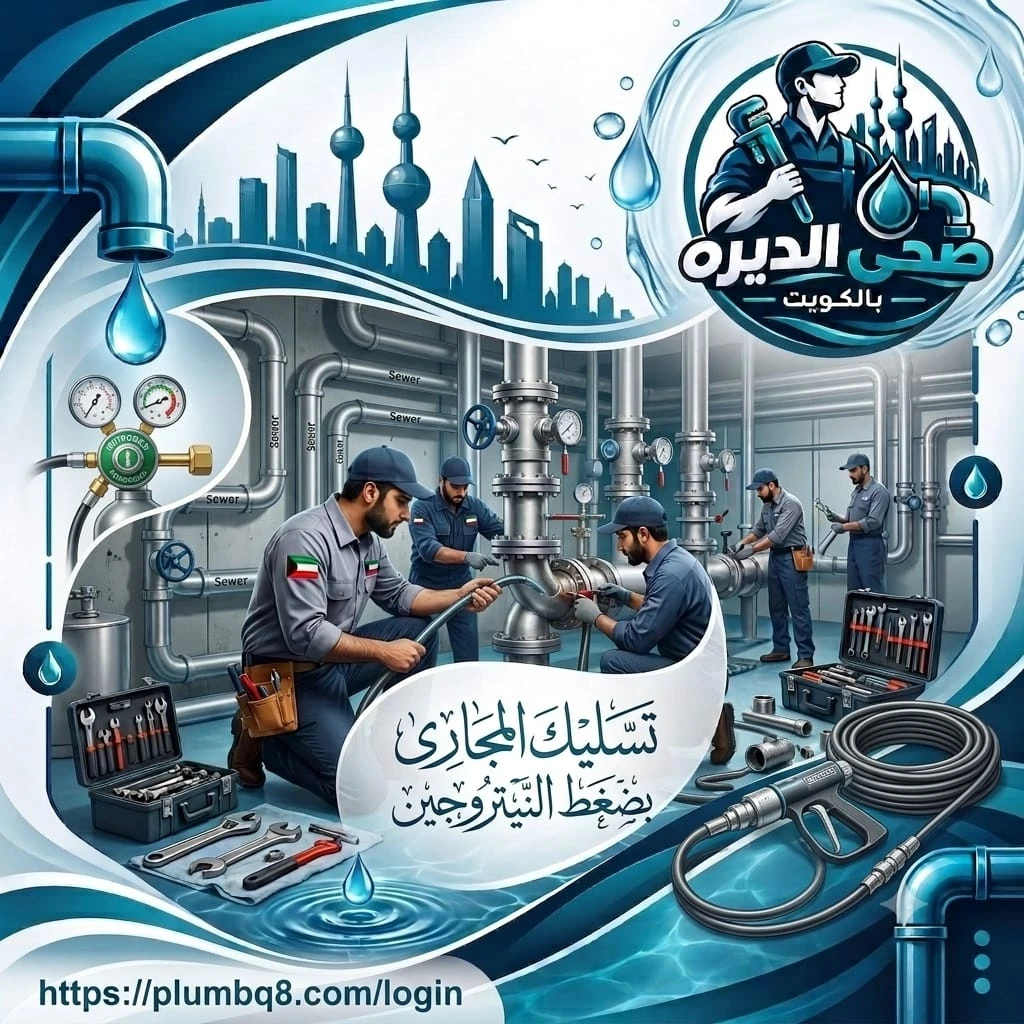
Nitrogen-Pressure Drain Cleaning in Kuwait
9 views
Removing stubborn blockages with a nitrogen-pressure machine, no breaking.
Drain Unblocking with Nitrogen Pressure
Blocked drains can disrupt the use of bathrooms and kitchens, particularly when grease, sediment, or waste accumulates inside drainage pipes, causing water to drain slowly or back up. The appropriate method of clearing a blockage depends on its location, the type of material causing it, and the condition of the pipes. In some cases, pressurized gas equipment can help move an obstruction and reopen the drainage passage, provided that the method is suitable for the type of network and that its pipes and connections can withstand the pressure.
Sehi Al Deira provides drain unblocking services using nitrogen pressure in Kuwait. The service includes inspecting the drainage system and locating the blockage before selecting an appropriate treatment method. It covers blocked kitchen and bathroom drains and residential drainage lines, according to the nature of the problem and the accessibility of the affected section. Pressure is not applied indiscriminately or treated as a suitable solution for every blockage. Some situations may require mechanical removal of the obstruction or inspection and repair of the line if the blockage results from a damaged pipe or a problem with the drainage route.
Drain Unblocking with Nitrogen Pressure
Drain unblocking with nitrogen pressure involves using specialized equipment to release controlled gas pressure into a section of a drainage line to help move certain types of obstructions and reopen the passage for water. The suitability of this method depends on the pipe material, diameter, condition of the connections, location of the blockage, and nature of the obstruction inside the line.
The service begins by inspecting the symptoms of the problem, such as slow drainage, rising water levels inside a sink, or water backing up from a floor drain. The next step is to determine whether the blockage is limited to a fixture's trap or located deeper within the drainage line, as selecting an unblocking method before locating the problem may result in inappropriate treatment.
Sehi Al Deira provides drain unblocking services using nitrogen pressure while assessing the condition of the drainage network before using pressurized equipment. Older, cracked, or weakened pipes and connections may not be suitable for this type of treatment.
Pressure may help move certain accumulations inside the line, but it does not guarantee the removal of all deposits or resolve the underlying cause of a recurring blockage. If the obstruction is a solid object, the pipe is damaged, or a section of the line has sagged, another method or a separate repair may be required.
After unblocking, water drainage should be tested and accessible connections reviewed to confirm that no new leakage or backflow has appeared. The cause of the blockage should also be assessed if the problem repeatedly occurs in the same location.
Drain unblocking services using nitrogen pressure include:
-
Inspecting blockage symptoms and identifying the affected drains and fixtures inside the home.
-
Locating the likely obstruction and assessing the condition of the pipe and connections before applying pressure.
-
Selecting equipment and a treatment method appropriate for the drainage line and its pressure limitations.
-
Checking water drainage after treatment to confirm that flow has been restored appropriately.
-
Identifying situations that require additional cleaning, mechanical obstruction removal, or repair of a damaged section of the network.
Nitrogen Drain Unblocking in Kuwait
Drainage blockages in Kuwaiti homes vary according to how the system is used, the pipe layout, and the condition of the drainage network. Grease and food residue may accumulate in kitchen drainage lines, while hair, sediment, or unsuitable objects may obstruct water drainage from bathrooms. Similar symptoms do not mean that every blockage can be treated using the same method.
Nitrogen drain unblocking in Kuwait begins by identifying where the problem appears and reviewing how many drains are affected. If water drains slowly from only one sink, the obstruction may be close to its trap or associated connection. However, if the problem appears in several drains connected to the same line, this may indicate a blockage in a shared section of the drainage network.
Sehi Al Deira provides nitrogen drain inspection and unblocking services in Kuwait, determining whether pressurized gas is suitable according to the condition of the pipes and the nature of the blockage.
In residential buildings with shared drainage lines, wastewater may continue to back up from one drain because other units connected to the affected line are still being used. The extent of the problem should therefore be identified, and coordination with building management may be necessary before work affecting shared pipework begins.
Applying pressure to an unidentified problem without inspection is not recommended, particularly when there has been previous leakage, visible cracking, or recurring blockage after several unblocking attempts.
Nitrogen drain unblocking services in Kuwait include:
-
Inspecting kitchen and bathroom blockages and identifying the number of affected drainage points.
-
Distinguishing between an obstruction close to a fixture and one located within a shared drainage line.
-
Assessing the condition of pipes and connections before determining whether nitrogen pressure equipment can be used.
-
Treating the blockage using a method appropriate for its location and the nature of the obstruction.
-
Testing affected drains after unblocking and checking whether the problem continues when more than one drainage point is used.
Opening Blocked Drains with Nitrogen Pressure
Material accumulating inside a drainage pipe may gradually narrow the passage until water flow becomes slow or stops completely. In some cases, nitrogen pressure can help move an obstruction inside the line. However, successful treatment depends on the nature of the blockage, how firmly it is lodged, and its location relative to the available access points.
Opening blocked drains with nitrogen pressure begins by reviewing the condition of the drain and determining whether the obstruction is close to the drainage opening or located farther along the network. In some cases, cleaning the trap or removing visible waste may be sufficient without using pressure.
Sehi Al Deira provides drain unblocking services using appropriate equipment after inspecting the condition of the line and determining whether nitrogen pressure is suitable for the problem.
When a blockage occurs in a drainage line containing old connections or damaged sections, the suitability of pressure must be assessed before treatment. Applying pressurized gas to an unsuitable line may cause leakage from connections or worsen existing damage.
The possibility of moving the obstruction into another section of the network without removing it completely must also be considered. A falling water level inside the sink is therefore not sufficient evidence that the problem has been resolved. Drainage should be tested to confirm that water continues to flow normally.
Services for opening blocked drains with nitrogen pressure include:
-
Identifying the location of the blockage and its effect on water flow within the drainage line.
-
Inspecting available access points and the condition of the pipes before selecting an unblocking method.
-
Using gas pressure when it is suitable for the type of line and the nature of the obstruction.
-
Testing water flow after treatment to confirm that the blockage has not persisted or moved into another section.
-
Determining whether additional cleaning or an alternative method is needed if the problem has not been fully resolved.
Nitrogen Drain Unblocking Technician
Using nitrogen drain unblocking equipment requires an understanding of the drainage network and the pressure limitations of its pipes and connections. Inappropriate pressure may cause water or waste to escape from other points or damage weakened sections of the line. The decision to use this method therefore depends not only on the severity of the blockage but also on the condition of the pipework and whether the section requiring treatment can be isolated.
A nitrogen drain unblocking technician begins by inspecting the location of the problem and reviewing the symptoms that appear when the drains are used. This includes determining whether water backs up from one drain or several drains and whether the blockage is continuous or returns shortly after previous unblocking work.
Sehi Al Deira provides drainage blockage inspection services and determines the appropriate treatment method, including the use of nitrogen pressure equipment when the condition of the network allows it.
If the blockage involves a solid object lodged inside the pipe, pressure may not be the appropriate method of removal. Accessing the obstruction or using mechanical drain unblocking equipment may be necessary. If the problem results from a damaged pipe route or a sagging section, temporarily reopening the passage will not resolve the underlying cause.
It is important to establish whether hazardous chemicals are present inside the drain before work begins, particularly if strong drain cleaners have previously been used. The technician should be informed of any products used to avoid exposure to splashes, fumes, or unsafe reactions during treatment.
Nitrogen drain unblocking technician services include:
-
Inspecting drains and drainage lines to determine the location and extent of the blockage.
-
Assessing the condition of pipes, connections, and access points before using pressurized equipment.
-
Determining whether the obstruction can be treated with nitrogen or requires another method.
-
Following safety precautions when wastewater has backed up or chemical products have previously been used.
-
Testing drainage after treatment and identifying the cause of recurring problems if symptoms continue.
Cleaning Drainage Pipes with Nitrogen
Cleaning drainage pipes differs from opening a localized blockage. Water flow may return after a particular obstruction is moved, while other deposits remain attached to the pipe's inner wall. The purpose of the service should therefore be established, whether it is to restore drainage in a blocked line or address accumulations that repeatedly restrict water flow.
Nitrogen pressure may help move certain obstructions inside drainage pipes when the condition of the line is suitable. However, it is not a guaranteed substitute for every deposit-cleaning method, particularly when dealing with adhered grease, hardened deposits, roots, or lodged objects.
Sehi Al Deira provides drainage pipe inspection and cleaning services and determines the appropriate method of treating a blockage according to the type of deposits and the condition of the pipes.
In kitchen drainage lines, grease may gradually accumulate on the inner walls of pipes, reducing the space available for water to pass through. Treating these deposits may require mechanical cleaning or another method suitable for the drainage line rather than relying on a single burst of pressure.
In bathroom drains, the obstruction may be close to the drainage opening or inside the trap. Removing hair and waste from the accessible section may therefore be more targeted than applying pressure throughout an entire line.
After cleaning or unblocking work, water flow should be tested and the previous symptoms reviewed to determine whether the problem has been resolved or whether the line requires further inspection.
Drainage pipe cleaning services include:
-
Inspecting the type and location of accumulated material and determining whether it causes a complete blockage or narrows the passage.
-
Assessing whether nitrogen pressure is suitable for the condition of the pipe and the type of deposits present.
-
Selecting an appropriate cleaning method for grease accumulations, waste, or obstructions near drainage points.
-
Testing water flow after treatment and reviewing drains connected to the line.
-
Determining whether additional cleaning or inspection of the pipe route is necessary when blockages recur.
Treating Drainage Blockages with Nitrogen Pressure
A drainage blockage may appear as slow water drainage, rising water levels inside a sink, or water backing up from a floor drain. Selecting the appropriate treatment method depends on identifying the location and nature of the blockage. The problem may be limited to a fixture's trap or located within a main drainage line serving several points.
Treating drainage blockages with nitrogen pressure begins by reviewing the symptoms and inspecting accessible sections of the network. The suitability of pressurized gas is then assessed to determine whether it can move the obstruction without damaging the pipes or connections.
Sehi Al Deira provides residential drainage blockage treatment services using a method appropriate for the problem, with nitrogen equipment available for situations in which the condition of the pipework allows its use.
If water backs up from a bathroom drain when the kitchen sink or another fixture is used, this may indicate a blockage in a shared line. In this situation, treatment should not be limited to the drainage opening where the backflow appears. The section responsible for restricting water flow must be identified.
Recurring blockages may also indicate a lodged object, a problem with the slope of the drainage line, or damage to one of its sections. If the problem continues after unblocking, further inspection may be necessary rather than repeatedly applying pressure without identifying the cause.
Services for treating drainage blockages with nitrogen pressure include:
-
Identifying affected drains and observing when slow drainage or backflow occurs.
-
Inspecting accessible components to determine whether the blockage is local or located within a shared line.
-
Assessing the condition of pipes and connections before selecting nitrogen pressure treatment.
-
Treating the obstruction using the appropriate method and testing water drainage afterward.
-
Identifying possible causes of recurring blockages and the need for further inspection or repair when necessary.
High-Pressure Sewer Line Unblocking
Some sewer lines may require specialized unblocking equipment when the obstruction is far from the drainage openings or affects several fixtures connected to the same line. However, describing an unblocking method as high-pressure does not mean that increasing pressure is appropriate for every blockage. The pressure tolerance of pipes and connections varies according to their material, age, condition, and installation method.
High-pressure sewer line unblocking begins by identifying the route of the line and its available access points, followed by reviewing the condition of the pipework and the likely type of obstruction before selecting appropriate equipment.
Sehi Al Deira provides sewer line inspection and unblocking services, assessing whether pressurized equipment is suitable for the drainage network and identifying situations that require another method.
It is important to distinguish between pressurized gas equipment and water-jetting equipment used to clean certain drainage lines. Each system has a different operating method, safety requirements, and limitations. They should not be treated as the same method or used interchangeably without a technical assessment.
If the line has a crack, a separated connection, or a blockage caused by a collapsed section of pipe, applying pressure may worsen the problem rather than resolve it. The condition of the line must therefore be established before treatment begins, particularly when backflow recurs or previous leaks have been observed.
After unblocking, water flow should be tested from the fixtures connected to the line, and accessible connections should be checked for backflow or leakage.
High-pressure sewer line unblocking services include:
-
Identifying the affected drainage line and the drains connected to it before unblocking begins.
-
Reviewing the condition of pipes, connections, and access points to assess the suitability of pressurized equipment.
-
Selecting the treatment method according to the nature of the obstruction and the specifications of the drainage network.
-
Testing water flow from the fixtures connected to the line after the blockage has been removed.
-
Determining whether pipe repair or an alternative unblocking method is necessary if the condition of the line does not permit pressure treatment.
Clearing Severe Blockages with Pressure
Severe blockages may cause water drainage to stop completely or result in repeated backflow, but the severity of a blockage does not necessarily mean that pressure is the appropriate solution. The obstruction may consist of a mass of grease and deposits, a solid object, or a damaged section of pipe restricting water flow. Each situation requires a different treatment method.
Clearing severe blockages with pressure begins by inspecting the extent of the problem and determining whether it affects one drain or several drains, followed by reviewing available access points and the condition of the drainage line.
Sehi Al Deira provides severe drain blockage treatment services, determining whether pressurized equipment can be used or whether mechanical unblocking or repair of the damaged section is necessary.
When a blockage is close to the drainage opening, accessing and removing the obstruction directly may be more appropriate than pushing it farther into the network. In longer lines, treatment may require locating the blockage accurately to avoid moving it into another section that is difficult to access.
If chemical products have previously been used to unblock the drain, the technician must be informed before work begins. Applying pressure may cause water or waste containing irritating or hazardous substances to spray out.
The disappearance of accumulated water is not sufficient evidence that the obstruction has been completely removed. The line should be tested and water flow monitored to confirm that the passage is no longer restricted and that backflow does not return.
Services for clearing severe blockages with pressure include:
-
Inspecting the blockage and determining its impact on drains and fixtures connected to the line.
-
Assessing the likely nature of the obstruction and the condition of the pipes before selecting a treatment method.
-
Using pressurized equipment when suitable for the network or selecting an alternative method when necessary.
-
Following safety precautions when wastewater has backed up or chemical products have previously been used.
-
Testing drainage after treatment and determining whether additional cleaning or repair is required.
Nitrogen Pressure for Opening Blocked Drains
Using nitrogen pressure to open blocked drains involves directing controlled gas pressure into a section of the drainage network to move an obstruction that restricts water flow. This requires specialized equipment and an appropriate operating method, as well as confirmation that the line can withstand the operating conditions and does not contain damage that pressure could worsen.
There is no single pressure value suitable for every drainage pipe. Pressure limitations vary according to the pipe material, diameter, wall thickness, condition of the connections, and installation method. Equipment and pipe specifications must therefore be followed, and the condition of the network must be assessed before treatment begins.
Sehi Al Deira provides drainage blockage inspection services and determines whether nitrogen pressure is suitable according to the nature of the obstruction and the condition of the drainage line.
This method should not be attempted using gas cylinders or pressurized equipment that is not designed for drain unblocking. Pressure should also not be directed into a closed pipe without understanding the condition of the network and the possible exit points for water and gas. Inappropriate use may damage connections or cause wastewater and waste material to be expelled dangerously.
Nitrogen pressure should not be used as a substitute for repairing a broken pipe or a drainage line with an unsuitable slope. In these situations, drainage may improve temporarily without addressing the cause of the blockage.
After treatment, water drainage should be tested, accessible connections inspected, and previous symptoms reviewed before the work is considered complete.
Nitrogen pressure drain unblocking services include:
-
Locating the blockage and reviewing the condition of the drainage line before using pressurized gas equipment.
-
Assessing whether the method is suitable for the pipe material, its connections, and the nature of the obstruction.
-
Using specialized equipment according to applicable safety requirements and appropriate operating specifications.
-
Testing water flow and reviewing accessible connection points after treatment.
-
Identifying situations that require mechanical obstruction removal or repair of part of the drainage line instead of repeated pressure treatment.
Cost of Nitrogen Drain Unblocking
The cost of nitrogen drain unblocking varies according to the location of the blockage, the nature of the drainage line, accessibility, and the condition of the pipes and connections. The obstruction may be close to a kitchen or bathroom drain, or the problem may be located within a longer line serving several fixtures or a shared section of a building's drainage network.
An accurate cost cannot be determined from slow drainage or water backflow alone. These symptoms may result from a localized blockage that is easy to access or a deeper problem requiring additional inspection before an appropriate treatment method can be selected.
Sehi Al Deira provides drain inspection and unblocking services in Kuwait, determining the work requirements according to the location and nature of the blockage and whether nitrogen pressure is suitable for the condition of the network.
The cost is affected by the number of affected drains, the length of the section requiring inspection, and the available access points. It may also depend on whether a trap needs to be removed, a shared line inspected, or an alternative unblocking method used because pressure is unsuitable.
Some situations may require additional cleaning after the blockage has been opened, while problems involving a damaged pipe or a separated connection require a separate repair that is not part of unblocking alone. The scope of the required work should therefore be explained before treatment begins.
It is important not to select a treatment method based on price alone. The method must be suitable for the nature of the obstruction and the condition of the pipes so that applying pressure to an unsuitable line does not cause additional damage.
Factors affecting the cost of nitrogen drain unblocking include:
-
The location of the blockage and whether it is close to a drainage opening or within a shared drainage line.
-
The length of the affected section of the network and the number of drains showing blockage symptoms.
-
The condition of the pipes and connections and whether they are suitable for nitrogen pressure equipment.
-
Accessibility of the unblocking point and whether connections need to be dismantled or additional inspection is required.
-
The need for additional cleaning, an alternative method, or a separate repair to a damaged section of the drainage line.
Contact Sehi Al Deira to request a drain blockage inspection and determine whether nitrogen pressure unblocking is suitable, along with the work requirements and cost according to the condition of the drainage network and the nature of the problem.
Frequently Asked Questions About Nitrogen Pressure Drain Unblocking
Is nitrogen pressure suitable for clearing every type of drain blockage?
No. The suitability of this method depends on the nature and location of the obstruction and the condition of the pipes and connections. Lodged solid objects, severe accumulations, or damaged pipes may require another unblocking method or a separate repair. The line must therefore be inspected before pressure treatment is selected.
Can nitrogen pressure damage drainage pipes?
Using inappropriate pressure or applying it to cracked pipes or weakened connections may worsen existing damage or cause leakage. The condition of the network must therefore be assessed, and specialized equipment must be used according to operating specifications and the pressure limitations of the pipework.
Can nitrogen remove grease accumulated inside kitchen drainage pipes?
Gas pressure may help move certain obstructions, but it does not guarantee the removal of all grease attached to the inner walls of a pipe. Grease accumulations may require additional cleaning or another method suitable for the drainage line.
What is the difference between nitrogen drain unblocking and high-pressure water jetting?
The first method uses equipment that applies pressurized gas, while the second uses equipment that pumps water through a different operating system. Each method has its own safety requirements and limitations. The appropriate choice depends on the nature of the blockage and the specifications and condition of the drainage network.
Can nitrogen pressure be used when water backs up from several drains?
Water backing up from several drains may indicate a blockage in a shared line, but this does not automatically mean that nitrogen pressure is suitable. The location of the blockage, the condition of the line, and the available access points must be identified before selecting an unblocking method.
Can a drain become blocked again after nitrogen unblocking?
A blockage may return if deposits remain inside the line or the underlying cause involves a lodged object, a problem with the pipe's slope, or damage to one of its sections. Drainage should therefore be tested after unblocking, and the likely cause should be identified if the problem repeatedly occurs in the same location.
Can drains be unblocked with nitrogen without dismantling the pipes?
This depends on the location of the blockage, the available access points, and the condition of the pipework. Treatment may be possible from a suitable access point without dismantling large sections of the network. However, some situations require removing a trap or accessing another section of the line to locate and treat the obstruction appropriately.
How is the cost of nitrogen drain unblocking in Kuwait determined?
The cost is determined according to the location and nature of the blockage, the length of the affected line, the condition of the pipes, and accessibility of the work area. The need for additional inspection, supplementary cleaning, or an alternative method also affects the scope and cost of the service.
Request Nitrogen Pressure Drain Unblocking from Sehi Al Deira
If you are experiencing slow drainage, recurring blockages in your kitchen or bathroom, or wastewater backing up from a drain, you can request Sehi Al Deira's services to inspect the drainage network, identify the location and nature of the obstruction, and determine whether nitrogen pressure is suitable for treating it.
Sehi Al Deira provides nitrogen pressure drain unblocking services in Kuwait, from inspecting kitchen and bathroom blockages to treating obstructions in drainage lines and testing water flow after unblocking according to the condition of the network and applicable safety requirements.