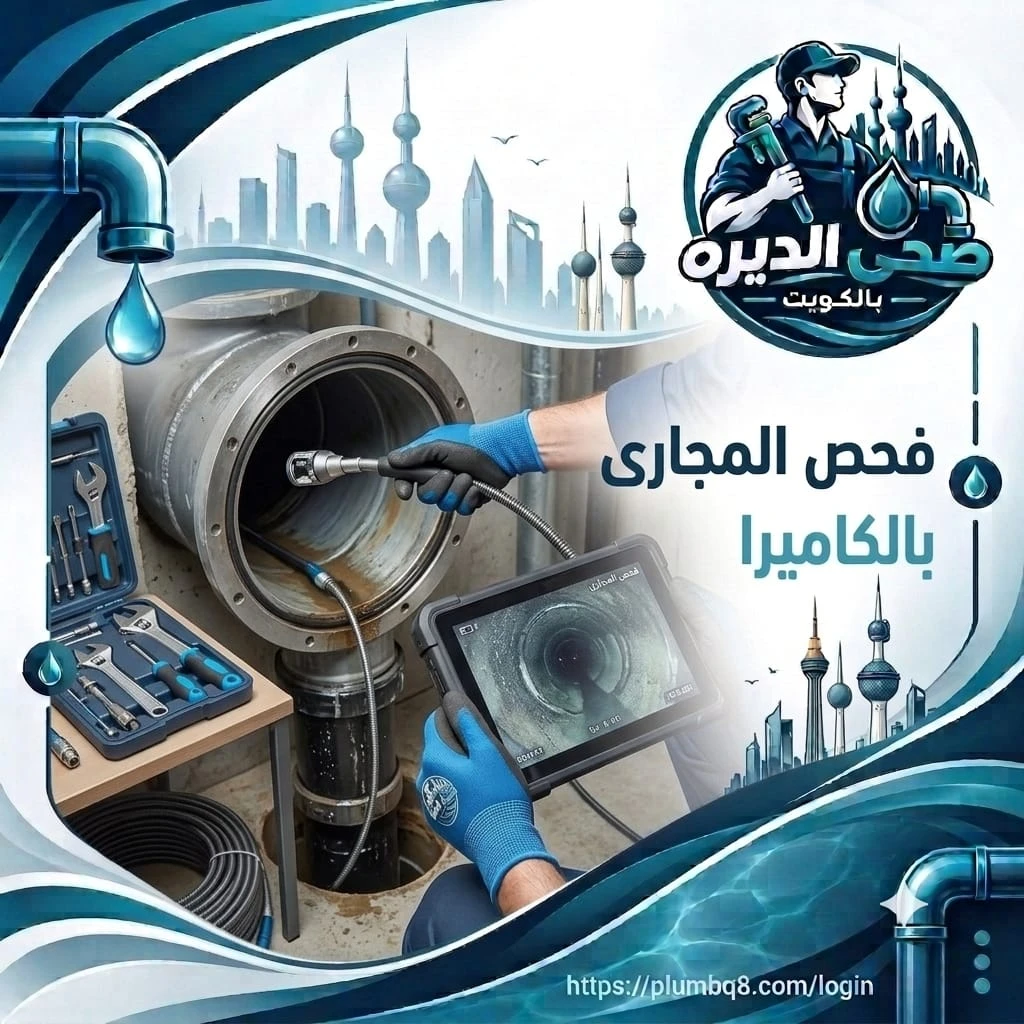
CCTV Drain Inspection in Kuwait
6 views
Filming inside the pipes to locate the cause and position of a blockage.
Sewer Camera Inspection
Sewer blockage symptoms may appear similar even when their underlying causes differ. Grease and sediment buildup can slow drainage, while a lodged object or damage to part of a pipe may cause wastewater to back up or blockages to recur after unblocking. Water emerging from a particular floor drain is not enough to identify the location of the problem, as the obstruction may be deeper inside the line. Sewer camera inspection helps examine accessible sections inside drainage pipes and identify the location of visible obstructions or damage before an appropriate treatment method is selected.
Sehi Al Deira provides sewer camera inspection services in Kuwait, including internal drainage pipe imaging, locating blockages, investigating recurring drainage problems, and identifying visible cracks and fractures in sections accessible to the camera. The service involves selecting a camera suitable for the pipe's diameter and route, then reviewing the images displayed or recorded during inspection to assess the condition of the line and the extent of the problem. The findings help determine whether the affected section requires unblocking, cleaning, further inspection, or repair.
Sewer Camera Inspection in Kuwait
Sewer camera inspection in Kuwait helps reveal the internal condition of a drainage line rather than relying solely on visible symptoms. Water may accumulate around a bathroom floor drain because of a nearby blockage or an obstruction in a shared line receiving wastewater from several fixtures. A blockage may also return after pipe cleaning if a lodged object or damaged section causes waste to accumulate repeatedly.
The service begins by reviewing the symptoms that appear when drains are used, identifying the line requiring inspection, and locating available access points, such as maintenance openings, inspection chambers, or accessible sections of the drainage connections.
Sehi Al Deira provides sewer camera inspection services in Kuwait, taking into account the pipe's diameter, length, condition, and the camera's ability to travel through the line.
The camera is inserted through a suitable access point, and the internal images are reviewed to identify accumulated deposits, obstructions, visible cracks, or changes in the pipe's route. If standing water or heavy deposits obstruct the view, the line may require preliminary unblocking or cleaning before the inspection can continue.
A camera inspection does not necessarily mean that the entire drainage network has been examined. The scope of the inspection depends on which sections are accessible, the cable length, and the camera's ability to pass through bends and obstructions inside the line.
Sewer camera inspection services in Kuwait include:
-
Reviewing blockage and slow drainage symptoms to identify the lines requiring internal inspection.
-
Selecting an appropriate camera entry point according to the pipe's route and available maintenance access.
-
Examining sections accessible to the camera to identify obstructions, deposits, and visible damage.
-
Identifying situations where preliminary cleaning is necessary to improve visibility inside the drainage line.
-
Explaining the inspection findings and the treatment required according to the condition observed inside the pipe.
Drainage Pipe Camera Imaging
Drainage pipe camera imaging makes it possible to examine internal sections of pipes that are difficult to access through an external inspection. A pipe may appear sound from the outside while deposits reduce its internal passage, an object becomes lodged at a bend, or an irregular connection affects the movement of waste through the line.
Drainage pipe camera imaging begins by identifying the pipe to be inspected and reviewing its diameter, route, and available access points. A camera is then selected that can travel through the line without damaging the pipe or its connections.
Sehi Al Deira provides drainage pipe camera imaging services to inspect accessible sections of the sewer network and identify visible problems within them.
During imaging, the camera feed helps distinguish between deposits on the pipe's inner wall and an obstruction occupying a substantial portion of the drainage passage. Changes in the shape of a connection, cracks in the pipe surface, or foreign objects inside the line may also become visible, helping determine the appropriate next step.
In pipes containing standing water or deposits that obscure the camera lens, the images may not be sufficient to assess the required section. In such cases, cleaning the line or removing the obstruction may be necessary before imaging is repeated, rather than making a diagnosis based on unclear footage.
Internal imaging also has limitations: it reveals sections visible to the camera lens but does not necessarily detect every problem outside the pipe or behind its wall.
Drainage pipe camera imaging services include:
-
Identifying the drainage line requiring imaging and selecting a suitable camera entry point.
-
Examining the pipe's inner wall, connections, and bends that the camera can reach.
-
Locating deposits, lodged objects, and visible changes in the pipe's shape.
-
Identifying sections that could not be examined because of obstructions, standing water, or limited access.
-
Using the imaging findings to determine whether unblocking, cleaning, or repair is necessary.
Detecting Sewer Blockages with a Camera
Sewer blockages may appear as slow drainage from several fixtures, rising water levels inside an inspection chamber, or wastewater backing up through a floor drain. However, these symptoms alone do not reveal the obstruction's location or nature. The blockage may be inside a branch pipe or a main line receiving wastewater from several fixtures.
Sewer blockage detection using a camera begins by identifying the affected drains and reviewing the direction of water flow and available access points. The line most likely to contain the obstruction is then inspected.
Sehi Al Deira provides camera-based sewer blockage detection services to locate visible obstructions inside pipes and assess their nature before an unblocking method is selected.
The camera may reveal a dense accumulation of deposits, a solid object lodged inside the pipe, or a narrowed section of the line. Identifying the type of obstruction helps determine the appropriate treatment because removing a solid object differs from cleaning grease buildup or dealing with a damaged pipe.
If the blockage is complete and prevents the camera from passing through, the obstruction may be located at the point reached by the lens. However, the condition of the sections beyond it cannot be confirmed without accessing them or removing the blockage first.
Finding an obstruction in one location does not rule out another blockage elsewhere in the network. If symptoms persist, the inspection may need to continue after the drainage passage has been reopened.
Camera-based sewer blockage detection services include:
-
Identifying the line likely to contain the blockage by reviewing the affected drains.
-
Inspecting the pipe from a suitable access point to the obstruction or the end of the accessible section.
-
Distinguishing between deposits, lodged objects, and visible narrowing of the drainage passage.
-
Determining whether preliminary unblocking is necessary when the camera cannot pass through the obstruction.
-
Re-examining the line after treatment when necessary to assess the section previously concealed by the blockage.
Drainage Pipe Inspection Camera
Drainage pipe inspection cameras vary in camera-head size, cable length, and their ability to travel through pipes and bends. A single camera is therefore not suitable for every sewer line. Inspecting a sink drainage pipe has different requirements from examining a large main line or a long external pipe.
Selecting a drainage pipe inspection camera begins by identifying the pipe's diameter, approximate length, and route, while reviewing access points that allow the device to be inserted without dismantling components unrelated to the problem.
Sehi Al Deira provides drainage pipe camera inspection services using equipment appropriate for the type of line being examined and the accessibility of its internal sections.
In narrow lines, the camera head must be compatible with the pipe's diameter and capable of passing through accessible bends. Larger lines may require a different imaging device that provides a clearer view of internal walls and connections.
The camera's built-in lighting may help reveal deposits, cracks, and lodged objects. However, image clarity is affected by cloudy water, grease adhering to the lens, and the condition of the pipe's internal surface.
The camera should not be forced forward when an obstruction or bend prevents it from passing through. Doing so may cause the device to become trapped or damage part of the connections. Another access point should be identified, or the obstruction should be treated before inspection continues when necessary.
Key considerations when using a drainage pipe inspection camera include:
-
Selecting a camera head compatible with the pipe's diameter and the type of drainage line being inspected.
-
Determining the length of the section requiring examination and whether the cable is suitable for the line's route.
-
Reviewing bends and access points that may affect the camera's movement inside the pipe.
-
Assessing image clarity while considering the effects of standing water and deposits on visibility.
-
Stopping when an obstruction prevents the device from passing through and determining an appropriate way to continue the inspection safely.
Locating Sewer Blockages
Locating a sewer blockage helps direct unblocking work toward the affected section rather than repeatedly attempting to clear drains far from the source of the problem. Wastewater may back up through a bathroom floor drain because of an obstruction in a shared line, even though the floor drain itself is clear. Similarly, water levels may rise inside an inspection chamber because of a blockage in the pipe connected to its outlet.
The service begins by reviewing the arrangement of drains and inspection chambers and the direction of water flow. An inspection point is then selected that provides access to the section likely to contain the obstruction.
Sehi Al Deira provides camera-based sewer blockage location services, relating the internal images to the drainage line's route and available access points.
When the camera reaches an obstruction, the length of inserted cable and the known pipe route can help estimate its location inside the line. However, pinpointing its position at ground level may require a locating device compatible with the camera. Cable length alone is not sufficient for precise positioning in lines with multiple bends or an unknown route.
If the blockage is located between two inspection chambers, comparing water levels and flow direction in the chambers with the camera findings may help narrow the search and identify the section requiring treatment.
If the pipe is buried or runs beneath the building's floors, its route should be verified before deciding to open the floor. The point where wastewater appears does not necessarily indicate the location of the obstruction beneath the surface.
Sewer blockage location services include:
-
Reviewing affected drains and inspection chambers to identify the line requiring examination.
-
Inserting the camera through a suitable access point and following its route to the obstruction.
-
Using the inserted cable length and known pipe route to estimate the blockage's location.
-
Using an additional locating method when precise positioning above a buried pipe is required, depending on the equipment available.
-
Identifying the section requiring unblocking, cleaning, or repair without assuming that the obstruction is located where wastewater appears.
Internal Drainage Line Inspection
Drainage lines may develop problems that are not visible during an external inspection, such as deposits accumulating at a bend, an irregular connection, or an object lodged inside the pipe. A line may continue to carry wastewater despite internal narrowing, with the problem eventually developing into a blockage when additional waste passes through.
Internal drainage line inspection begins by identifying the section requiring examination and reviewing available access points. A camera appropriate for the pipe's type and condition is then selected.
Sehi Al Deira provides internal drainage line inspection services to assess accessible sections and identify visible obstructions and changes affecting the flow of wastewater.
Internal imaging helps reveal the condition of the pipe's inner wall, connections, and bends. It may show deposits accumulating in a particular location or an object preventing normal water flow. Signs of damage may also become visible, indicating that further inspection is necessary before a repair method can be determined.
In some cases, the line may contain enough standing water or deposits to prevent clear images from being obtained. Preliminary cleaning or accessing the pipe from another point may be necessary before the inspection can continue.
It is important to distinguish between problems clearly visible to the camera and those that cannot be confirmed through internal imaging alone, such as the condition of the soil surrounding the pipe or a small leak with no clear internal indication.
Internal drainage line inspection services include:
-
Identifying the sections of the drainage network requiring examination and suitable access points.
-
Inspecting the inner walls, connections, and bends that the camera can reach.
-
Identifying deposits, obstructions, and visible changes that may affect drainage.
-
Explaining which sections could not be examined and whether cleaning or further inspection is necessary.
-
Using the findings to determine whether the line requires unblocking, cleaning, or repair.
Detecting Broken Drainage Pipes with a Camera
A broken or cracked drainage pipe may allow wastewater to leak into surrounding areas, soil and debris to enter the line, or blockages to recur at the damaged section. However, dampness on a wall or floor does not necessarily indicate a broken sewer pipe, as moisture may originate from another source requiring a separate investigation.
Detecting broken drainage pipes with a camera begins by identifying the line suspected of being damaged and reviewing the visible symptoms. Accessible internal sections are then imaged to look for visible fractures, cracks, and separated connections.
Sehi Al Deira provides drainage pipe camera inspection services to help identify visible internal damage and assess whether further investigation or repair is necessary.
The camera may reveal a crack in the pipe's inner wall, a separated joint, a change in the shape of the drainage passage, or roots and other materials entering through a damaged section. These images help identify the area requiring attention, although they do not always reveal the full extent of damage outside the pipe.
If the damaged area is submerged or concealed by deposits, it may not be sufficiently visible during the initial inspection. The line may need to be cleaned, or another inspection method may be required to establish the nature of the problem before repairs begin.
A decision to break the floor or replace a pipe section should not be based on dampness alone without verifying its source and the likely location of the damage.
Camera-based drainage pipe damage detection services include:
-
Identifying the pipe suspected of being damaged and reviewing the associated symptoms.
-
Imaging accessible internal sections to look for visible fractures, cracks, and separated connections.
-
Locating changes in the pipe's shape or external materials entering through a damaged section.
-
Explaining whether line cleaning or further inspection is necessary when visibility is insufficient.
-
Using the inspection findings to determine the appropriate repair area after the location of the damage has been verified.
Diagnosing Sewer Problems with a Camera
Sewer problems may produce similar symptoms despite having different causes. Slow drainage may result from grease buildup, a lodged object, or narrowing in part of a pipe. Wastewater may also back up because of a blockage in a shared line, while recurring problems may be associated with a damaged connection or a fault in the drainage route.
Diagnosing sewer problems with a camera begins by gathering information about the symptoms, including which drains are affected, when the problem occurs, and how often it returns. The lines requiring internal inspection are then identified.
Sehi Al Deira provides camera-based sewer problem diagnosis services to help distinguish between blockages, accumulated deposits, and visible pipe damage while determining appropriate treatment steps.
If the camera reveals deposits accumulating in a particular section, cleaning that section may be the appropriate next step. If a solid object is lodged inside the pipe, treatment may require accessing and removing it properly rather than pushing it deeper into the network.
When the images show a crack or a separated joint, the damaged section may need to be assessed to determine whether repair is necessary. If the camera does not reveal a clear cause, the entire network should not automatically be considered sound. Another line may need to be examined, or an additional diagnostic method may be required.
Reviewing the inspection findings alongside the actual symptoms helps avoid confusing the primary problem with minor deposits that may be visible inside the pipes but are not responsible for the fault.
Camera-based sewer problem diagnosis services include:
-
Reviewing the symptoms and identifying the drains and lines requiring inspection.
-
Examining accessible internal sections to look for obstructions, deposits, and visible damage.
-
Distinguishing between situations requiring cleaning or unblocking and those that may require repair.
-
Determining whether further inspection is necessary when the internal images are insufficient to confirm the cause.
-
Explaining the proposed treatment based on the inspection findings and the condition of the drainage network.
Sewer Network Camera Imaging
A property's sewer network consists of branch and main pipes, connections, and inspection chambers that carry wastewater from kitchens and bathrooms to the external drainage point. A problem may be limited to one line or affect several connected sections of the same network, making it important to determine the scope of imaging before the inspection begins.
Sewer network camera imaging begins by reviewing the arrangement of drains, pipes, and available inspection chambers. The sections requiring imaging are then identified according to the symptoms appearing inside or outside the building.
Sehi Al Deira provides camera imaging services for accessible sections of sewer networks within properties, determining the inspection scope according to pipe routes, access points, and the camera's ability to travel through the lines.
If the problem appears in only one bathroom, imaging the drainage line connected to that bathroom may be an appropriate starting point. However, if several bathrooms and kitchens are affected simultaneously, a main line or shared section of the network may need to be inspected before examining individual branches.
In properties with several inspection chambers, imaging from different access points may help examine sections that cannot be reached through a single opening, particularly where sharp bends or obstructions prevent the camera from passing through.
The entire network cannot be considered inspected simply because one of its lines has been imaged. The sections examined and those the camera could not reach should be clearly identified, particularly when assessing an older network or planning repair work.
Sewer network camera imaging services include:
-
Reviewing the arrangement of drainage lines and inspection chambers to determine the required imaging scope.
-
Selecting suitable access points to examine branch and main lines according to the nature of the problem.
-
Imaging accessible sections and identifying visible obstructions and damage within them.
-
Explaining the inspection's limitations and identifying sections that could not be examined because of unavailable access or an obstruction.
-
Using the imaging findings to determine cleaning, unblocking, or repair priorities within the network.
Investigating the Causes of Recurring Sewer Blockages
A sewer blockage may return after unblocking if deposits have not been completely removed, an object remains lodged inside the pipe, or damage to part of the line causes waste to accumulate repeatedly in the same location. Recurring problems may also be related to how drains are used or unsuitable materials entering the network. It is therefore important not to assume that every recurring blockage has the same cause.
Investigating recurring sewer blockages begins by reviewing the history of the problem, identifying affected drains, and determining whether the blockage returns to the same location or appears in several different drains. The line requiring internal camera imaging is then selected.
Sehi Al Deira provides camera inspection services to investigate recurring sewer blockages, examining accessible sections and identifying visible obstructions or damage that may explain why the problem returns.
If the camera reveals heavy deposits in a particular location, the affected section may need to be cleaned appropriately before its condition is reassessed. If a lodged object or an irregular connection where waste accumulates becomes visible, treatment may require a different approach from routine unblocking.
The camera may reveal standing water inside part of the pipe, but accurately determining the cause may require reviewing the line's slope and route. The presence of water alone is not sufficient to confirm that the pipe has sagged or establish the extent of the problem.
If the blockage returns despite the removal of visible obstructions, the inspection may need to be expanded to include a shared line or another section of the network. The nature of materials repeatedly entering the drains should also be reviewed.
Services for investigating recurring sewer blockages include:
-
Reviewing previous blockage locations and determining whether the problem repeatedly occurs in the same line.
-
Imaging accessible pipe sections to look for deposits, lodged objects, and visible damage.
-
Assessing the need for additional cleaning, removal of a persistent obstruction, or repair of a damaged section.
-
Identifying situations that require the pipe's slope or route to be examined using an appropriate method.
-
Explaining measures that may help reduce recurring blockages according to the cause identified during inspection.
Frequently Asked Questions About Sewer Camera Inspection
When do I need a sewer camera inspection?
A camera inspection may be useful when blockages recur after unblocking, slow drainage continues without an obvious cause, or a lodged object or damage inside a drainage pipe is suspected. The inspection helps examine accessible sections and determine the appropriate next treatment step.
Can a sewer camera locate a blockage precisely?
A camera helps identify the obstruction's position within the section of pipe it can reach. However, pinpointing its location at ground level or beneath floor tiles may require a locating device compatible with the camera, particularly when the line's route is unknown or contains several bends.
Can sewer camera inspection be performed without breaking the floor?
Inspection can be performed through maintenance openings, inspection chambers, or other suitable access points when they are available and allow the camera to pass through. However, some lines may require an additional access point if the device cannot be inserted through the existing connections.
Can a camera detect every broken drainage pipe?
A camera can reveal fractures, cracks, and separated connections in sections it can reach when visibility is sufficient. However, it cannot guarantee detection of every type of damage, particularly when the affected section is concealed by deposits or water or when the damage is located outside the pipe's inner wall.
Does the sewer line need to be unblocked before camera inspection?
Not in every case. The camera may be inserted directly when the pipe's route allows it. However, if a blockage prevents the camera from passing through or deposits and cloudy water obstruct the view, preliminary unblocking or cleaning may be necessary before the inspection can continue.
Can camera imaging identify the cause of wastewater backflow?
Imaging may help identify a visible blockage or obstruction inside the line that explains the backflow. However, if the cause does not appear in the section examined, other lines may need to be inspected, or the shared drainage network may need to be reviewed to identify the source of the problem.
Can the entire sewer network be imaged with a camera?
This depends on the arrangement of the lines, access points, pipe diameters and lengths, and the camera's ability to travel through them. Imaging the network may require more than one entry point, with a clear explanation of which sections were examined and which could not be reached.
What happens after a problem is detected with the camera?
The next step depends on the inspection findings. The pipe may require unblocking or cleaning to remove deposits, removal of a lodged object, or repair of a damaged section. If the images are insufficient to confirm the cause, further inspection may be necessary before a treatment method is selected.
Is sewer camera inspection useful when blockages recur after cleaning?
Yes. It may help determine whether deposits remain, an object is lodged inside the pipe, or visible damage is present in part of the line. If no clear cause appears, the inspection may need to be expanded, or the pipe's route and the way the drains are used may need to be reviewed.
Request Sewer Camera Inspection from Sehi Al Deira
If you are experiencing recurring sewer blockages, slow drainage, or wastewater backflow, or need to assess the condition of a buried pipe before repair work begins, you can request Sehi Al Deira's sewer camera inspection service. The inspection will help identify the sections requiring examination and determine an appropriate method according to the drainage network's route and available access points.
Sehi Al Deira provides sewer camera inspection services in Kuwait, from drainage pipe imaging and locating blockages to examining visible fractures and cracks and investigating the causes of recurring sewer problems, with an explanation of the inspection findings and the treatment required according to the condition of the drainage network.