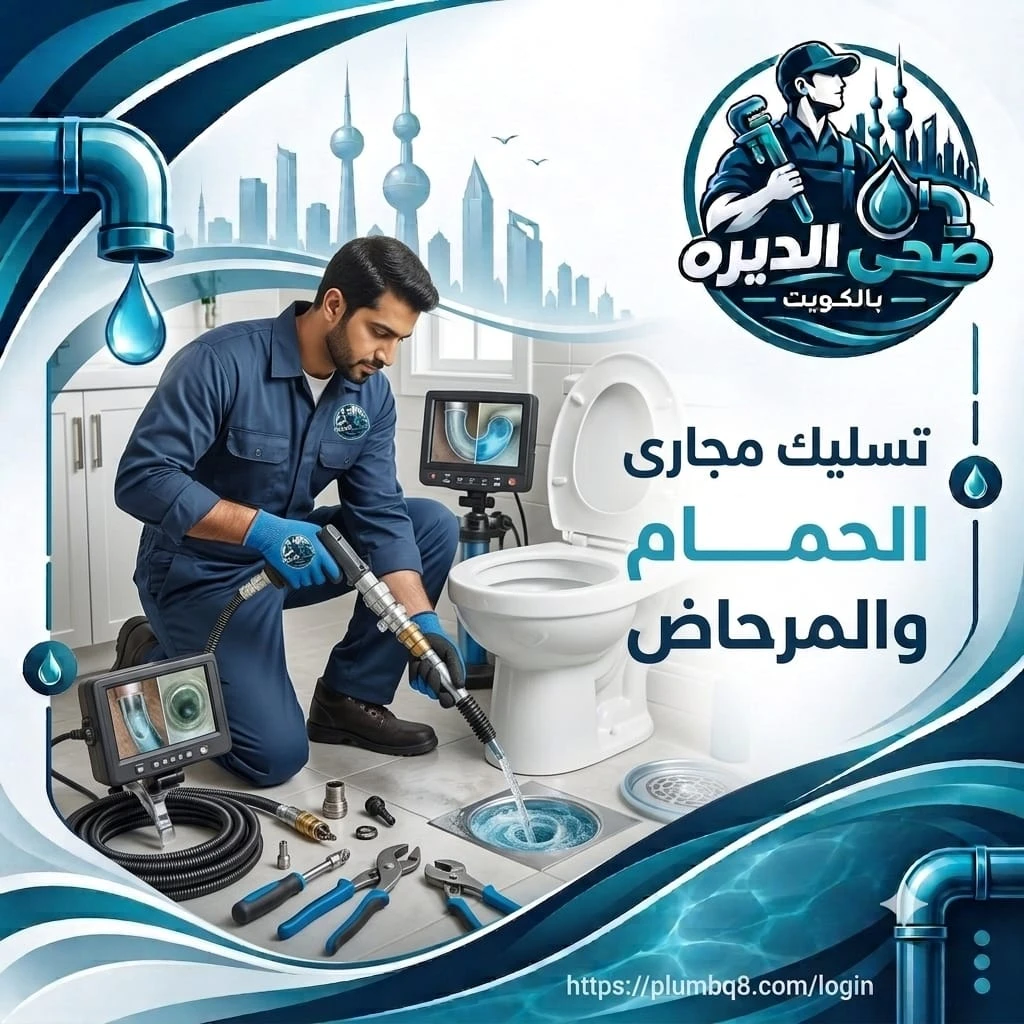
Bathroom & Toilet Drain Unclogging in Kuwait
12 views
Unclogging bathroom and toilet drains and restoring flow.
Bathroom and Toilet Drain Unblocking
Blocked bathroom and toilet drains can disrupt the use of a bathroom, whether the problem appears as slow drainage from the sink or floor drain, rising water levels inside the toilet bowl, or wastewater backing up from a drain. The causes of blockages vary according to the location of the obstruction and the nature of the materials accumulated inside the pipes. The problem may result from hair and sediment buildup, an unsuitable object entering the toilet, or a blockage in a shared drainage line. Identifying the location of the obstruction is therefore essential before selecting an appropriate unblocking method.
Sehi Al Deira provides bathroom and toilet drain unblocking services in Kuwait, including inspecting blocked toilets, opening floor drains, cleaning drainage pipes, and treating water backflow and slow drainage. The service involves inspecting accessible sections of the drainage network and determining whether the problem is limited to one fixture or extends into its connected drainage line. An appropriate treatment method is then selected according to the condition of the pipes and connections, followed by testing water drainage after the work is completed.
Bathroom Drain Unblocking in Kuwait
A bathroom drainage blockage may appear in several places, such as water accumulating around the floor drain, slow drainage from the sink, or rising water levels inside the toilet. The blockage may be limited to one fixture, while several drains being affected at the same time may indicate an obstruction in a shared section of the drainage network.
Bathroom drain unblocking in Kuwait begins by inspecting the affected drains and identifying when the problem occurs, whether during sink use, showering, or toilet flushing. This helps identify the section where the blockage is likely to be located before unblocking tools are used.
Sehi Al Deira provides bathroom drain unblocking services in Kuwait, inspecting the condition of pipes, traps, and floor drains to determine the appropriate treatment method for the nature of the obstruction.
If water accumulates around the floor drain only during showering, the blockage may be close to the drain opening or inside the shower drainage line. However, if water rises from the floor drain when the toilet is flushed, this may indicate a blockage in a shared line receiving water from more than one fixture.
In residential buildings, some bathrooms may be affected by a blockage in a drainage line shared by several units. In this situation, water may continue to back up even after the affected bathroom fixtures are no longer being used. The extent of the problem must therefore be identified, and coordination with building management may be necessary.
Bathroom drain unblocking services in Kuwait include:
-
Inspecting the toilet, sink, shower, and floor drain to identify the affected drainage points.
-
Distinguishing between a localized blockage in one fixture and an obstruction within a shared drainage line.
-
Removing visible waste and cleaning accessible components when an obstruction is close to the drainage opening.
-
Using unblocking tools appropriate for the nature of the blockage and the condition of the pipes and connections.
-
Testing water drainage from the affected fixtures after treatment to confirm that slow drainage or backflow has stopped.
Blocked Toilet Unblocking in Kuwait
A toilet may become blocked when excessive amounts of paper, materials that do not break down easily, or a solid object enter the drainage passage. This may cause water levels inside the bowl to rise or prevent normal flushing. Repeatedly flushing a blocked toilet may cause water to overflow, particularly when the obstruction completely prevents drainage.
Blocked toilet unblocking in Kuwait begins by checking the water level inside the bowl and determining whether the blockage is limited to the toilet or also affects the floor drain and nearby drainage points.
Sehi Al Deira provides blocked toilet inspection and unblocking services in Kuwait, selecting an obstruction removal method according to its location and nature and the condition of the toilet outlet and connected drainage line.
If the obstruction is close to the toilet outlet, a specialized toilet unblocking tool may be used without removing the fixture. However, if a solid object is lodged in a difficult-to-reach location, a different procedure may be required to avoid pushing it deeper into the drainage network.
Repeatedly operating the flushing mechanism when the water level inside the toilet is high is not recommended. Sharp metal tools that may scratch the toilet's internal surface or damage its components should also be avoided.
After removing the blockage, water drainage should be tested to confirm that no leakage appears around the toilet base and that water does not back up from nearby drains.
Blocked toilet unblocking services in Kuwait include:
-
Checking the water level inside the toilet and determining whether the blockage is limited to the fixture or extends into the drainage line.
-
Using specialized toilet unblocking tools when they are suitable for the location and nature of the obstruction.
-
Identifying situations that require accessing a lodged solid object rather than pushing it farther into the pipe.
-
Reviewing the toilet outlet and mounting base when the fixture needs to be removed or reinstalled.
-
Testing flushing and drainage after treatment to confirm that the blockage does not persist and no leakage has appeared.
Clearing a Blocked Toilet Bowl
A blocked toilet bowl differs from a blocked floor drain or sink drain because the toilet's internal drainage passage contains bends designed to retain a water seal that prevents sewer odors from entering the bathroom. Some objects or waste materials may become lodged within this passage before reaching the sewer pipe, requiring a tool suitable for the fixture.
Clearing a blocked toilet bowl begins by observing how water behaves during flushing and determining whether it rises inside the bowl before draining slowly, remains at a high level without draining, or is accompanied by water backing up from another drain.
Sehi Al Deira provides toilet bowl blockage removal services, locating the obstruction and selecting an appropriate unblocking method without using tools that could damage the toilet surface or its connections.
When the blockage is close to the toilet outlet, it may be treated using a tool designed specifically for toilets. However, if a solid object is lodged within the internal passage, treatment may require accessing it appropriately rather than attempting to force it into the drainage line.
If leakage appears around the toilet base after unblocking attempts or during use, the drainage connection and seal at the base should be inspected. The problem may involve a faulty connection between the toilet and the drainage pipe.
Strong chemical products should not be used indiscriminately inside a blocked toilet, particularly when water is standing in the bowl, as this may expose anyone working on the fixture afterward to irritating or hazardous substances.
Toilet bowl blockage removal services include:
-
Identifying the likely location of the obstruction within the toilet's internal passage or at its connection to the drainage line.
-
Using tools suitable for the toilet without scratching its surface or damaging its components.
-
Handling lodged objects according to their location and accessibility.
-
Inspecting the drainage connection and toilet base when leakage accompanies the blockage.
-
Testing water drainage after removing the obstruction to confirm normal flushing and the absence of backflow.
Bathroom Drain Unblocking Technician
Bathroom drain unblocking requires identifying the section responsible for the problem before treatment begins. Slow sink drainage may result from hair accumulating inside the trap, while water backing up from a floor drain may be connected to a blockage deeper within the line. Inspecting the affected fixtures helps avoid using unsuitable tools or treating a section of the network that is functioning normally.
A bathroom drain unblocking technician begins by reviewing the symptoms that appear when the toilet, sink, shower, and floor drain are used. The next step is to determine whether the problem involves one drain or several drainage points connected to the same line.
Sehi Al Deira provides bathroom drainage inspection and unblocking services, selecting a treatment method according to the nature of the blockage, the condition of the pipes and connections, and the available access points.
If water accumulates on the bathroom floor during showering, the obstruction may be close to the floor drain grate or inside the shower drainage line. However, if backflow appears when the toilet is used, the drainage line receiving water from several fixtures may need to be inspected.
If chemical drain cleaners have previously been used, the technician should be informed before work begins. Dismantling the trap or using unblocking tools may otherwise result in contact with irritating substances or cause them to splash.
After treatment, water drainage should be tested from the affected points, and any connections that were dismantled or cleaned should be reviewed to confirm that no new leakage has appeared.
Bathroom drain unblocking technician services include:
-
Inspecting the toilet, sink, shower, and floor drain to determine the extent of the blockage.
-
Determining whether the problem is limited to a fixture's trap or located within a shared drainage line.
-
Cleaning accessible components and using suitable unblocking tools for deeper obstructions.
-
Following safety precautions when wastewater has backed up or chemical products have previously been used.
-
Testing drainage and reviewing connections after treatment to confirm that the problem has been resolved without causing leakage.
Treating Toilet Water Backflow
Toilet water backflow may occur when water and waste cannot pass normally through the drainage passage. This may cause the water level inside the bowl to rise or wastewater to emerge from a floor drain connected to the same line. The cause may be a blockage inside the toilet, in its connected pipe, or in a shared line receiving wastewater from several fixtures.
Treating toilet water backflow begins by identifying where the water appears and when the backflow occurs, whether during flushing or when the sink, shower, or other fixtures connected to the drainage network are used.
Sehi Al Deira provides toilet water backflow inspection and treatment services, locating the blockage and selecting an unblocking method appropriate for the condition of the drainage line.
If the water level inside the toilet rises when it is flushed, flushing should not be repeated, as this may cause water to overflow from the bowl. However, if water emerges from the floor drain when the toilet is used, this may indicate an obstruction in a shared section of the drainage line.
In buildings with a shared drainage network, backflow may continue because other units connected to the affected line are still being used. Coordination with building management may therefore be necessary to identify the extent of the problem and arrange appropriate treatment.
Contact with backed-up wastewater should be minimized, and children and pets should be kept away from the affected area. The affected drains should also not be used until the blockage has been treated.
Toilet water backflow treatment services include:
-
Determining whether water backs up inside the toilet bowl or emerges from a floor drain connected to the drainage line.
-
Inspecting the toilet outlet and its connected pipe to identify the likely location of the blockage.
-
Reviewing shared lines when several fixtures are affected or backflow continues without the toilet being used.
-
Treating the obstruction using a method appropriate for the nature of the blockage and the condition of the pipes.
-
Testing water drainage after unblocking to confirm that backflow has stopped during normal use.
Bathroom Drainage System Unblocking
Bathroom fixtures connect to a drainage network that may contain separate lines for the sink, shower, and toilet before they meet in a shared section. A blockage may therefore appear at one drainage point or affect several fixtures, depending on its location within the network. Understanding these connections helps identify the appropriate unblocking point instead of treating each drain separately without determining the cause.
Bathroom drainage system unblocking begins by inspecting the affected fixtures and reviewing accessible drainage routes. The next step is to determine whether the blockage is located inside a trap, a branch connection, or a shared drainage line.
Sehi Al Deira provides bathroom drainage system unblocking services, including treating blocked sinks, floor drains, and toilets according to the nature of the problem and the condition of the network.
When only the sink drains slowly, the obstruction may be inside the trap or a nearby connection. However, if water accumulates on the bathroom floor during showering, the problem may involve the floor drain or its connected drainage line.
If several fixtures are affected simultaneously, the shared line may need to be inspected and an appropriate access point identified to treat the blockage without dismantling components unrelated to the problem.
After unblocking, every drainage point affected by the fault should be tested. Restored drainage in one fixture does not necessarily confirm that the blockage has been resolved throughout the network.
Bathroom drainage system unblocking services include:
-
Inspecting the sink, shower, toilet, and floor drains to identify the affected sections.
-
Locating the blockage in relation to branch connections and shared drainage lines.
-
Cleaning traps and accessible components when an obstruction is close to a fixture.
-
Using suitable unblocking equipment for obstructions located inside drainage pipes.
-
Testing affected drainage points after treatment to confirm normal water flow and the absence of continuing backflow.
Opening a Blocked Bathroom Floor Drain
A blocked bathroom floor drain may cause water to accumulate on the floor during showering or bathroom cleaning. Unpleasant odors may also appear when waste accumulates inside the drainage opening. The causes vary according to the design and location of the floor drain. Hair and deposits may collect near the grate, or the obstruction may be located inside the trap or connected pipe.
Opening a blocked bathroom floor drain begins by inspecting the grate and accessible components to determine whether the blockage is close to the drainage opening or deeper within the network.
Sehi Al Deira provides blocked bathroom floor drain opening services, selecting an obstruction removal method according to the nature of the accumulations and the condition of the drain and its connected line.
If the obstruction consists of hair and waste collected near the grate, removing these materials and cleaning the accessible section may be sufficient. However, if water continues to accumulate after cleaning, the trap or the pipe connected to the floor drain may need to be inspected.
When water backs up from the floor drain as the toilet or sink is used, the blockage may be in a shared line rather than inside the floor drain itself. The source of the problem should therefore be identified before repeated unblocking attempts are made through the floor opening.
Sharp tools should not be inserted into the floor drain, and different chemical products should not be used indiscriminately, as this may damage internal components or expose people to hazardous substances during treatment.
Blocked bathroom floor drain opening services include:
-
Inspecting the drain grate and accessible components to locate accumulated material.
-
Removing visible hair and waste and cleaning the section close to the drainage opening.
-
Inspecting the trap and connected pipe when water continues to accumulate.
-
Identifying situations in which backflow results from a blockage in a shared line.
-
Testing water drainage after unblocking to confirm that water no longer continues accumulating on the bathroom floor.
Toilet Drain Pipe Cleaning
Waste materials may accumulate inside a toilet drainage pipe, or an unsuitable object may become lodged in one of its sections, causing weak drainage or recurring blockages. The problem may be close to the toilet outlet or farther along the line, making it necessary to locate the obstruction before selecting an appropriate cleaning method.
Toilet drain pipe cleaning begins by observing how water behaves during flushing and reviewing whether the problem affects only the toilet or extends to other floor drains and drainage points.
Sehi Al Deira provides toilet drainage pipe inspection and cleaning services, determining the treatment method according to the nature of the obstruction, the condition of the pipe, and accessibility of the affected section.
If the obstruction is within the toilet bowl's internal passage, treatment may require a tool designed specifically for toilets. However, if it is located inside the drainage pipe, accessing it from a suitable point and using unblocking equipment compatible with the line's diameter and material may be necessary.
Using unsuitable metal tools or attempting to force a solid object into the pipe is not recommended. Doing so may move the object into a deeper section or damage parts of the drainage network.
When a blockage repeatedly occurs in the same location, the pipe route may need to be inspected to determine whether a lodged object, damage, or a problem with the line's slope is affecting water flow.
Toilet drain pipe cleaning services include:
-
Inspecting blockage symptoms and determining whether the obstruction is inside the toilet or its connected pipe.
-
Selecting cleaning and unblocking tools appropriate for the diameter and condition of the drainage line.
-
Removing accessible waste and obstructions without pushing solid objects into deeper sections of the network.
-
Reviewing the pipe route when blockages recur or weak drainage continues.
-
Testing water flow after cleaning to confirm normal toilet operation and the absence of backflow.
Solutions for Slow Bathroom Drainage
Slow bathroom drainage may affect the sink, shower, or floor drain. It may be accompanied by water accumulating for longer than usual or sounds coming from the drain during use. Identifying the cause depends on knowing which fixture is affected and whether the problem appears when one drainage point or several connected points are used.
Solving slow bathroom drainage begins by reviewing the drainage rate of each affected fixture, followed by inspecting nearby traps, grates, and connections to determine whether deposits are present in an accessible section.
Sehi Al Deira provides bathroom drainage inspection and treatment services, locating restrictions within the drainage line and selecting an appropriate cleaning or unblocking method.
If slow drainage is limited to the sink, the problem may result from hair and deposits accumulating inside the trap. However, if water accumulates around the floor drain during showering, the obstruction may be close to the grate or inside the shower drainage line.
When several fixtures drain slowly, this may indicate a restriction or partial blockage in a shared line. This situation may require a broader inspection rather than cleaning each trap separately.
Repeatedly using chemical drain cleaners without identifying the cause should also be avoided. Slow drainage may result from a lodged object or a problem with the pipe's route that these products cannot resolve.
Services for solving slow bathroom drainage include:
-
Inspecting the drainage rate of the sink, shower, and floor drain to determine the extent of the problem.
-
Cleaning grates, traps, and accessible components when deposits are present inside them.
-
Inspecting the drainage line when slow drainage continues after components near the fixtures have been cleaned.
-
Determining whether the problem affects one drainage point or several points connected to a shared line.
-
Testing drainage after treatment to confirm improved water flow and the absence of continuing water accumulation.
Treating Toilet Blockages Without Breaking Tiles
Some toilet blockages can be treated without breaking floor tiles or walls, particularly when the obstruction is inside the toilet's internal passage or in a section of the drainage line that can be accessed using suitable unblocking tools. However, avoiding structural opening work cannot be guaranteed in every case. Some problems may result from a damaged concealed pipe, an object lodged in a difficult-to-reach location, or a fault in the drainage network's route.
Treating toilet blockages without breaking tiles begins by inspecting the symptoms and determining whether the blockage is limited to the toilet bowl or extends into its connected drainage line. Available access points are then reviewed before selecting a treatment method.
Sehi Al Deira provides toilet inspection and unblocking services, prioritizing treatment methods that do not require breaking tiles when the nature of the obstruction and the condition of the pipework allow it.
If the blockage is close to the toilet outlet, a specialized unblocking tool may remove the obstruction without dismantling the fixture. However, if a solid object is lodged within the toilet's internal passage, treatment may require removing the toilet to access it. This does not necessarily mean that the floor must be broken.
When a blockage results from a damaged pipe or a collapsed section of the drainage line, unblocking alone may not be sufficient. Treatment may require accessing and repairing the damaged section. The necessary work is determined after inspecting the location of the problem and the condition of the network.
After removing the obstruction, water drainage should be tested, and the toilet base and any serviced connections should be reviewed to confirm that no leakage or continuing backflow has appeared.
Services for treating toilet blockages without breaking tiles include:
-
Inspecting the toilet and drainage line to locate the obstruction and determine whether it can be accessed.
-
Using specialized unblocking tools when the blockage can be treated without dismantling the fixture.
-
Identifying situations that require removing the toilet to access a lodged object without breaking floor tiles.
-
Explaining the need for additional opening or repair work if the blockage is associated with damage to a concealed pipe.
-
Testing flushing and drainage after treatment and reviewing the tightness of the toilet base and connections.
Frequently Asked Questions About Bathroom and Toilet Drain Unblocking
What causes bathroom drains to become blocked repeatedly?
Recurring blockages may result from hair and sediment accumulating inside drains, unsuitable objects entering the toilet, or an obstruction within a shared drainage line. Repeated problems may also be associated with damage to part of a pipe or a fault in its route. The cause should therefore be identified if the blockage returns after unblocking.
What should I do if the water level inside the toilet rises?
Stop operating the flushing mechanism to prevent water from overflowing from the bowl. If water also backs up from the floor drain or other drainage points, avoid using fixtures connected to the affected line until the blockage has been located and treated.
Can a toilet be unblocked without removing it?
Yes. Some blockages can be treated using specialized toilet unblocking tools without removing the fixture, particularly when the obstruction is close to the toilet outlet. However, lodged solid objects or difficult-to-reach blockages may require a different procedure after inspection.
Why does water back up from the bathroom floor drain when the toilet is flushed?
Water backing up from the floor drain when the toilet is used may indicate a blockage in a shared section of the drainage line receiving water from both fixtures. The location of the obstruction must be identified before selecting an appropriate unblocking method.
Can a blocked toilet be treated without breaking the floor tiles?
Many blockages can be treated using unblocking tools or by accessing the obstruction through removal of the toilet when necessary, without breaking the floor tiles. However, if the problem results from a damaged concealed pipe or a collapsed section of the drainage line, repair may require access to the damaged section.
Are chemical drain cleaners suitable for a blocked toilet?
Using these products indiscriminately or mixing different types is not recommended, particularly when water is standing inside the toilet. They may expose anyone attempting to unblock the fixture to irritating or hazardous substances. The technician should be informed if any chemical product has previously been used.
When is a bathroom blockage connected to a shared drainage line?
Several drains being affected simultaneously, water backing up from the floor drain when the toilet is used, or backflow continuing without any bathroom fixtures being used may indicate a problem in a shared line. Identifying this requires inspecting the drains and connections associated with the network.
How can I reduce the risk of recurring bathroom drain blockages?
Avoiding the disposal of wet wipes and other unsuitable materials in the toilet and removing visible hair and waste from drain grates can help reduce the likelihood of blockages. If the problem continues despite these precautions, the drainage line should be inspected to determine whether there is a persistent obstruction or a problem with the pipe.
Request Bathroom and Toilet Drain Unblocking from Sehi Al Deira
If you are experiencing a blocked toilet, slow drainage from the sink or shower, water accumulating around the floor drain, or wastewater backing up, you can request Sehi Al Deira's services to inspect the drainage network, locate the blockage, and select an appropriate unblocking method according to the condition of the pipes and affected fixtures.
Sehi Al Deira provides bathroom and toilet drain unblocking services in Kuwait, from clearing blocked toilet bowls and cleaning floor drains and drainage pipes to treating slow drainage and water backflow, with drainage system testing after the work is completed.