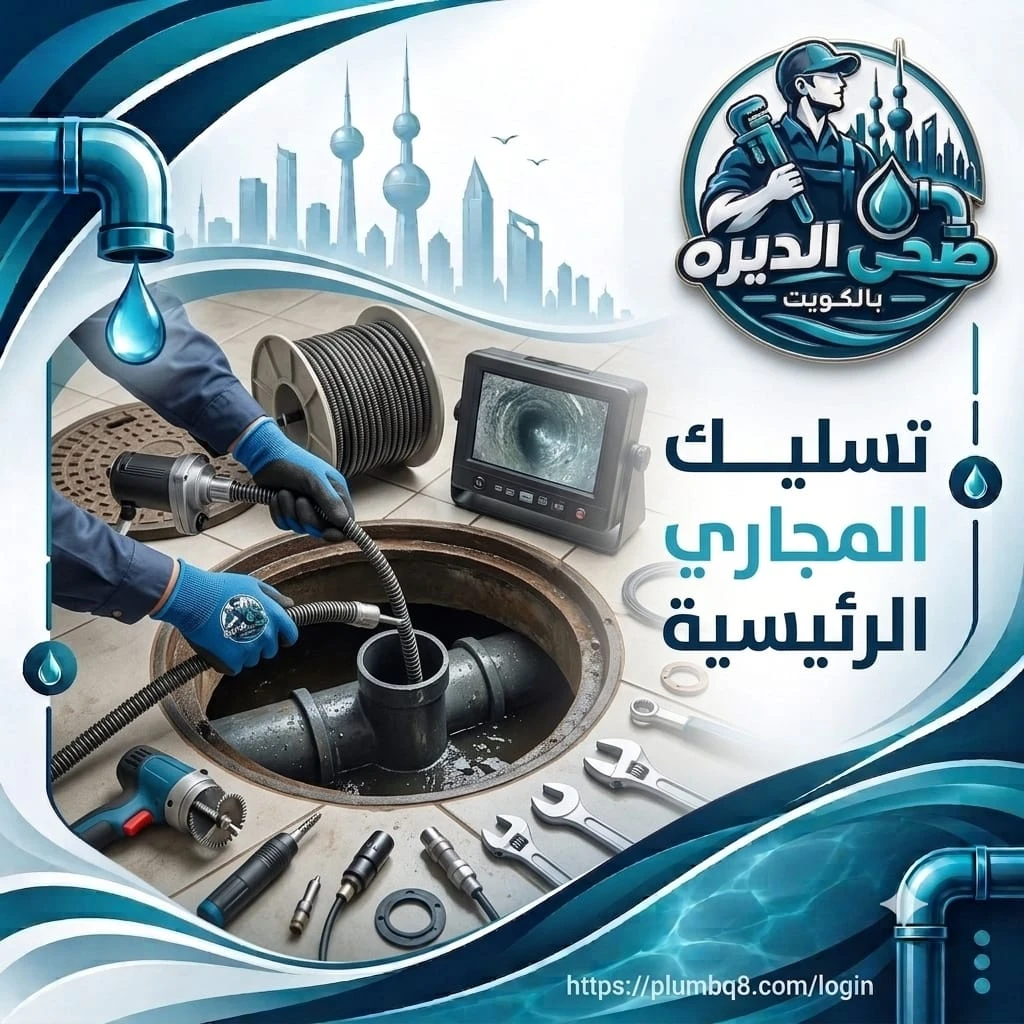
Main Sewer Line Unclogging in Kuwait
4 views
Clearing the building’s main sewer line.
Main Sewer Line Unblocking
A blockage in the main sewer line can affect more than one bathroom or kitchen within a home. Its impact may extend to several residential units if the obstruction is located in a shared drainage line within an apartment building. The problem commonly appears as slow drainage from several fixtures, wastewater backing up through floor drains, or sewage overflowing from an external inspection chamber. Treating the blockage requires identifying its location and nature and assessing the condition of the pipes and inspection chambers. The problem may result from accumulated deposits, a lodged object, or damage to part of the drainage network.
Sehi Al Deira provides main sewer line unblocking services in Kuwait, including inspecting internal and external drainage lines, clearing obstructions inside main pipes, cleaning affected sections of the network, and treating sewage overflow. The service begins by determining the extent of the problem and identifying the affected drainage points. An appropriate unblocking method is then selected according to the condition of the line and the location of the obstruction, followed by drainage testing to confirm that water flow has been restored and backflow does not continue.
Main Sewer Line Unblocking in Kuwait
A blockage in the main sewer line differs from a localized obstruction inside a sink trap or bathroom floor drain because it may affect several fixtures connected to the same drainage line. Wastewater may back up through a floor drain when the toilet is flushed, drainage from the kitchen and bathroom sinks may slow down simultaneously, or the wastewater level inside an inspection chamber may rise because of an obstruction in a line receiving water from several parts of the building.
Main sewer line unblocking in Kuwait begins by inspecting the affected drains and identifying how they connect to the main drainage line. Inspection chambers and available access points are then reviewed to determine the section where the blockage is likely to be located.
Sehi Al Deira provides main sewer line inspection and unblocking services in Kuwait, selecting a treatment method according to the nature of the obstruction and the condition of the pipes, connections, and drainage network.
If the blockage is located inside a main line serving an entire home, wastewater may continue to back up through one drain when another fixture is used, even if the drain where the water appears is functioning normally. The obstruction must therefore be located within the shared line rather than repeatedly attempting to unblock each floor drain separately.
If the problem involves a full inspection chamber or a damaged external pipe, the route of the line and the condition of the chamber may need to be examined before selecting an unblocking method, particularly when overflow continues or wastewater leaks into the surrounding soil.
Main sewer line unblocking services in Kuwait include:
-
Inspecting affected drains and determining whether the blockage is located in a main or branch drainage line.
-
Reviewing inspection chambers and available access points to identify the likely location of the obstruction.
-
Selecting unblocking equipment suitable for the pipe's diameter, material, and the condition of its connections.
-
Treating the blockage and testing water flow from drainage points connected to the line.
-
Identifying situations that require additional cleaning or repair of a damaged section of the sewer network.
Opening the Main Sewer Line
A blocked main sewer line may prevent water from draining from several fixtures inside a home because wastewater from bathrooms and kitchens cannot pass freely into the external drainage network. The blockage may develop gradually as deposits accumulate or occur suddenly when a solid object becomes lodged or part of the pipe is damaged.
Opening the main sewer line begins by locating the blockage in relation to inspection chambers and branch connections. The condition of the pipe and its access points is then reviewed before an unblocking method is selected.
Sehi Al Deira provides main sewer line opening services, determining the appropriate treatment method according to the location of the obstruction and the nature of the materials accumulated inside the line.
If water accumulates in an inspection chamber close to the building while the next chamber along the drainage route does not show a similar rise in water level, this may help identify the section where the blockage is likely to be located. The direction of flow and the arrangement of connections between the chambers must also be considered.
Some blockages may require suitable mechanical unblocking equipment to reach the obstruction, while cases involving accumulated deposits may require cleaning the affected section of the line. However, if the cause is a collapsed pipe section or a disconnected joint, temporarily reopening the passage does not eliminate the need to repair the damage.
After the line has been opened, drainage from the connected fixtures should be tested, and inspection chambers should be reviewed to confirm that water levels have fallen and flow has been restored without continuing overflow.
Main sewer line opening services include:
-
Locating the blockage in relation to inspection chambers and branch connections.
-
Inspecting the condition of the pipe and its access points before selecting unblocking equipment.
-
Removing the obstruction using a method appropriate for its nature and location within the line.
-
Identifying the need to repair a damaged section when pipe damage prevents normal drainage.
-
Testing water flow after opening the line and reviewing the connected inspection chambers.
Main Drainage Line Cleaning
A main drainage line may continue to carry water despite deposits accumulating on its inner walls. However, these accumulations can reduce the available passage and increase the likelihood of a blockage when additional waste passes through the pipe. Cleaning the main line therefore differs from removing a localized obstruction, as cleaning aims to treat deposits in the affected section according to their nature and the condition of the pipe.
Main drainage line cleaning begins by examining the symptoms and reviewing inspection chambers and access points. The next step is to determine whether the line is completely blocked or partially restricted by accumulated materials.
Sehi Al Deira provides main drainage line cleaning services, selecting an appropriate cleaning method according to the pipe's diameter, material, condition, and the nature of the deposits.
Grease and other deposits may accumulate in sections receiving kitchen wastewater, while sand or solid waste may collect elsewhere in the network. The type of accumulation should be identified before selecting a cleaning method because removing grease differs from dealing with a lodged solid object or a damaged pipe.
Using high pressure indiscriminately inside an old or cracked line is not recommended, as it may worsen damage to connections or cause water to escape through weakened sections. A sagging pipe or an incorrect pipe slope may also cause deposits to continue accumulating even after cleaning.
After cleaning, water flow should be tested, and accessible sections of the line should be reviewed to determine whether the deposits have been adequately removed or further inspection is necessary.
Main drainage line cleaning services include:
-
Inspecting the line and identifying deposit accumulations that affect water flow.
-
Reviewing inspection chambers and access points to select an appropriate cleaning method.
-
Treating accumulations according to their nature without using equipment unsuitable for the condition of the pipe.
-
Testing drainage after cleaning and reviewing water levels inside inspection chambers.
-
Identifying possible causes of recurring deposits when the problem continues in the same location.
Main Sewer Line Unblocking Technician
Dealing with a main sewer line blockage requires an understanding of the drainage network and the connections between internal drains, inspection chambers, and external lines. Wastewater appearing at a particular point does not necessarily mean that the blockage is located there. Unblocking a branch drain without identifying the main obstruction may allow the problem to continue or return when other fixtures are used.
A main sewer line unblocking technician begins by reviewing symptoms inside and outside the building, determining the number of affected drains, and inspecting inspection chambers and available access points.
Sehi Al Deira provides main sewer line inspection and unblocking services, determining the treatment method according to the location of the blockage, the nature of the obstruction, and the condition of the drainage network.
If several bathrooms and kitchens are affected simultaneously, the obstruction may be located in a shared line receiving wastewater from those fixtures. If overflow appears from an external inspection chamber, the section between chambers may need to be identified, or the connection between the building's drainage line and the external network may need to be reviewed.
Safety precautions must be followed when dealing with inspection chambers and wastewater. This includes avoiding entry into confined spaces or attempting to descend into sewer chambers without specialized procedures and equipment, as these spaces may contain hazardous gases or have insufficient oxygen.
After treatment, affected drainage points should be tested, and inspection chambers should be reviewed to confirm that flow has been restored and water no longer accumulates or backs up.
Main sewer line unblocking technician services include:
-
Inspecting the drainage network and identifying the relationship between internal drains and the main line.
-
Reviewing inspection chambers and access points to identify the likely location of the blockage.
-
Selecting unblocking equipment appropriate for the nature of the obstruction and the condition of the pipes.
-
Following safety precautions when handling wastewater and working around inspection chambers.
-
Testing water flow after treatment and determining whether additional cleaning or repair of a damaged section is necessary.
Treating Main Sewer Line Blockages
Main sewer line blockages may result from grease, deposits, and waste accumulating inside the line, a solid object obstructing water flow, or damage to part of the pipe that narrows the passage. The appropriate treatment depends on the cause because removing a temporary obstruction does not resolve an ongoing problem with the drainage route or the condition of the pipes.
Treating main sewer line blockages begins by determining the extent of the problem and the likely location of the obstruction. Inspection chambers and connections associated with the line are then examined to identify an appropriate treatment method.
Sehi Al Deira provides main sewer line blockage treatment services, taking into account the condition of the pipes and connections and the nature of the materials accumulated inside the network.
If the blockage results from deposits accumulating in a particular section, treatment may require cleaning that section using suitable equipment. If a solid object is responsible, it may need to be accessed and removed in a way that prevents it from moving deeper into the line.
When blockages recur after unblocking, the possibility of an incorrect pipe slope, a sagging section, or a damaged connection that causes waste to accumulate should be investigated. These situations may require a separate repair rather than repeatedly reopening the drainage passage.
It is also important to distinguish between a blockage within the building's drainage network and a problem in a public sewer network outside the property boundaries. Identifying which party is responsible for the affected section influences how the fault should be addressed.
Main sewer line blockage treatment services include:
-
Determining the extent of the blockage and identifying affected drains and inspection chambers.
-
Inspecting the condition of the line to determine whether the obstruction results from deposits, a solid object, or pipe damage.
-
Selecting an unblocking or cleaning method appropriate for the nature of the blockage and the condition of the network.
-
Identifying situations that require repairing a damaged section or reviewing the pipe's route.
-
Testing water flow after treatment and checking whether the problem continues when several drainage points are used.
Solutions for Main Sewer Line Overflow
Main sewer line overflow may occur when wastewater accumulates inside the network because a blockage prevents normal flow. This can cause wastewater to emerge from an inspection chamber, floor drain, or another low-lying point connected to the line. Continuing to use drains during an overflow may increase the amount of accumulated wastewater and cause it to spread to other areas of the property.
Treating main sewer line overflow begins by identifying where wastewater is emerging and reviewing affected inspection chambers and drains. The section where the blockage is likely to be located is then identified before unblocking begins.
Sehi Al Deira provides main sewer line overflow inspection and treatment services, determining the appropriate obstruction removal method according to the condition of the pipes and the extent of the problem.
If overflow appears from an inspection chamber within the property boundaries, the blockage may be located in the line connecting it to another chamber or in a section farther along the network. However, if several neighboring properties experience overflow simultaneously, the problem may involve a shared or public sewer network, requiring consultation with the party responsible for that section.
When overflow occurs, the use of drains connected to the affected line should be reduced. Contact with wastewater should be avoided, and children and pets should be kept away from the area. No one should attempt to enter or descend into an inspection chamber to treat the blockage because of the risks associated with hazardous gases and oxygen deficiency.
After removing the obstruction, water flow should be tested, and water levels inside inspection chambers should be reviewed to confirm that overflow has stopped and wastewater is no longer accumulating inside the line.
Main sewer line overflow treatment services include:
-
Identifying the overflow point and the drains and inspection chambers connected to the affected line.
-
Inspecting the drainage route to determine the section where the blockage is likely to be located.
-
Treating the obstruction using a method appropriate for the condition of the pipe and the nature of the waste.
-
Identifying situations that require coordination with building management or the authority responsible for the public sewer network.
-
Testing water flow after treatment to confirm that overflow has stopped and drainage has been restored.
Home Drainage Network Cleaning
A home's drainage network consists of pipes and connections that carry wastewater from kitchens and bathrooms into the main drainage line. It may also include external inspection chambers that provide access to sections of the network. Blockage problems vary according to the location of accumulated materials, the nature of use, and the condition of the pipes. Cleaning the network therefore does not necessarily involve using the same method in every section.
Home drainage network cleaning begins by inspecting drains showing signs of blockage and reviewing shared lines and accessible inspection chambers. The sections requiring cleaning or unblocking are then identified.
Sehi Al Deira provides home drainage network inspection and cleaning services, selecting an appropriate treatment method for each section according to the nature of the deposits and the condition of the pipes.
Grease may accumulate in kitchen drainage lines, while other waste materials may collect in bathroom drainage lines or inspection chambers. If the problem is limited to one drain, cleaning the entire network may not be necessary; treating the affected section alone may be sufficient.
However, if blockage symptoms appear at several points, shared lines may need to be inspected to determine whether deposits are located in the main line or in several sections of the network.
When the problem repeatedly occurs in a particular location, the possibility of pipe damage or an incorrect slope should be reviewed, as cleaning deposits without addressing the underlying cause may allow the blockage to return.
Home drainage network cleaning services include:
-
Inspecting kitchen and bathroom drains and identifying affected sections of the drainage network.
-
Reviewing shared lines and inspection chambers to locate accumulated deposits.
-
Cleaning sections requiring treatment using a method appropriate for the condition of the pipes.
-
Determining whether the problem is localized or requires inspection of a larger section of the network.
-
Testing water flow after cleaning and reviewing the causes of recurring blockages when necessary.
Opening an External Sewer Pipe
An external sewer pipe carries wastewater from the building's drainage network to another connection point within the property or to the public sewer network. It may become blocked because of accumulated waste, unsuitable materials entering the line, or damage to one of its sections. The problem may appear as overflow from an external inspection chamber or wastewater backing up into internal drains when bathrooms and kitchens are used.
Opening an external sewer pipe begins by identifying the route of the line and its available access points. Inspection chambers are then examined to determine the section where the blockage is likely to be located.
Sehi Al Deira provides external sewer pipe inspection and unblocking services within the property's drainage network, determining the treatment method according to the condition of the pipe and the nature of the obstruction.
If water accumulates in an inspection chamber close to the building while the next chamber does not show the same problem, this may help identify the affected section between the two points, taking into account the direction of flow and the arrangement of connections.
A blockage may require removing a lodged object or cleaning deposits accumulated inside the pipe. However, if the problem involves a broken or sagging section of the line, repair may be necessary to address the cause rather than simply reopening the passage temporarily.
Unsuitable pressure equipment should not be used, and excavation to reach the pipe should not begin before its route and the condition of surrounding utilities have been established. Otherwise, additional damage may occur, or other buried services on the property may be affected.
External sewer pipe opening services include:
-
Identifying the external pipe's route, access points, and connected inspection chambers.
-
Inspecting the likely location of the blockage and the condition of the pipe before selecting an unblocking method.
-
Removing the obstruction or cleaning deposits using equipment suitable for the nature of the line.
-
Identifying situations that require repairing a broken or damaged section of pipe.
-
Testing water flow after treatment to confirm that overflow does not continue and wastewater does not back up into the building.
Apartment Building Main Drain Unblocking
A blockage in an apartment building's main drainage line may affect several apartments or floors, particularly when the obstruction is located in a shared section receiving wastewater from multiple units. The problem may appear on lower floors as wastewater backing up through floor drains or toilets while other units continue discharging water into the affected line.
Apartment building main drain unblocking begins by identifying the affected units and drainage points and reviewing the routes of shared lines and inspection chambers. Coordination with building management may be necessary to organize drain use during treatment.
Sehi Al Deira provides apartment building main drainage line inspection and unblocking services, locating the obstruction and selecting a treatment method appropriate for the condition of the network.
If the problem appears in only one apartment, the blockage may be located in a branch line serving that unit. However, if several units connected to the same line are affected, this may indicate an obstruction in a shared section requiring inspection and treatment.
When overflow continues, water use in units connected to the affected line may need to be reduced until the blockage is removed. Continued drainage may increase the amount of wastewater backing up into lower floors.
After unblocking, water flow should be tested from suitable points within the building, and inspection chambers should be reviewed to confirm that drainage has been restored without continuing accumulation or backflow into the affected units.
Apartment building main drain unblocking services include:
-
Identifying affected apartments, floors, and drains to assess the extent of the blockage.
-
Inspecting shared lines and inspection chambers to determine the likely location of the obstruction.
-
Coordinating with building management when necessary to organize water use during treatment.
-
Selecting unblocking equipment suitable for the line's diameter, the nature of the blockage, and the condition of the pipes.
-
Testing drainage after treatment and reviewing affected units to confirm that backflow has stopped.
Treating External Sewer Line Blockages
An external sewer line may become blocked in the section carrying wastewater from the building to an inspection chamber or another connection point. The obstruction may result from accumulated deposits, a solid object entering the line, or damage to the pipe. The appropriate treatment depends on identifying the location of the blockage, the condition of the line, and whether it can be accessed through inspection chambers or available maintenance points.
Treating an external sewer line blockage begins by examining symptoms inside and outside the building. Inspection chambers and the pipe's route are then reviewed to identify the affected section.
Sehi Al Deira provides external sewer line blockage inspection and treatment services within the property's drainage network, selecting an appropriate unblocking or cleaning method according to the nature of the obstruction and the condition of the pipework.
If the blockage is located in a section accessible from an inspection chamber, suitable equipment may be used to remove the obstruction without opening the ground. However, if the cause is damage to a buried pipe or a collapsed section, treatment may require accessing and repairing the affected segment.
When sewage overflows onto the street or several neighboring properties are affected, it is important to determine whether the problem is located within the public sewer network. The authority responsible for that section should be contacted rather than carrying out work on infrastructure outside the property boundaries without authorization.
After treatment, drainage should be tested, and inspection chambers connected to the line should be reviewed to confirm that flow has been restored and wastewater no longer accumulates or backs up into the building.
External sewer line blockage treatment services include:
-
Inspecting the external drainage line and locating the blockage in relation to inspection chambers.
-
Reviewing the condition of the pipe and its access points before selecting an unblocking or cleaning method.
-
Removing obstructions and deposits using equipment appropriate for the nature and condition of the line.
-
Identifying the need to repair a damaged buried section or contact the authority responsible for the public network.
-
Testing water flow after treatment to confirm that overflow does not continue and wastewater does not back up into the building.
Frequently Asked Questions About Main Sewer Line Unblocking
How can I tell if the blockage is in the main sewer line?
Slow drainage in several bathrooms and kitchens, wastewater backing up through a floor drain when another fixture is used, or rising wastewater levels inside an inspection chamber may indicate a blockage in a main or shared drainage line. Identifying the obstruction's location requires inspecting the drains and inspection chambers connected to the network.
Can the main sewer line be unblocked without breaking the floor?
Some blockages can be treated through inspection chambers or available access points using suitable unblocking equipment, without breaking floor surfaces. However, if the blockage results from a damaged buried pipe or a collapsed section of the line, repair may require accessing the damaged segment.
Why does wastewater back up into the bathroom when the kitchen is used?
This may occur when the kitchen and bathroom are connected to a shared drainage line containing a blockage that prevents normal water flow. Wastewater may then back up through one of the lower drainage points. The route of the line should be inspected to locate the obstruction before selecting a treatment method.
Is cleaning the inspection chamber enough to treat a main sewer line blockage?
Not always. Water may accumulate inside an inspection chamber because of a blockage in a connected pipe rather than waste inside the chamber itself. Water levels, flow direction, and the lines connected to the chamber should therefore be examined to identify the location of the problem.
What causes recurring main sewer line blockages?
Recurring blockages may result from continued deposit accumulation, a lodged object, damage to part of the pipe, or a problem with the line's slope. If the problem returns after unblocking, further inspection may be necessary to identify the cause rather than repeatedly reopening the passage.
What should I do if sewage overflows from an inspection chamber?
Reduce the use of drains connected to the affected line, avoid contact with wastewater, and keep children and pets away from the area. Do not attempt to descend into the inspection chamber, as confined spaces may contain hazardous gases or have insufficient oxygen. The location of the blockage and the party responsible for the affected section should be identified before treatment.
Can an apartment building's main drain be unblocked while residents continue using water?
Continued water use in units connected to a blocked line may increase backflow and overflow, particularly on lower floors. Coordination with building management may therefore be necessary to organize drain use during treatment according to the extent of the problem and the nature of the required work.
When is an external sewer blockage the responsibility of the public sewer network?
If the blockage or overflow is located outside the property's drainage network or affects several neighboring properties, the problem may involve a section of the public sewer network. The location of the fault should be verified, and the authority responsible for that section should be consulted before any work is carried out on it.
Request Main Sewer Line Unblocking from Sehi Al Deira
If you are experiencing a blockage affecting several drains inside your home, wastewater backing up through bathroom floor drains, or sewage overflowing from an inspection chamber, you can request Sehi Al Deira's services to inspect the drainage network, locate the obstruction, and select an appropriate unblocking method according to the condition of the main line, inspection chambers, and associated connections.
Sehi Al Deira provides main sewer line unblocking services in Kuwait, from opening main drainage lines and cleaning pipes and inspection chambers to treating sewage overflow, external sewer line blockages, and apartment building drainage problems, with water flow testing after the work is completed.