Water Bill Suddenly Higher? Detect Water Loss Before Repairs

You opened your water bill and found that the amount was higher than usual, even though your household water usage has barely changed. Your first thought might be that you have a hidden leak, but not every increase in a water bill means there is a broken pipe. Sometimes the reason is a change in consumption, a problem with an appliance that uses water, or a difference in the billing period. That is why, before requesting wall demolition or pipe replacement, it is better to start by investigating water loss and finding out where the extra water is going. A systematic inspection helps you distinguish normal consumption from water waste caused by a fault and determines whether you need a plumbing technician or should first review the meter readings and billing information.
High Water Bill Due to a Leak

If you suspect that your high water bill is due to a leak, do not immediately assume that the problem must be inside the walls or underground. A leak may be visible at a connection, faucet, or toilet cistern, or it may occur in a concealed section of the water supply network. However, a higher bill alone does not prove that a leak exists. You first need to establish whether the recorded water consumption has actually increased compared with previous periods or whether the difference is related to how the bill was calculated or the length of the meter-reading period.
Suppose your household consumed approximately the same amount of water over the past several months, but suddenly there is a noticeable increase in recorded consumption. In this situation, it is useful to compare meter readings and review whether anything has changed, such as the number of people living in the home, garden watering, water tank cleaning, or swimming pool filling, if applicable. If there has been no change that explains the increase, the possibility of unnoticed water loss deserves investigation.
Warning signs include hearing running water even when faucets are closed, noticing that a water tank needs refilling more frequently than usual, or seeing water continue to flow into the toilet bowl after flushing. However, these signs still require the source to be identified before repairs begin. A leaking toilet cistern is different from a concealed supply pipe leak in terms of inspection procedures and repair methods.
A common mistake is requesting pipe replacement immediately after receiving a higher bill, only to discover that excessive consumption continues after the repair. This may happen because the leak location was never identified or because more than one source contributed to the increase. The correct starting point is therefore to compare consumption, identify the suspected section, and then select the appropriate repair.
-
If your water bill has increased but the recorded consumption has not changed significantly, review the billing details and meter-reading period before assuming that a leak requires repair.
-
If the quantity of water consumed has genuinely increased, compare current household usage with previous periods because additional occupants, irrigation, or filling a large tank may explain part of the difference.
-
If you hear continuous running water after closing the faucets, try to identify the general area where the sound originates without dismantling connections or breaking walls, because sound alone cannot accurately locate a leak.
-
If you notice water continuously entering the toilet bowl, that area deserves inspection because it may waste water without leaving puddles on the floor or visible moisture around the cistern.
-
If several signs suggest water loss, potential sources should be inspected systematically instead of repairing the first suspicious connection and assuming the problem has ended without verifying consumption.
Identifying the Cause of Increased Water Consumption
Identifying the cause of increased water consumption begins with a simple question: is the household actually using more water than before, or is the problem related to how consumption is recorded and calculated? This distinction matters because a plumbing technician can inspect the water network and connected appliances but cannot verify every billing item without referring to information from the billing provider. It is therefore necessary to separate reviewing the bill from diagnosing water loss inside the property.
The first practical step is comparing current and previous meter readings with the figures shown on your bills. Comparing the amount payable alone is not enough because the total may be affected by factors other than the volume of water used. What matters most is whether the number of recorded consumption units has actually increased and whether the periods being compared contain approximately the same number of days. Comparing a short billing period with a longer one can create a misleading impression of the increase.
Next, review how water is used throughout the property. For example, if a new irrigation system has been installed, cars are washed more frequently, or additional water-consuming activities have taken place, those factors should be considered. If consumption remains unusually high despite no change in household activities, a technical inspection can begin to determine whether water is flowing through the system without a legitimate need.
Consider an illustrative example: a homeowner notices that recorded consumption has increased for two consecutive months but sees no leaks around sinks or bathrooms. After reviewing household usage, it becomes apparent that the irrigation system operates during hours when nobody notices it. In this situation, the inspection should include the irrigation line and its operating schedule rather than focusing exclusively on bathrooms and searching for moisture. However, if the irrigation system is switched off and the meter continues recording consumption while no water is being used, the inspection priorities change.
Another mistake is relying on a single bill without considering the overall consumption trend. A temporary increase with an identifiable explanation differs from a continuous increase across several readings. The more accurate your consumption information is, the easier it becomes to define the inspection scope and reduce reliance on guesswork.
-
When comparing bills, focus on the recorded water quantity and the number of days in each reading period rather than the total amount alone, because differences in billing duration can distort the actual consumption picture.
-
If the increase began after installing an irrigation system or changing the water usage schedule, review that change first so that known consumption is not mistakenly classified as a hidden leak.
-
If higher consumption continues for more than one billing period without an obvious change in household usage, this is a reason to inspect the network and connected appliances more thoroughly.
-
If the actual meter reading differs from the reading stated on the bill, document the readings and contact the billing authority rather than requesting repairs unrelated to the problem.
-
If consumption records are unclear, keep photographs of meter readings with their dates so you can compare consumption over equal periods and provide more accurate information when requesting an inspection.
Inspecting Water Loss in the Home

Inspecting water loss in the home is different from randomly searching for damp patches or leaking pipes. The purpose of a water loss inspection is to determine whether water entering the household network is reaching a known point of use or whether some of it is being wasted because of a fault in one of the supply routes. This process requires dividing the network into sections that can be evaluated rather than assuming that every pipe is equally likely to be responsible.
Initially, the technician needs to understand how the property receives its water supply. Some homes have an underground tank, an overhead tank, and a pump, while others use different supply and distribution arrangements. These details matter because movement on the external meter does not always reflect faucet consumption at that exact moment, particularly when the meter supplies a tank that fills periodically. The technician must therefore understand the relationship between the meter, tanks, and pump before interpreting a reading.
One useful diagnostic approach involves carrying out suitable isolation tests on different sections of the network, provided that the valves and supply arrangements allow this. For example, the technician may assess whether unexpected consumption is associated with a line supplying a particular area, a tank-filling system, or a plumbing fixture. However, testing must be performed safely without interrupting the supply to equipment that requires continuous water or causing a pump to operate without water.
Suppose the meter records movement during a period when no water is visibly being used, and the property has an underground tank that fills automatically. Before concluding that there is a leak inside the walls, the technician needs to determine whether the tank is currently filling and whether its control valve closes when the required water level is reached. If a fault allows water to continue entering or escaping through an overflow route, the water loss may be associated with the tank system rather than the bathroom supply pipes.
After identifying the suspected section, the technician determines which additional inspection is appropriate. Sometimes the fault is in an accessible component that can be repaired directly. In other cases, specialized detection methods may be needed to narrow down the location of a concealed leak. The important point is that opening walls or breaking floors should not begin until sufficient evidence indicates where the problem is located.
-
If the property relies on tanks and pumps, the technician must understand how water enters the system and fills the tanks before interpreting meter movement, because consumption may be recorded during tank filling even when the faucets are closed.
-
If sections of the network can be isolated using suitable valves, testing each section systematically may help narrow down the source of water loss instead of inspecting every pipe in the same way.
-
If a tank continues receiving water after reaching its intended level, the filling control mechanism and overflow route should be inspected before searching for a leak inside the walls.
-
If the problem involves a concealed pipe, sufficient evidence should be gathered about the suspected location before proposing to open the floor or wall, because unnecessary demolition may increase costs without identifying the cause.
-
If the suspected component is repaired, unexpected consumption should be checked again so that replacing a part is not treated as sufficient proof that all water loss has stopped.
Hidden Water Leaks That Increase Your Water Bill
A hidden water leak that increases your water bill is one possibility that should be investigated when consumption rises without an obvious explanation, particularly when there are no visible signs of water around faucets or plumbing fixtures. However, a hidden leak does not necessarily mean that the problem is inside a wall. Water may be escaping from a pipe buried underground, a supply line running beneath floor tiles, or a connection concealed behind fixtures that are difficult to access. The distinction matters because the detection method and repair cost depend on the location.
A concealed leak may continue for some time without producing a visible damp patch. Water sometimes escapes into the surrounding soil or structural cavities. In other cases, delayed signs appear, such as changes in paint color or swelling of a finished surface. However, these signs do not conclusively prove that the water supply network is leaking, because moisture may originate from waterproofing problems, drainage, or condensation.
One mistake is choosing a demolition location based on the nearest damp patch. Water may travel through cavities or along surfaces before appearing somewhere different from its original source. The technician therefore needs to connect the water network inspection findings with the visible signs before recommending that any part of a wall or floor be opened.
Suppose your water bill has increased and you have also noticed moisture at the bottom of a wall near the bathroom. The inspection must establish whether water is escaping from a pressurized supply pipe or whether the moisture is associated with bathroom use or another source. If the supply network is confirmed to be losing water, the next step is narrowing down the location through suitable tests, taking into account the pipe material and accessibility.
Repair costs depend on more than detecting the leak. The location, access method, pipe material, and extent of any necessary restoration work can all affect the final amount. It is therefore better to distinguish the detection charge from the repair cost once the location has been established.
-
If your bill is high but there is no visible water on the floor, do not rule out a concealed leak because buried supply lines may lose water into soil or hidden cavities without leaving obvious surface signs.
-
If a damp patch appears on a wall, do not automatically assume it marks the exact location of the damaged pipe, because water may travel some distance before becoming visible on paint or finishing materials.
-
If moisture appears only after the bathroom is used, it is important to distinguish a supply network fault from a drainage or waterproofing problem instead of repairing a water pipe without evidence.
-
If specialized detection methods are required, the appropriate method depends on the pipe material, route, and site conditions, and it should not be assumed that every leak can be located using the same technique.
-
Once the leak location has been identified, request an explanation of the access method, repair scope, and potential restoration work so you understand the difference between detection costs and repair expenses.
Water Waste Detection Technician in Kuwait

When you need a water waste detection technician in Kuwait, it is better to choose the service based on its ability to identify the cause of excessive consumption rather than assuming that the technician should immediately replace components or open walls. Water waste may result from different faults. Some require a relatively simple repair to an accessible component, while others need a broader inspection to identify the source of water loss.
Before booking, explain the nature of the problem to the technician. Did the increase appear on one bill or continue for several months? Does the meter move when no water is being used? Have you noticed frequent tank refilling or continuous water flow from a plumbing fixture? This information helps establish the inspection scope, although it cannot independently prove that a leak exists or determine its location.
It is also important to ask what the detection service includes. Some situations require inspecting connections and plumbing fixtures, while others may involve testing sections of the network or using a suitable method to locate concealed water loss. You should also clarify whether the quoted price covers detection only or whether repairs are charged separately.
Consider an illustrative example: a homeowner requests water waste detection because consumption has increased and believes the cause is a pipe beneath the ground. During inspection, the technician discovers that water continues flowing into one of the toilet bowls. In this situation, there is no reason to proceed immediately to examining buried pipes before addressing the visible fault and checking its effect on consumption.
If no obvious source of waste is found, random repairs should not be recommended. Instead, the technician should explain the tests completed, the sections that have been ruled out, and the next step required to narrow down the problem. This allows you to compare the cost of further investigation with the possibility that opening or repair work may eventually be necessary.
-
Before requesting a technician, prepare information about when consumption began increasing and any available readings so that the inspection is based on specific indicators rather than a general statement that the bill is expensive.
-
Ask whether the service includes inspecting plumbing fixtures, tanks, and supply lines according to the property's condition, because concentrating only on concealed pipes may leave an accessible source of waste unchecked.
-
If the technician proposes repairs before establishing the source of water loss, ask which inspection findings support the recommendation so you do not pay to replace components that have not been shown to cause the increase.
-
When comparing prices, confirm whether detection is charged separately from repairs and whether additional fees apply for specialized tests or accessing difficult sections of the network.
-
A suitable technician should be able to explain what has been inspected and what still requires evaluation, because failing to locate a leak during the first stage does not justify unnecessary demolition or an unsupported diagnosis.
Water Meter Moving When No Water Is Being Used
If you notice the water meter moving when no water is being used, this is a sign worth investigating, but it is not conclusive proof of a broken pipe. Meter movement generally indicates that water is passing through the meter when it is functioning correctly. However, you need to determine where that water is going before classifying it as waste. Some properties have tanks that fill automatically or appliances that use water at times when the homeowner is unaware.
The first step is to establish the conditions under which the reading is taken. Make sure nobody is using faucets or water-consuming appliances during the observation period, while remembering that systems such as automatic tank filling and irrigation may operate without direct human involvement. It is also important to know whether the meter serves your home exclusively or supplies multiple units or shared areas of a building.
If the meter supplies an underground storage tank, it is normal for it to record water flow while the tank is filling, even if every faucet inside the home is closed. However, if movement continues unexpectedly after filling should have finished, an inspection is needed to determine whether water is escaping through an overflow route, the filling valve is failing to close correctly, or another part of the line is losing water.
If the meter is connected to a direct supply network, the movement must be interpreted differently. A technician may use suitable tests to isolate sections of the network where appropriate valves are available, while ensuring that essential equipment is not deprived of water and pump operation is not adversely affected.
Another mistake is observing the meter for only one minute and then making a final judgment. Some consumption occurs intermittently, while smaller leaks may require readings to be compared over an appropriate period. Recording the meter reading, time, and operating conditions makes the findings easier to review.
-
If the meter moves while the faucets are closed, first check tank filling, irrigation equipment, and other automatic systems because these may draw water without anyone directly using a faucet.
-
If the meter serves multiple units, you need to understand which sections of the network it supplies before attributing the movement to your household alone.
-
If meter movement stops after a particular section of the network is safely isolated, this may help narrow the inspection scope, but it does not establish the final leak location without further testing.
-
If movement is slow or intermittent, recording readings and times is more useful than relying on a quick observation because some consumption patterns do not occur continuously.
-
If you suspect that the meter itself is inaccurate, document your observations and contact the responsible authority instead of attempting to dismantle the meter, interfere with its seals, or modify its connections.
Leak Detection After an Unexpected Water Bill Increase
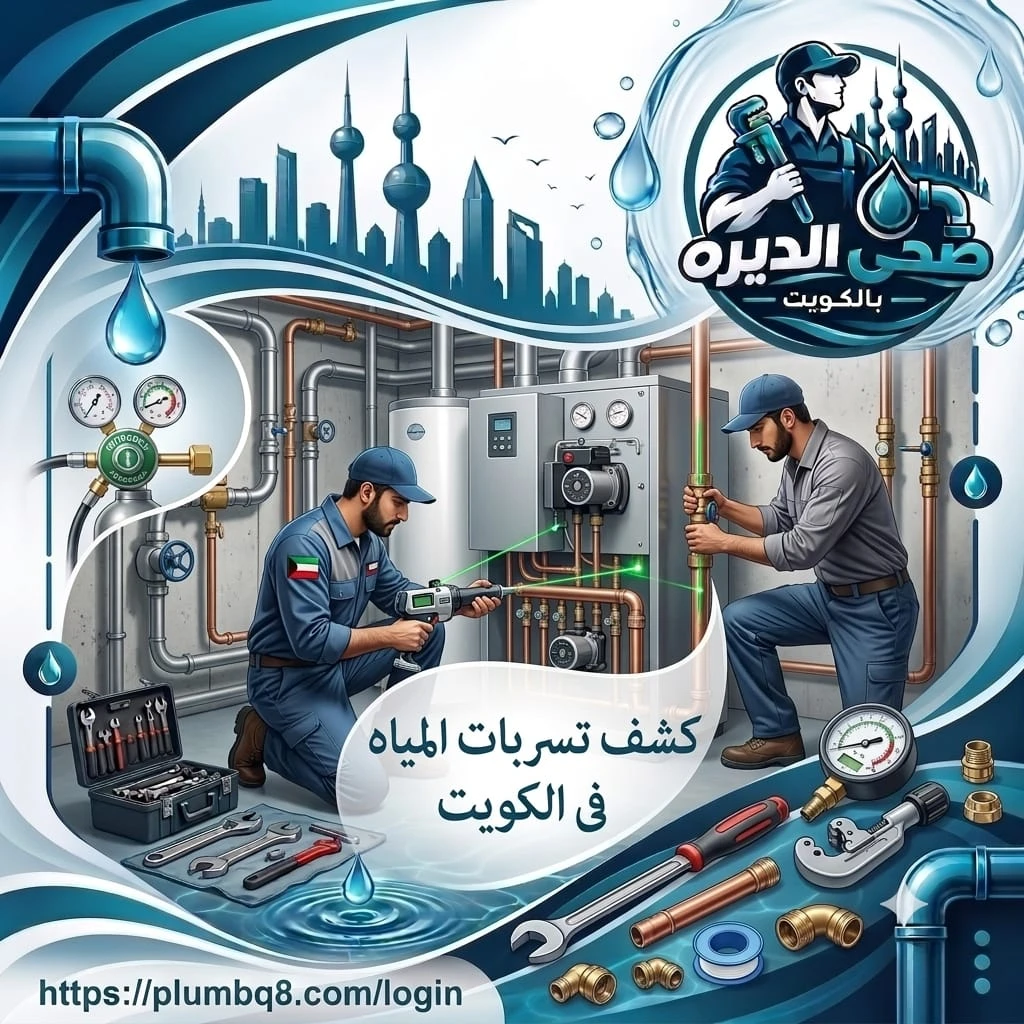
Leak detection after an unexpected water bill increase requires a different approach from repairing a visible leak. In this situation, you begin with an unusual financial amount or consumption reading rather than a known location where water is escaping. The first objective is therefore to establish whether unexplained water loss exists, then identify the responsible section, and finally choose a repair method if a fault is confirmed.
It is useful to gather previous bills, photographs of meter readings, and any observations about changes in household water usage. This information helps identify the period when consumption began increasing, especially if the current bill includes accumulated consumption or a different reading period. A sudden increase in the billed amount does not necessarily mean that a leak began on the date the bill was issued.
After reviewing the records, the technical inspection begins with the sources most closely related to the observed symptoms. If there is continuous running water inside a bathroom, inspecting the plumbing fixtures is logical. If moisture appears around a supply line, that location needs assessment. However, if there are no visible signs, broader testing may be necessary to determine whether water loss is actually occurring within the network.
Consider a hypothetical example: a homeowner discovers an increase in the water bill and requests repairs to a leak beneath the floor tiles based on nontechnical advice. Before any demolition, consumption is reviewed and water usage points are inspected. The inspection reveals that a valve connected to an outdoor appliance does not close completely. In this case, the correct diagnosis avoids unnecessary opening work and ensures that the repair addresses the actual source.
After the repair, the water loss associated with the fault should be checked to confirm that it has stopped. However, the next bill may not immediately decrease by the amount expected because the result depends on the meter-reading period, actual consumption, and billing calculation. Monitoring readings is therefore more useful than relying solely on the billed amount to judge whether the repair was successful.
-
If you discover a substantial increase in your bill, keep a copy and record the current meter reading so you can compare consumption before and after the inspection more accurately.
-
If there are no visible signs of leakage, do not immediately request that floor tiles be removed because water loss detection should come before selecting a repair location.
-
If symptoms point toward a particular appliance or supply line, begin by examining that area while continuing to consider other possibilities if the findings do not explain the entire increase.
-
If a confirmed leak has been repaired, monitor subsequent readings under comparable usage conditions because the bill total may be influenced by the billing period and may not immediately reflect the result.
-
If unusual consumption continues after repairs, the network and water usage sources need to be reassessed rather than assuming the problem has ended simply because one fault was corrected.
Finding the Source of Excessive Water Consumption
Finding the source of excessive water consumption depends on understanding what actually uses water inside the home and which systems should not be consuming it when they are inactive. Excess consumption is not always caused by a leaking pipe. Sometimes an appliance operates longer than usual, or a control system fails to stop water flow at the intended time.
Irrigation systems are an important example, particularly when they operate on timers. The watering schedule may change without the homeowner noticing, or a line may remain open because of a control problem. Tank-filling equipment also deserves attention if water levels rise abnormally or water continuously escapes through an overflow pipe.
It is important to distinguish high consumption from water waste. If a household uses a large amount of water for a known activity, such as irrigating a large garden, that is identifiable consumption even if it is higher than before. However, when water flows through the network without a useful purpose or because a fault prevents the flow from stopping, this is water loss that requires investigation.
Suppose consumption increases noticeably on particular days of the week while readings on other days remain closer to normal. This pattern may direct attention toward an activity repeated on those days, such as irrigation or cleaning outdoor areas. However, if consumption remains elevated even on days without additional activities, the inspection should look for an unknown continuous or intermittent source.
Appliances that use water indirectly should not be ignored either. Depending on the property's equipment, certain cooling, cleaning, or filling systems may be connected to the water network. Understanding which appliances are installed and how they operate helps build an accurate picture of consumption routes rather than focusing exclusively on faucets.
-
If consumption increases on particular days, compare those days with irrigation schedules, cleaning activities, and other water-consuming tasks because the timing pattern may help identify the source.
-
If you have an automatic irrigation system, review its operating times and control settings because longer watering periods or a line that remains open may increase consumption without any leak inside the home.
-
If a water tank overflows or needs frequent refilling, assess its level-control mechanism and overflow route to determine whether water is entering the tank and escaping without being used.
-
If additional appliances are connected to the water supply, include them in the consumption review according to their operating characteristics rather than limiting the inspection to sinks and bathrooms.
-
If high consumption is identified but is associated with a known activity, the solution may involve adjusting operating schedules and reducing waste rather than repairing pipes that have not been shown to be defective.
Inspecting Home Plumbing When the Water Bill Increases

Inspecting home plumbing when the water bill increases becomes necessary when the records and observations suggest that water may be escaping somewhere within the pipework, particularly if the cause cannot be identified through accessible appliances or normal usage patterns. However, a comprehensive inspection does not mean dismantling every connection or testing every pipe randomly. It begins by understanding how the network is divided, where the supply lines run, and which valves control them.
A home's water network may include a main supply line and branch lines serving bathrooms, the kitchen, water heaters, tanks, and the garden. Each section operates under different conditions. The technician therefore needs to identify available isolation valves and understand how the lines connect so that appropriate tests can be selected without unnecessarily interrupting the rest of the property.
If the suspected problem is in a pressurized line, suitable technical tests may be available to evaluate whether a section of the network retains pressure. However, the testing method and limits depend on the pipe material, condition, and system design. Applying unsuitable pressure to an older network or components not designed for the test may cause damage rather than reveal the problem.
It is also important to recognize that some networks contain concealed sections that are difficult to access. In these situations, the priority should be to narrow the inspection area using available access points before considering opening walls. If water loss is associated with an underground outdoor line, the ground surface and pipe route will influence the access and repair method.
Regarding prices, inspecting a small network with clearly accessible valves differs from inspecting a larger system with concealed lines and sections requiring additional tests. It is therefore better to agree on the scope of the initial inspection and discuss any advanced procedures if the findings show they are necessary.
-
Before testing the network, the main and branch supply lines and available isolation valves should be identified so that the findings relate to a known section rather than treating the entire property as a single line.
-
If a pressure test is required, the technician must consider the pipe material, condition, and suitable operating limits because excessive or inappropriate pressure may damage otherwise functioning components.
-
If an underground outdoor line is suspected, its route should be established as accurately as possible before excavation is proposed so that work does not spread into areas unrelated to the problem.
-
If certain valves do not isolate lines correctly, they may affect how test results are interpreted, so their condition should be assessed before relying on isolation findings.
-
When agreeing on the cost, ask whether the price includes only the network inspection or additional testing, and whether opening, repair, and restoration work are charged separately.
Why Your Water Bill Suddenly Increased
Understanding why your water bill suddenly increased requires combining numerical records, knowledge of household usage, and technical inspection findings because a sudden increase may have very different causes. Some situations involve a genuine change in consumption, others involve water loss within the network, and some result from differences in billing periods or reading information that should be reviewed with the responsible authority.
First, do not rely on the bill amount alone. Review the recorded quantity of water and compare it with similar periods in terms of the number of days and usage conditions. If only the amount payable has increased, the billing calculation may need to be reviewed. If the recorded quantity of water has risen noticeably, investigating the source of that increase becomes a logical next step.
Then ask yourself whether anything has changed in the household recently. Have more people moved in? Has a new irrigation system started operating? Have cleaning activities required more water? If so, try to estimate the effect of those changes before treating the entire increase as leakage. If nothing has changed, the meter and potential consumption sources need closer examination.
It is also important to understand that one leak may not explain the entire increase. You might have a toilet cistern that continuously wastes water while garden irrigation has also increased. Repairing the cistern would reduce one part of consumption, but the total may remain higher than in previous months because of the additional irrigation. Accurate diagnosis therefore aims to explain the increase as a whole rather than finding any single fault and assuming it accounts for everything.
If you need a technician, explain that your objective is to identify the reason for increased consumption before proceeding with repairs. This defines the service and prioritizes investigation and assessment rather than repairs unrelated to the problem. Once the cause has been established, you can decide what requires repair, what requires a change in water usage, and what may need review with the billing authority.
-
If your bill suddenly increases, begin by comparing recorded consumption and the number of days in each reading period before deciding on the cause, because a change in the amount payable does not always represent an equivalent increase in water usage.
-
If the increase coincides with more household occupants or newly installed equipment, estimate the effect of those changes so that known consumption is not mistakenly treated as concealed water loss.
-
If there has been no obvious change in usage, monitoring the meter and inspecting appliances and supply lines can help determine whether unexplained water flow requires diagnosis.
-
If more than one source of increased consumption is discovered, assess the contribution of each source rather than assuming that repairing the first fault will explain the entire increase.
-
If the inspection does not establish water loss inside the property and the meter-reading records remain inconsistent with expected consumption, contact the responsible meter and billing authority instead of continuing with unjustified repairs.
Conclusion
A higher water bill is not sufficient reason to begin replacing pipes or breaking walls. The most important step is determining whether the increase results from actual consumption, water loss from part of the network, or a difference in billing information. Reviewing readings and inspecting appliances, tanks, and supply routes helps narrow down the possibilities and identify what genuinely needs repair, rather than paying for work that does not address the cause.
If you notice an unusual increase in water consumption, you can request an inspection of potential water loss sources inside your home from Sehi Al Deira before agreeing to repairs. Prepare previous bills, meter readings, and any observations about water movement or tank filling so that the inspection is based on clear information. The objective is to carry out repairs only after identifying the problem and then monitor consumption to confirm that the water loss associated with the discovered fault has been addressed.
Frequently Asked Questions About High Water Bills and Water Loss Detection
Does a higher water bill always mean I have a leak?
No, not necessarily. A higher bill may result from increased consumption, a different meter-reading period, or an issue with billing information that requires review. It is better to compare recorded water quantities with previous periods before assuming that a leak exists inside the property.
How can I tell if I am losing water without a visible leak?
Review consumption patterns and meter movement under known conditions, and pay attention to tank filling and appliances that use water automatically. If unexplained consumption appears, a systematic inspection is needed to identify its source rather than relying on the absence of visible moisture.
Is meter movement with all faucets closed proof of a leak?
Not always. The meter may record water entering a storage tank or being used by an irrigation system or another automatic appliance. Every consumption source connected to the meter should be considered before treating movement as evidence of water loss from the network.
Can a leaking toilet cistern increase my water bill?
Yes. Water continuously flowing into the toilet bowl may cause unnecessary consumption even when no water appears on the floor. It is therefore important to inspect the cistern if you notice continuous flow or unusually frequent refilling of the flush tank.
Do I have to break a wall to detect a hidden leak?
Not necessarily. The process should begin by identifying the suspected section and using tests suitable for the network's condition. Opening work may be necessary to reach a confirmed repair location, but random demolition should not begin before the problem area has been narrowed down.
Can an underground water tank cause increased consumption?
Yes. If the filling control mechanism is faulty or water escapes through an overflow route, water loss may occur. However, normal tank filling also records consumption on the meter, so it is important to distinguish expected filling from unwanted water flow.
What is the difference between water loss detection and leak detection?
Water loss detection investigates the cause of unexplained water consumption, whether it results from a leak, an appliance fault, or a tank-filling control problem. Leak detection focuses on identifying water escaping from a defective section of the network or its connections. Water loss detection therefore covers a broader range of possible causes than simply searching for a broken pipe.
How much does it cost to investigate a high water bill in Kuwait?
The cost varies depending on the network's size, the type of inspection required, how easily connections can be accessed, and whether additional tests are necessary. It is better to clarify the inspection price and what it includes, as well as whether repairs, replacement parts, and opening work are charged separately.
Will my water bill decrease immediately after a leak is repaired?
Not necessarily. The result may not appear on the first bill exactly as expected because the amount depends on the meter-reading period, recorded consumption, and billing method. Monitoring meter readings after the repair and comparing them under similar usage conditions is a better way to assess whether water loss has stopped.
When should I call a plumber because of a high water bill?
If you confirm an unexplained increase in recorded consumption or notice continuous water flow, problems with tanks, or faults in plumbing fixtures, requesting a technical inspection is appropriate. However, if the issue concerns meter readings or bill calculations, you may also need to contact the responsible authority.