Low Water Pressure Throughout Your Home? Inspect Before Pumping
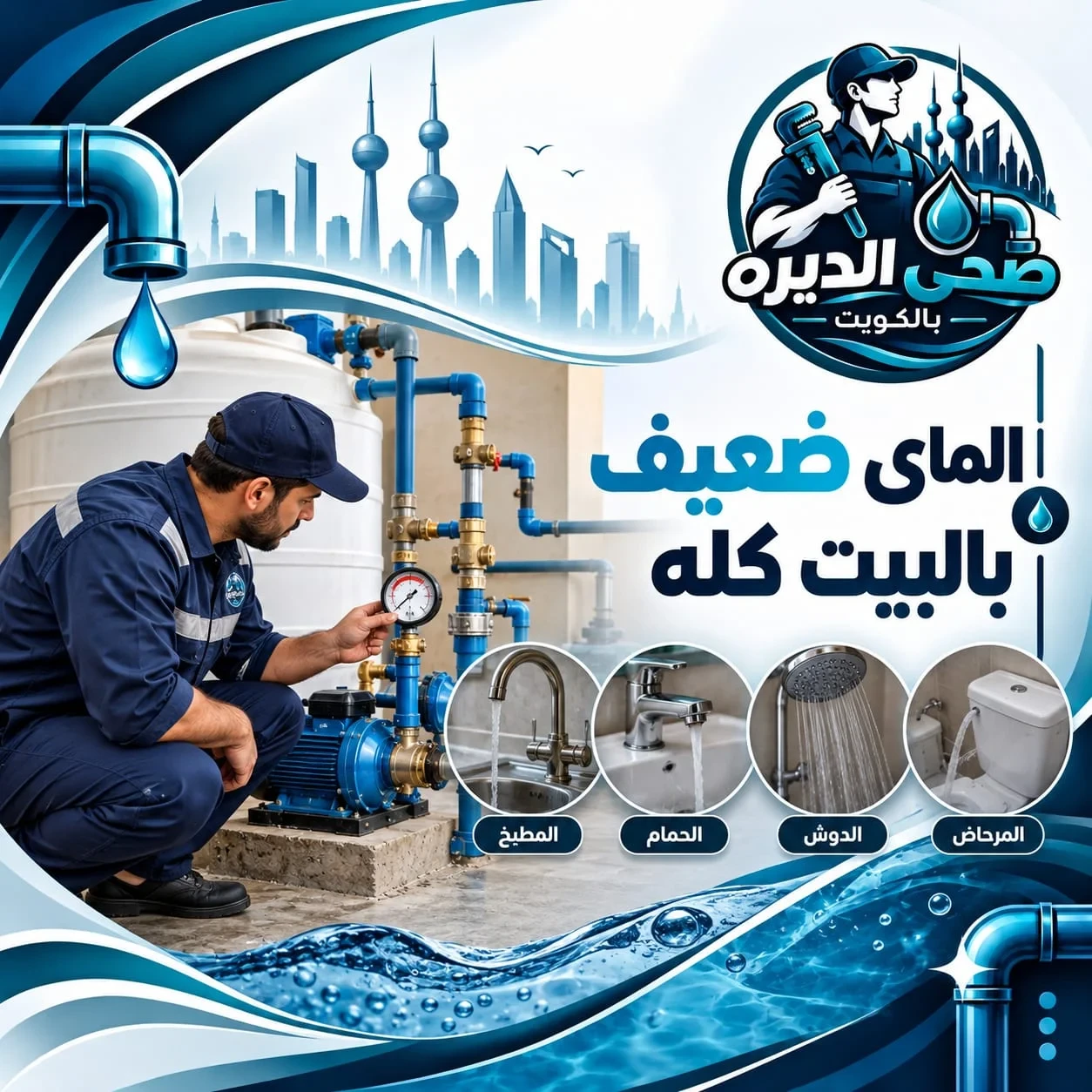
If you turn on the kitchen faucet and notice weak water flow, then walk into the bathroom and discover the same problem, installing a new water pump is not necessarily the solution. Weak water supply throughout the house may be related to the incoming water supply, the water level in the storage tank, the position of the valves, or a problem within the pipes. Sometimes an existing pump is simply not operating as it should. Understanding the difference between these causes is important because each requires a different solution. Before spending money on a pump or replacing plumbing lines, the source of the weakness should be identified, water pressure measured, and flow evaluated. A proper inspection helps determine whether you actually need a pump or whether repairing an existing component could solve the problem.
Weak Water Supply Throughout the Entire House

When the water supply is weak throughout the entire house, the most important first step is to determine whether every water outlet is genuinely affected or whether the problem is limited to a particular group of faucets. Sometimes you notice weak water flow in the kitchen and bathrooms and assume the entire supply system is affected. However, inspection may reveal that the problem is confined to one section of the distribution network. Comparing different faucets is therefore more than a casual test. It helps establish the extent of the problem before considering a water pump.
Consider a practical example: a house has two bathrooms and a kitchen, and cold water flow is weak in every location, while hot water flows at a noticeably different rate. This observation calls for examining the supply routes and water distribution system rather than immediately assuming the pump is underperforming. If both hot and cold water are affected to a similar extent at every outlet, attention should turn toward shared components such as the storage tank, main valves, and any existing pump. These observations help guide the inspection, but they do not establish the cause on their own.
You should also pay attention to when the problem occurs. Was the water supply normal before suddenly becoming weak? Does the flow decrease at particular times? Does the problem become noticeable only when several faucets are opened simultaneously? These details help distinguish a continuous supply problem from a system that cannot maintain adequate flow during increased demand. The presence of water at a faucet does not necessarily mean that the pressure or flow rate is sufficient for normal household use.
A common mistake is buying a more powerful pump simply because the water flow has become weak. If the actual problem is a partially closed valve or an obstruction inside a supply pipe, increasing pumping power will not correct the underlying cause. It may also introduce additional problems if the pump is unsuitable for the plumbing system. The correct decision begins with identifying where the weakness originates and then choosing a solution based on the condition of the pipes and the household's actual requirements.
-
If water flow is weak in the kitchen and every bathroom, shared components in the home's water supply system should be examined before focusing on one faucet or replacing unrelated parts without evidence.
-
If cold water flow is weak while hot water behaves noticeably differently, this comparison helps direct the inspection toward the relevant supply routes rather than assuming the entire network has the same problem.
-
If the problem appears only when several faucets are opened, the system's ability to provide sufficient flow during simultaneous use should be assessed instead of relying on the performance of a single faucet.
-
If the water supply suddenly became weak after previously operating normally, it is important to review recent valve adjustments, maintenance work, and changes in supply conditions before purchasing a pump.
-
Installing a stronger pump without identifying the cause may increase expenses without producing an appropriate result, particularly when an obstruction exists in the supply line or another component requires repair.
Low Water Pressure in the Home
Low water pressure in the home is not always the same as a low volume of water coming out of a faucet. This distinction should be understood before attempting repairs. Pressure describes the force available to move water through the plumbing system, while flow rate refers to the quantity of water passing through the system over a particular period. Pressure may be acceptable at a specific measurement point, yet the volume reaching a faucet may be limited because of an obstruction or restriction along the route. In other situations, the pressure supplied by the source itself may be low, requiring a different approach.
Consider a situation where one faucet produces an acceptable stream of water, but the flow decreases considerably as soon as the shower and sink are used together. This condition requires comparing pressure and flow during actual use because a pressure reading taken while no water is flowing does not provide a complete picture of how the system performs under demand. A technician should therefore avoid judging the problem solely by how strongly water appears to leave the faucet and instead consider the network's condition and operating circumstances.
It is also important to distinguish between low pressure throughout the entire home and reduced pressure at higher floors or elevated outlets. The height of a fixture relative to the water source affects the available pressure. However, a noticeable difference between the ground floor and upper floor does not automatically mean that a new pump is required. The method used to supply each floor, the condition of the plumbing, and any existing pressure-control or boosting equipment should be examined first.
When considering repairs, replacing a pump before obtaining actual pressure readings may be an unsuitable decision. If a substantial pressure loss occurs as water travels through part of the network, the technician needs to locate that loss. If the available supply pressure is genuinely insufficient for the household's requirements, an appropriate solution can then be evaluated while considering the pressure limits of the pipes, fixtures, and installation requirements.
-
Measuring pressure while no water is flowing provides information about one aspect of the network, but observing how it changes when faucets are opened is important because some problems do not appear in a single static reading.
-
If water flows well from one faucet but becomes considerably weaker during simultaneous use, the supply system's ability to meet demand should be evaluated instead of judging pressure from one outlet alone.
-
Differences in water strength between the ground floor and upper floor require examining the distribution arrangement, elevation changes, and existing equipment before treating a pump as the only solution.
-
Pressure at one measurement point does not guarantee sufficient water flow to other faucets if an obstruction or significant restriction exists somewhere along the distribution route.
-
The method chosen to correct low pressure must account for the condition of the pipes, faucets, and fixtures because raising pressure without assessing the system's limits is not a substitute for proper diagnosis.
Checking the Cause of Weak Water Flow Before Installing a Pump
Checking the cause of weak water flow before installing a pump is the step that protects you from purchasing equipment that does not address the problem. Many homeowners immediately associate weak water flow with the need for a pump. However, a pump is intended to boost pressure within a suitable system, not remove a blockage inside a pipe or compensate for an ongoing shortage of incoming water without proper assessment. If a valve is partially closed or water cannot leave the storage tank freely, installing a new pump before correcting the cause may produce disappointing results.
Inspection begins by understanding the water's route from its source to the household outlets. If the house relies on a storage tank, the water level, outlet route, and connected valves should be examined. If a pump is already installed, its operation should be evaluated to determine whether weak flow is associated with the pump running or stopping. The performance of faucets close to and far from the supply route should also be compared to identify whether the weakness begins at a shared point or becomes more pronounced farther into the network.
Imagine a homeowner planning to install a pump because water flow is weak in every bathroom. During inspection, a main valve is found to be only partially open following previous maintenance work. In this situation, correcting the valve position may be the appropriate step before spending money on new equipment. Conversely, if the supply and distribution routes are in suitable condition but the available pressure remains below what the household needs, evaluating a pump becomes a reasonable option based on measurements and clearly established requirements.
The cost of treatment cannot be determined from a description of weak flow alone. Checking a valve is different from addressing a storage tank problem, repairing a supply line, or selecting and installing a pump. It is therefore better to request a diagnosis explaining the cause and scope of work before agreeing to purchase equipment. If a pump is genuinely necessary, it should be selected according to supply conditions, required flow rate, target pressure, and plumbing specifications rather than simply choosing the strongest or most expensive model.
-
Checking the water level in the storage tank and the route through which water leaves it before purchasing a pump helps rule out basic supply problems that cannot be corrected simply by adding pressure-boosting equipment.
-
If a pump is already installed, its operation and performance within the network should be assessed before replacing it because weak water flow may originate from another component rather than the pump itself.
-
Confirming the position of main valves is particularly important after maintenance because a valve that is not fully open can restrict flow and create symptoms resembling an underperforming pump.
-
Comparing faucets located near and far from the supply route helps establish whether the problem begins at a shared point or becomes more noticeable in a particular section of the household network.
-
Selecting a pump after inspection depends on the required pressure and flow rate, supply conditions, and pipe condition rather than purchasing the highest available capacity without calculating the household's actual needs.
Weak Water Pressure at Every Faucet
When you notice weak water pressure at every faucet, you should first confirm that the problem genuinely affects all water outlets, not only those you use most frequently. Weak flow from the sink, shower, and kitchen faucet at the same time may indicate a problem in a shared section of the supply network, but that does not establish the cause before inspection. Sometimes there is a noticeable difference between faucets close to the supply source and those farther away. That difference can help identify where pressure or flow begins to decrease.
Suppose an outdoor faucet produces stronger water flow than the bathroom faucets, even though they all receive water from the same general source. The point where the outdoor faucet connects to the network should be established because it may receive water through a different route or connect before the affected section. If even the faucet closest to the beginning of the distribution system has weak flow, examining the supply source and main components becomes more important than replacing bathroom mixer taps.
You should also observe whether ordinary faucets and showerheads are affected to the same extent. Some showerheads contain flow restrictors or become affected by accumulated deposits. However, if every faucet has the same problem, it is unreasonable to assume that all outlets suddenly became blocked independently. Different outlets should be compared while considering their individual designs and connections.
In homes with multiple floors, testing should be systematic. Open a faucet on the ground floor and compare it with an outlet upstairs, then observe what happens when two outlets operate simultaneously. These comparisons do not provide a final diagnosis by themselves, but they help the technician select suitable measurement points instead of replacing components unrelated to the problem.
-
If the outdoor faucet has stronger flow than indoor faucets, its connection point should be identified because a different supply route may help narrow down where the reduction in water flow begins.
-
If every faucet is weak even when operated individually, shared supply components should be inspected before assuming that separate blockages have developed inside every mixer tap.
-
If only showerheads have weak flow while ordinary faucets perform normally, this is a different situation that requires checking the shower outlets and their components rather than treating the entire network as weak.
-
If the upper floor is more severely affected than the ground floor, available pressure at different elevations and the distribution arrangement should be assessed before selecting pressure-boosting equipment.
-
If opening a second faucet noticeably reduces flow from the first, that observation is important when evaluating the network's ability to support simultaneous use instead of relying on a single-outlet test.
Technician for Inspecting Weak Water Pumping
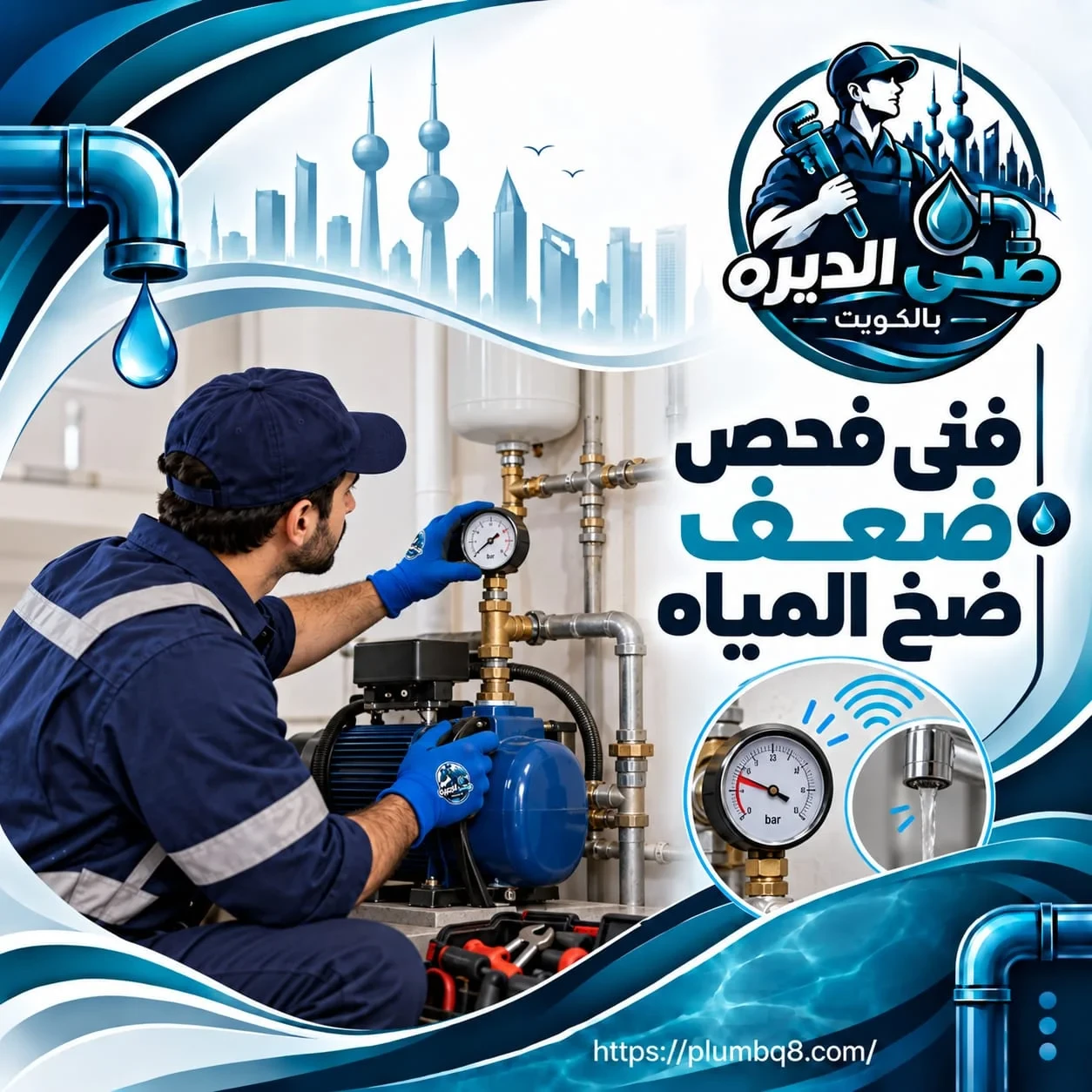
Choosing a technician for inspecting weak water pumping should not depend only on whether the technician can install a new pump. More importantly, the technician should be able to distinguish between a problem with the incoming supply, an issue in the internal distribution network, and poor performance from an existing pump. A homeowner requesting an inspection needs to understand the cause and the work required, not simply receive a recommendation to purchase equipment before the condition of the system is established.
The technician should begin by asking about how the problem behaves. Is the weakness present throughout the day? Did it appear after replacing a mixer tap or servicing the water tank? Is an existing pump running without improving water flow? Does the problem affect every floor? The answers help organize the inspection and identify which components deserve attention first.
Another important consideration is determining whether the problem involves pressure, flow rate, or both. The technician can take appropriate measurements at selected points and compare them when water is not being used and while fixtures are operating. Accessible valves and supply routes should also be examined, along with the condition of any installed pump, without automatically assuming that weak water flow is caused by a motor failure.
If inspection confirms that the pump requires repair or replacement, the decision should be connected to the findings. For example, poor pump performance caused by inadequate incoming water is different from a fault inside the pump itself. Selecting a replacement pump without considering the water source and pipe condition may result in unsuitable operation or pressure exceeding the appropriate limits of certain fixtures.
Before approving the work, ask the technician to explain the cause identified and how that conclusion was reached. If a pump is recommended, ask why repairing or adjusting an existing component would not be sufficient. This allows you to compare services based on a clear diagnosis instead of comparing equipment prices without knowing whether a new pump is necessary.
-
A suitable technician begins by reviewing the symptoms and history of weak water flow because a sudden problem following maintenance has different possible causes from a gradual decline that developed over several months.
-
Measuring pressure at appropriate points under static and operating conditions helps provide a clearer picture of network performance than relying only on the visible force of water leaving a faucet.
-
If an existing pump operates but water flow does not improve, both the supply route and pump condition should be examined before deciding to replace the entire unit.
-
Homeowners should understand what the inspection includes and what additional work might be required because diagnostic costs are different from the costs of repairing plumbing or installing new equipment.
-
A technician who explains the inspection findings and connects the recommended solution to the actual problem helps prevent unnecessary equipment purchases or modifications that fail to address the main cause of weak water flow.
Does Weak Water Pressure Mean You Need a Pump?
The question does weak water pressure mean you need a pump does not have one answer that applies to every home. In some situations, a pump is an appropriate way to increase pressure. In others, it will not solve the problem because the cause is located elsewhere. The installation decision should therefore follow an inspection rather than being the first response to noticing weak water flow.
If the water source provides a sufficient quantity of water but the pressure available at household outlets is lower than required, a pump may form part of the solution after the system has been evaluated. However, if the storage tank does not contain enough water or an obstruction prevents water from moving through the supply line, the underlying supply problem must be corrected. A pump cannot create water where an adequate supply does not exist, and operating certain types of pumps without suitable incoming water may damage them.
Consider two different homes. The first has a storage tank and stable water supply, but the distribution system does not provide adequate pressure to upper-floor outlets. In this situation, an appropriate pressure-boosting system may be worth considering. The second home previously had strong water flow, but it suddenly became weak after maintenance on the main supply line. For the second home, inspecting valves and the supply route is more logical than immediately purchasing a pump because the sudden change needs an explanation before additional equipment is installed.
Pump selection should not depend on the number of bathrooms alone. The number of fixtures used simultaneously, the height of the distribution network, the required pressure, and the available flow rate all affect the choice. A pump larger than the household needs will not necessarily produce better results because excessive pressure or unsuitable operation may affect plumbing fixtures and increase energy consumption.
Regarding cost, the correct comparison is between the expense of addressing the existing cause and the cost of the pumping system if one is genuinely required. The pump itself is not necessarily the entire expense because installation may require appropriate controls, protection, and other components depending on the system design.
-
If the incoming supply is stable but measured pressure at household outlets is insufficient, a pump may be appropriate after confirming that the source can provide the required water flow.
-
If the storage tank level drops enough to affect the supply, the water availability problem must be addressed first because installing a pump cannot compensate for an inadequate amount of water in the source.
-
If the weakness began immediately after maintenance work, examining the valves, connections, and components that were serviced is more logical than automatically assuming a new pump is needed.
-
Pump capacity should be selected according to household operating conditions, simultaneous fixture use, and distribution heights rather than assuming that the strongest pump is always the best choice.
-
The cost of installing a pumping system should include the assessment of suitable installation, controls, and protection requirements rather than comparing equipment prices without establishing compatibility with the network.
Measuring Water Pressure at Home

Measuring water pressure at home provides more accurate information than simply looking at the stream coming from a faucet. However, measurements must be taken under appropriate conditions because a pressure reading with no water consumption is different from one taken while water is flowing. Each reveals a different aspect of system performance, so a single number should not be interpreted without understanding how it was obtained.
Static pressure is measured when there is no water flow at the measurement point, while pressure under operating conditions reflects the network's performance during a particular level of water use. If static pressure is acceptable but falls substantially when faucets are opened, there may be significant resistance along the supply route or insufficient capacity at the source to meet demand. Determining the cause requires comparing readings and inspecting the relevant components.
It is also important to choose measurement points that genuinely represent the network. A reading close to the supply source may differ from one taken at a distant or elevated location, particularly if valves or other components affect water movement between the two points. The technician should therefore select measurement locations according to the home's plumbing design and reported symptoms rather than measuring the first available faucet and treating that result as representative of the entire house.
The difference between pressure and flow rate must also be considered. A pressure reading may appear acceptable even though the volume of water passing through a particular outlet is limited by a local obstruction. Conversely, water flow may become noticeably weak when several outlets operate together, even though one faucet performs adequately by itself. Some situations therefore require evaluating flow rate alongside pressure measurements.
If you are considering a pump, these measurements help establish the actual requirements instead of selecting equipment through guesswork. The pressure limits of the pipes and fixtures, together with the supply arrangement, must still be considered before making a final decision.
-
Static pressure alone is not enough to evaluate how the network performs during use because certain problems become apparent only when water begins moving through the pipes.
-
Comparing pressure near the supply source with readings farther along the network helps establish whether pressure loss occurs within the distribution route or begins at the incoming supply.
-
If pressure decreases noticeably when several faucets operate, flow conditions under demand should be assessed rather than relying on a reading taken while all faucets are closed.
-
Measuring the volume of water delivered over a defined period may help assess flow rate when needed, but the result must be interpreted alongside pressure readings and outlet conditions to avoid misleading conclusions.
-
Measurement results should guide the appropriate repair or pump requirements if boosting is necessary, while respecting the pressure limits of household fixtures rather than increasing pressure without proper assessment.
Causes of Weak Water Flow in Kuwait
The causes of weak water flow in Kuwait vary between homes depending on the water supply arrangement, distribution design, and plumbing condition. Some properties rely on rooftop storage tanks, while others use pumps and pressure-boosting systems. Certain homes also have multiple tanks or separate distribution routes. The same solution cannot therefore be applied to every house experiencing weak water flow, even when the symptoms appear similar.
Possible causes include an obstruction in part of the supply line, a valve that does not open fully, or a problem with water leaving the storage tank. Some plumbing sections may also be affected by internal deposits that gradually reduce the space available for water to pass through. However, not every gradual reduction in flow is caused by deposits, just as every sudden reduction does not automatically indicate pump failure. The possible causes must be assessed against observations and measurements.
In some homes, weak flow becomes more noticeable when several bathrooms are used at the same time. The technician then needs to review whether the supply and distribution system can meet simultaneous demand. If the weakness appears only at certain times, recording when it occurs and comparing those periods with the storage tank level and pump operation, where applicable, can be useful before assuming an external or internal cause.
Another mistake is choosing a solution based entirely on a neighbor's experience. A neighbor may have installed a pump and experienced better water flow, but their house may have a different tank arrangement, floor height, pipe diameter, or distribution design. The same equipment will not necessarily produce the same result in your home, particularly when the cause of the weakness is different.
When requesting repairs, explain whether the problem is longstanding or recent and whether it affects every outlet or appears mainly during periods of high household demand. These details help determine the inspection required and reduce the likelihood of replacing components that are still functioning correctly.
-
Differences in storage tanks, pumps, and pipe distribution arrangements between homes in Kuwait mean that weak water flow should be diagnosed according to each property's plumbing design rather than applying one solution to every household.
-
A valve that does not open completely may restrict the amount of water passing through the line even when the pump is functioning correctly, making it an important component to examine along the supply route.
-
Weak flow that becomes worse when several bathrooms operate requires evaluating the network's ability to meet simultaneous demand rather than testing only one faucet.
-
Recording when the weakness occurs and comparing those periods with tank conditions and pump operation helps identify a pattern instead of assuming an unverified cause.
-
Successful pump installation in a neighboring home does not prove that the same equipment is suitable for your property because pressure requirements, flow demand, and water distribution arrangements vary between systems.
Checking the Water Tank and Valves When Water Flow Is Weak

Checking the water tank and valves when water flow is weak is an important step because the problem may begin before water even reaches the household faucet network. If the tank cannot provide an adequate supply or a main valve restricts the passage of water, weak flow may appear throughout the house even when the internal pipes and pump are in suitable condition.
Inspection begins by understanding how the storage tank receives water and how much water is available inside it. If the water level is unusually low, the reason should be identified before evaluating distribution pressure. The route through which water leaves the tank and the accessible components along that route should also be examined because a problem at the outlet or supply line may reduce the amount of water reaching the rest of the network.
Valves that are not in the correct position can also cause noticeable weakness without completely stopping water flow. For example, following maintenance work, a main valve may remain partially open, allowing water through but at a lower rate than usual. In that situation, systematically checking valve positions is more important than replacing a pump that has not been shown to be faulty.
However, valves should not be operated randomly. Some older or damaged valves may be affected by attempts to force them open or closed, potentially causing leaks or mechanical failure. If a valve is stuck or its condition is uncertain, it is better for a technician to handle it rather than forcing it to move.
It is also important to establish whether the tank supplies the home directly or through a pump because the arrangement changes how inspection should proceed. In systems with pumps, the equipment must receive suitable water supply according to its operating requirements. Weak flow should not be treated as evidence that a more powerful pump is needed until the source condition has been verified.
-
An unusually low water level in the storage tank requires investigating the reason for insufficient supply before blaming the pump or distribution network because the problem may begin at the source.
-
Inspecting the tank outlet and supply line helps identify restrictions that reduce the amount of water reaching the home even when the faucets and internal plumbing are otherwise functioning correctly.
-
A partially open main valve may allow water to pass while restricting flow during increased demand, making its position particularly important to check after maintenance work.
-
If a valve is old or stuck, it should not be forced because excessive pressure or rough handling may cause damage or leakage requiring additional repairs.
-
The way the tank connects to the pump and household distribution system determines the inspection sequence because different arrangements manage water supply and pressure in different ways.
Solutions for Low Water Pressure in the Home Plumbing Network
Solutions for low water pressure in the home plumbing network depend on identifying the actual cause before making any modifications. If the weakness results from a valve or an obstruction in the supply line, the appropriate solution differs from a situation where the available pressure from the distribution system is below the household's needs. If an existing pump has an operating or performance problem, it should be assessed before deciding whether repair or replacement is necessary.
The first step is to bring the inspection findings together into a clear picture. Does the weakness affect every faucet? Does it change during simultaneous use? What is the condition of the tank and valves? Do pressure and flow measurements support a problem at the source or within the network? Once these questions have been answered, the solution can be connected to a specific cause instead of carrying out multiple repairs through trial and error.
If the problem is found within a section of the plumbing, repair options should be assessed according to its condition and accessibility. If the available pressure is genuinely insufficient despite the supply route being in suitable condition, an appropriate pressure-boosting system may be considered. In either situation, the effects of any modification on other fixtures must be taken into account because increasing pressure beyond what is needed is not an objective in itself.
From a cost perspective, the cheapest immediate option is not always the least expensive over time. Installing an unsuitable pump may add expense without addressing the cause, while repairing a specific restriction may restore the required flow without any new equipment. Conversely, if the house genuinely needs pressure boosting, repeatedly carrying out unrelated repairs wastes both time and money.
With Sehi Al Deira, you can request an inspection of weak water flow and explain the symptoms before choosing a solution. It helps to mention whether the problem affects the entire house or a particular floor, whether a storage tank or pump is already installed, and what changes you have noticed. These details help direct the inspection toward the source of the problem rather than beginning with equipment installation without diagnosis.
-
The appropriate solution begins by connecting pressure and flow measurements with the condition of the storage tank, valves, and distribution route so that functioning components are not replaced simply because symptoms appear similar.
-
If a specific obstruction exists within the supply system, repairing the affected section may be more suitable than installing a new pump that cannot correct the underlying restriction.
-
If pressure boosting is genuinely required, the system should be selected according to household demand and the pressure limits of pipes and fixtures rather than choosing the highest available capacity.
-
Comparing repair costs with the expense of new installation should include the cause of the problem and the requirements for operation and maintenance, not merely the pump price or installation labor.
-
After the solution has been implemented, water flow should be tested at different outlets and under simultaneous demand when appropriate to confirm actual improvement rather than relying on a single faucet test.
Conclusion
Weak water flow throughout the house does not automatically mean that you need a new pump. The cause may involve the incoming supply, storage tank level, valve positions, or a section of the plumbing. An existing pump may also require inspection. That is why examining the system before purchasing equipment helps avoid decisions based on guesswork and determines whether the real problem involves pressure itself or the volume of water moving through the network.
If you notice weak water flow at every faucet or a substantial reduction when several outlets operate simultaneously, you can request a water network inspection from Sehi Al Deira to identify the source of the weakness before choosing a treatment. The objective is to select a solution appropriate for the home's condition and actual requirements, whether that involves repairing an existing component or evaluating the need for a pump, followed by testing the result after the work is completed.
Frequently Asked Questions About Weak Water Flow at Home
Why has the water supply suddenly become weak throughout my house?
There may have been a change in the incoming water supply, storage tank level, valve position, or performance of an existing pump. If water flow suddenly becomes weak after previously operating normally, it is better to review any recent maintenance and inspect shared components before purchasing a new pump.
Does low water pressure mean I have to install a pump?
No, not necessarily. If the weakness is caused by an obstruction inside a pipe, a partially open valve, or a problem with the storage tank supply, a pump will not correct the underlying cause. Whether a pump is needed should be determined after examining pressure, flow rate, and the condition of the plumbing network.
What is the difference between low water pressure and low water flow?
Pressure refers to the force available to move water through the plumbing network, while flow rate is the amount of water passing through the system over a particular period. Pressure may be acceptable at one point while flow remains weak because of a restriction, so some situations require measuring both.
Why does the water flow become weaker when I open two faucets?
The incoming supply or part of the distribution network may not have enough capacity to meet simultaneous demand. Faucet performance should be compared and pressure measured during operation to establish whether the problem originates at the source or within the plumbing network.
Does weak water flow on the upper floor mean I need a pump?
Not always. The elevation of a water outlet affects the available pressure, but the distribution arrangement, supply condition, and any existing pump should be inspected before deciding to install additional equipment.
Can the main valve cause weak water flow throughout the house?
Yes. If a valve on the main supply route is not fully open, it may restrict the amount of water reaching the rest of the home. However, the valve should be examined appropriately, particularly if it is old or stuck, rather than attempting to force it open.
How can I tell whether the problem is in the tank or the pump?
This requires checking the water level in the storage tank, the route through which water leaves it, and how the tank connects to the pump, along with assessing the pump's performance if one is installed. Weak flow alone is not enough to identify which component is responsible.
Can I measure household water pressure from one faucet?
A reading can be taken at a suitable point, but it may not provide a complete picture of the entire household network. The technician may need to compare several locations and measure pressure both when water is not being used and during operation to identify the nature of the weakness more accurately.
What determines the cost of fixing low water pressure?
The cost depends on the cause, inspection scope, and repairs required. Adjusting or repairing a valve is different from repairing a supply line, servicing a pump, or installing a new pressure-boosting system. Diagnosis should therefore come before determining the cost of treatment.
How can I confirm that weak water flow has been fixed after repairs?
Water flow should be tested at different outlets throughout the house and compared with its performance before the repair, including simultaneous faucet use when appropriate. If the problem was related to pressure, suitable measurements should also be checked to confirm that the network performs better under normal household operating conditions.