Faucet Dripping When Turned Off? Repair or Replace It?
You turn off the kitchen or bathroom faucet, come back a little later, and notice that water is still dripping. Sometimes the problem is minor and requires replacing an internal component. In other cases, the faucet itself may be worn out and no longer able to shut off the water properly. Not every dripping faucet needs to be replaced, but not every faucet can be repaired economically either. The right decision depends on where the water is coming from, the type of faucet, the condition of its internal components, and the availability of suitable replacement parts. This article explains how to distinguish temporary dripping from continuous leakage, when replacing a valve or cartridge is enough, and when replacing the entire faucet makes better financial sense.
Faucet Dripping When Turned Off

When you notice a faucet dripping when turned off, the first thing to do is distinguish between water remaining inside the spout and a continuous leak caused by an internal component that no longer seals properly. Some faucets, especially those with long spouts or pull-out spray heads, may release a small number of drops after being turned off because water remains inside them. However, if dripping continues for an extended period or occurs repeatedly without the faucet being used again, the internal shutoff mechanism should be inspected.
Consider a situation where you turn off the kitchen faucet before going to bed and discover the next morning that water is still dripping even though nobody has used it. This is different from a faucet that releases a few drops immediately after being turned off and then stops. Continuous dripping may indicate a problem with the internal component responsible for controlling water flow, although identifying the exact part depends on the faucet's design and operating mechanism.
Single-handle mixer faucets commonly use an internal cartridge to control water flow and mix hot and cold water. Some two-handle faucets use different shutoff mechanisms with independently replaceable components. For this reason, ordering a replacement valve or cartridge before identifying the faucet model and the original internal component may result in purchasing an unsuitable part.
You should also observe where the water appears. If drops come from the spout while the faucet is closed, the inspection should focus on the internal shutoff mechanism. However, if water collects around the faucet base or underneath the sink, the problem may involve connections or seals. This is different from water dripping directly from the spout.
One common mistake is repeatedly forcing the handle into the closed position to stop the dripping. If an internal component is worn, applying excessive pressure will not necessarily solve the problem and may damage the handle or operating mechanism. Identifying the fault is better than continuing to force the faucet closed.
The decision between repair and replacement begins with these observations. If the faucet body is sound and a suitable internal component is available, repair may be sufficient. However, if essential parts are damaged or compatible replacements cannot be obtained, the technician may need to discuss replacing the entire faucet.
-
If a few drops come from the faucet spout immediately after closing it and then stop, observe how long the dripping lasts before treating it as a malfunction because some water may remain inside the spout or spray head.
-
If the faucet continues dripping even after it has not been used for a long period, the internal shutoff mechanism should be inspected instead of simply wiping away the water or forcing the handle closed.
-
If the faucet has a single handle, the cartridge type, dimensions, and installation method must be identified before purchasing a replacement because internal components can differ even when faucets look similar externally.
-
If water appears around the faucet base rather than the spout, the actual source should be identified because leaking connections or seals require a different repair from a faulty internal shutoff mechanism.
-
If the faucet body is in good condition and dripping is caused by a replaceable internal component, repair may be more appropriate than buying an entirely new faucet, provided the replacement part is compatible and the shutoff is tested after installation.
Tap Dripping After Being Turned Off
A tap dripping after being turned off is more than an annoyance caused by the sound of falling water. Continuous dripping can increase water consumption and gradually leave deposits or marks on the sink surface. However, before considering replacement, you need to establish whether the leak comes from the spout, the handle area, or a nearby connection because each location suggests a different possible source.
One useful diagnostic observation is when the dripping occurs. If it begins immediately after the tap is turned off and continues at a relatively consistent rate, the shutoff mechanism may not be completely preventing water from passing through. If it stops after a limited amount of water has drained, the cause may be water remaining inside the spout. This observation does not provide a final diagnosis, but it helps the technician determine which component should be examined.
Consider a bathroom sink tap that drips continuously even though its handle moves normally and no water leaks around the base. In this situation, the fault may involve the internal component responsible for controlling water flow. However, if the handle has become stiff or sticks during movement, the technician may need to inspect the operating mechanism and internal components instead of assuming that a simple washer is responsible.
Some people try to close a dripping tap more forcefully until the water stops. This can increase wear on certain components or damage the handle, especially when the shutoff mechanism is already defective. It is better to treat the dripping as a sign that the cause needs to be identified rather than attempting to conceal the problem through additional pressure.
The tap type also affects the repair method. Traditional taps with rotating handles may contain different components from modern single-handle mixers, meaning the required replacement part and disassembly method will vary. Installing an unsuitable component may prevent proper shutoff even if the part appears to fit.
If the tap is old and has visible deterioration or recurring problems involving several components, the cost of repair should be compared with the overall condition of the fixture. Replacement is not necessarily the only solution, but it may be worth considering if suitable parts are difficult to obtain or repair is not economically worthwhile.
-
If the tap continuously drips from its spout, the shutoff mechanism should be identified before ordering replacement parts because traditional taps and modern mixers do not all use the same internal components.
-
If dripping occurs only after use and stops within a limited period, check whether residual water inside the spout explains the drops before approving a repair that may not be necessary.
-
If the tap handle becomes stiff or requires unusual movement to close, the internal operating mechanism should be evaluated instead of applying force that could worsen the existing damage.
-
If mineral deposits appear around the spout because of continuous dripping, the source of water passing through the tap should be corrected rather than merely cleaning the deposits because the problem will continue while the shutoff remains defective.
-
If the tap is old and needs several replacement components, compare the cost of parts, labor, and availability with the price of a suitable replacement before making the final decision.
Repairing a Dripping Faucet in Kuwait
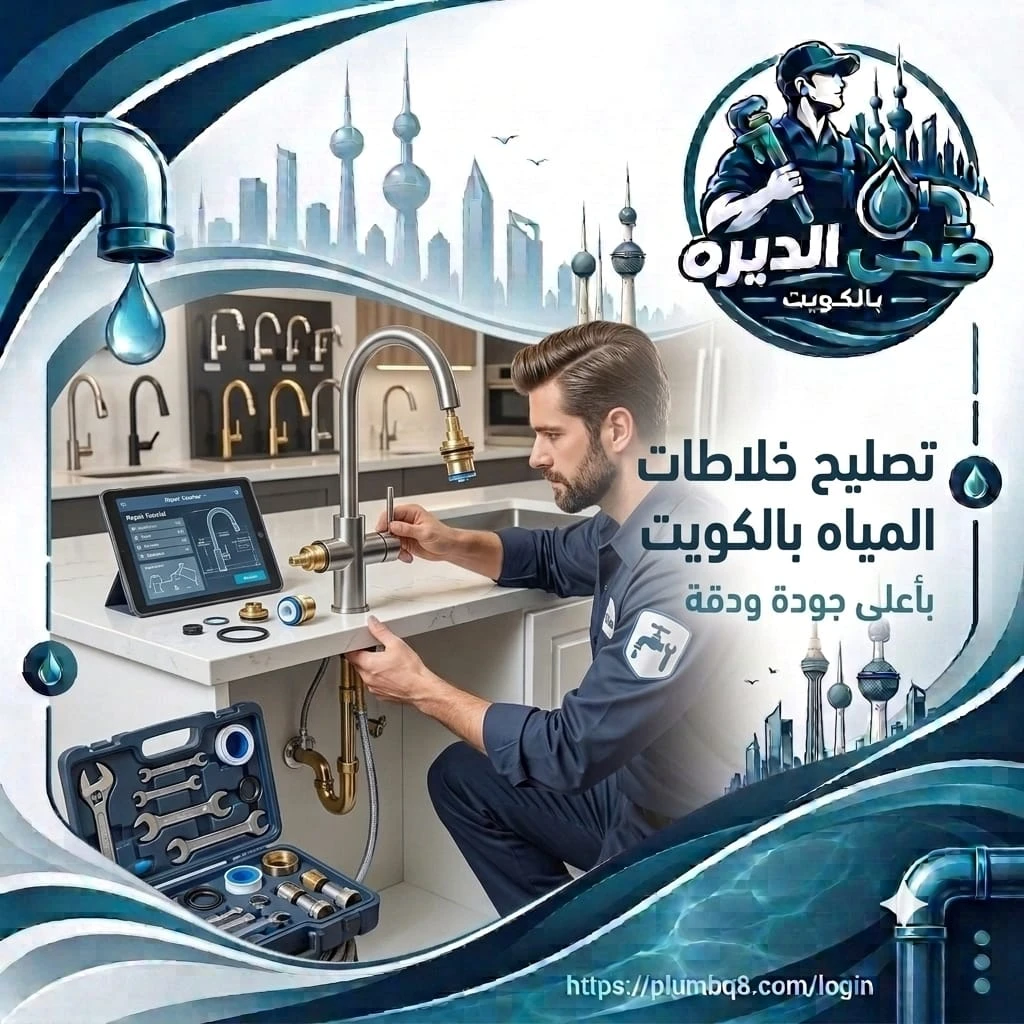
When requesting dripping faucet repair in Kuwait, the important thing is for the technician to identify the actual cause before dismantling the faucet or replacing any components. Some problems involve the cartridge or shutoff mechanism, while others are associated with seals or connections. Treating every leak in the same way may lead to unnecessary expenses for parts that were not responsible for the problem.
The inspection begins by identifying the faucet type, where the dripping occurs, and when it appears. Does water come from the spout after the handle is closed? Does it appear around the handle while the faucet is operating? Does water collect beneath the sink? These questions matter because a faucet that leaks from the spout while closed has a different problem from one that leaks only when water is running.
Consider a single-handle kitchen faucet that drips continuously, while its external body remains sound and there is no leakage around the base. After confirming that the problem is not simply residual water inside the spout, the technician should assess the internal cartridge, its sealing condition, and the area where it is installed. If the cartridge is defective and a matching replacement is available, replacing it may be sufficient without changing the entire faucet.
However, if the faucet is old and has internal corrosion or damage to the cartridge mounting area, replacing the cartridge alone may not restore proper shutoff. In that situation, the technician should explain whether a reliable repair is possible or whether purchasing a new faucet is more sensible than repeating unsuccessful repair attempts.
Before starting the repair, the water supply must be isolated safely. Some sinks have separate hot and cold shutoff valves underneath them. However, if those valves are damaged or fail to close, the technician may need to address the isolation problem before dismantling anything. It is not appropriate to open a faucet while the water supply is still connected and pressurized.
Different faucets also have different internal designs and methods of securing their components. Careless dismantling or using unsuitable tools may damage the handle, external finish, or cartridge mounting area, turning a limited repair into a more expensive problem.
Regarding cost, faucet repair prices vary according to the type of fixture, the required component, accessibility, and the condition of the connections. It is better to establish the inspection, labor, and replacement part costs before approving the work, particularly when complete replacement is also being considered.
-
When requesting a technician to repair a dripping faucet, explain whether the leak comes from the spout, handle, or base because identifying the location helps direct the inspection toward the correct component.
-
If the faucet uses an internal cartridge, the replacement must be compatible with the model and its mounting arrangement instead of installing a component that looks similar but differs in dimensions or connection points.
-
If the shutoff valves beneath the sink do not close properly, the water isolation problem must be addressed before dismantling the faucet to prevent a controlled repair from becoming an uncontrolled leak.
-
If corrosion or damage appears in the cartridge mounting area, repair feasibility should be evaluated before paying for a new cartridge that may not solve the problem because the faucet body itself is damaged.
-
If the repair cost approaches the price of a suitable replacement faucet, compare the fixture's condition, parts availability, and required work rather than automatically choosing whichever option is suggested first.
Replacing the Internal Faucet Valve
Replacing the internal faucet valve may be appropriate when inspection confirms that the component responsible for opening and closing the water has lost its ability to control flow correctly. However, the term "faucet valve" is sometimes used to describe different components depending on the faucet design. The equipment must therefore be identified before any replacement part is purchased. Some faucets contain a cartridge that controls hot and cold water through one handle, while others use separate shutoff mechanisms for each supply.
Consider a two-handle mixer with one handle for hot water and another for cold water. If water continues dripping from the spout after both handles are closed, the technician should determine which side is allowing water through. Replacing both mechanisms without inspection may be an unnecessary expense. If the faulty side contains a replaceable shutoff component, a matching part should be selected according to its design.
In single-handle faucets, the internal component may control both water volume and temperature. The inspection method is therefore different from that used for separate-handle faucets because the problem may involve the cartridge's internal sealing mechanism or the condition of its mounting area.
A common mistake is relying on the external handle's appearance when purchasing an internal valve. Two faucets may look almost identical while containing components with different lengths, diameters, or mounting arrangements. It is better to identify the model or inspect the original component after safely isolating the water supply and removing it using the appropriate method.
The condition of surrounding components must also be assessed. If the mounting area is corroded or contains deposits that affect sealing, suitable cleaning or treatment may be required before the replacement is installed. If the faucet body itself is damaged, changing the internal valve will not necessarily restore proper shutoff.
After replacement, the handle should move smoothly, and the faucet should be checked for leakage from the spout and around the repaired area. A successful repair is not measured only by whether the dripping stops immediately after installation. The faucet should also open and close normally during testing.
-
If the faucet has two handles, the hot or cold side responsible for allowing water through should be identified before replacing the internal valve so two components are not changed when only one is defective.
-
If the faucet has a single handle, the internal cartridge design must be identified because its control mechanism differs from traditional faucets with separate shutoff valves.
-
If the original component's model is unknown, its dimensions and mounting arrangement should be matched with a suitable replacement instead of relying on the external similarity of different faucets.
-
If deposits or corrosion are found around the internal valve mounting area, their effect on sealing should be assessed before installing the replacement so dripping does not continue despite changing the component.
-
After the internal valve is replaced, the handle movement, shutoff of both hot and cold water, and the absence of leakage around the dismantled components should all be verified.
Does the Faucet Need Repair or Replacement?
The question does the faucet need repair or replacement cannot be answered based on its age alone. Some older faucets remain repairable when their bodies are sound and suitable components are available. Conversely, a newer faucet may suffer damage that makes replacement more practical. The decision begins by determining whether the problem is limited to a replaceable component or affects the faucet body and other essential parts.
If dripping is caused by a defective cartridge and the rest of the faucet is in good condition, replacing the cartridge may be enough. However, if the mounting area is damaged, the faucet body is cracked, or significant corrosion is present, repair feasibility should be evaluated before purchasing a replacement component in the hope that it will solve every problem.
Consider a bathroom faucet that drips from the spout, has a sound handle, shows no leakage around the base, and has a reasonably priced replacement component available. Repair is worth considering in this situation. However, if the faucet moves because its mounting base is damaged and water leaks from several locations, the cost of repairing the different components should be compared with purchasing a replacement.
The availability of compatible parts also influences the decision. Some faucets can technically be dismantled and repaired, but if the model is unknown and the required component is unavailable, searching for a suitable replacement or attempting to modify an incompatible part may become more expensive than the repair is worth. Installing an incompatible component is not a proper solution, even if the faucet works temporarily.
It is also important to distinguish damage to the faucet from damage to external connections. If water leaks from a supply hose or a connection beneath the sink, the connection itself may be repairable without replacing a sound faucet. This is why the actual source must be identified before deciding to purchase a new fixture.
If you are considering replacement because you want a different design or appearance, that is a separate decision from whether repair is necessary. However, if your objective is to stop dripping at a reasonable cost, the comparison should focus on the faucet's actual condition and the cost of parts and labor.
-
If the faucet body is sound and the fault is limited to a replaceable cartridge or internal valve, repair may be more appropriate than purchasing an entirely new fixture, provided a matching component is available.
-
If the faucet leaks from several locations and has significant deterioration affecting essential components, the combined repair costs should be calculated instead of treating each problem separately without considering the total expense.
-
If the required component is unavailable, an incompatible replacement should not be installed merely because it looks similar, as an incorrect fit may prevent proper shutoff or create another leak.
-
If water leaks from a supply hose or external connection, the actual source should be repaired rather than replacing a functioning faucet that was not responsible for the leakage.
-
If the repair price is close to the cost of a suitable new faucet, compare the replacement's quality, the existing fixture's condition, and installation expenses before making the final decision.
Technician to Repair a Faucet That Will Not Shut Off
When you need a technician to repair a faucet that will not shut off, the situation depends on whether water escapes as individual drops or continues flowing despite the handle being moved to the closed position. Continuous water flow requires more urgent attention, especially when the faucet does not respond to the handle at all, because it can increase water consumption or cause water to collect in an unsuitable area.
The first step is to attempt to stop the water supply using the faucet's dedicated shutoff valve, if one is available and can be operated safely. If the valve does not close or cannot be accessed, the water may need to be isolated at another suitable point in the plumbing system by someone familiar with the pipe arrangement. The faucet should not be dismantled while water remains pressurized.
Consider a kitchen faucet whose handle moves normally, but water continues flowing from the spout. The technician should assess the relationship between handle movement and the internal shutoff mechanism. The handle may move externally while the component responsible for stopping the flow no longer performs its function.
In another situation, the handle itself may be loose or may no longer transfer movement properly to the internal component. The problem could then involve the connecting mechanism or one of the handle-related parts rather than the entire faucet body. Identifying this difference helps avoid purchasing unnecessary components.
The faucet type must also be considered. Some faucets have one handle, others have two, and certain designs use different operating mechanisms. The technician should therefore identify the shutoff arrangement before dismantling internal components or selecting replacements.
If the problem appeared suddenly after an earlier repair attempt, the technician should be informed about which parts were changed and how the malfunction developed. An incompatible component or incorrect installation may affect shutoff performance, but this cause should not be assumed without inspection.
-
If water continues flowing despite the handle being closed, isolate the supply using the appropriate valve when it is safe to do so rather than leaving the faucet running while waiting for the technician.
-
If the handle moves without affecting water flow, the connection between the handle and internal mechanism should be inspected before concluding that the entire faucet is defective.
-
If the faucet stopped shutting off after a component was replaced, the replacement's compatibility and installation should be reviewed instead of continuing to force the handle or attempting adjustments without understanding the problem.
-
If the supply shutoff valve itself does not close, the water isolation issue must be addressed before dismantling the faucet because working under water pressure can cause a leak that is difficult to control.
-
If the faucet contains more than one shutoff mechanism, the component responsible for the continued flow should be identified so the actual fault can be repaired without replacing functioning parts.
Causes of a Tap Dripping After Closing
Understanding the causes of a tap dripping after closing requires knowing how internal components prevent water from passing through when the handle is turned off. A faucet does not rely solely on the force applied by your hand. It contains components designed to create a watertight seal. If the sealing surfaces become worn or are affected by particles or deposits, a small amount of water may pass through even when the handle is in the closed position.
One possible cause is deterioration of the internal component responsible for controlling water flow. Some faucets use cartridges containing precisely fitted sealing surfaces, while other designs use different mechanisms. When the seal no longer functions correctly, dripping may appear at the spout even though the handle seems to move normally.
Particles or mineral deposits may also affect certain shutoff components. However, deposits visible on the outside of the spout do not prove that deposits inside the faucet are causing the problem. External cleaning alone is therefore not a confirmed diagnosis or treatment for continuous dripping.
Consider a tap that starts dripping after maintenance work has been performed on the home's plumbing network. Operating conditions may have changed, or particles may have reached an internal component, but this possibility requires inspection. Not every leak appearing after plumbing work is necessarily caused directly by that work.
Continuous dripping must also be distinguished from residual water drainage. Some faucets with long spouts or movable spray heads retain a limited amount of water after being turned off. A few drops may fall and then stop. However, continued water discharge after sufficient time has passed indicates that the shutoff mechanism should be evaluated.
Water pressure that is higher than appropriate may also make an existing leak more noticeable, but it is not sufficient evidence by itself to establish why the faucet has failed. If there are indications of a water pressure problem, the technician should assess the plumbing network separately rather than attributing every dripping faucet to pressure.
-
If dripping continues from the spout, the internal shutoff mechanism should be assessed because normal handle movement does not necessarily mean the sealing surfaces are completely preventing water from passing through.
-
If the problem appeared after work on the plumbing network, tell the technician when it started so the possibility of particles entering the internal components or changes in operating conditions can be considered without assuming the cause in advance.
-
If the drops stop shortly after the faucet is used, residual water drainage should be distinguished from an actual leak before replacing any component.
-
If external deposits appear on the tap, they should not be treated as conclusive evidence of the internal cause because identifying the fault requires assessing the component responsible for shutting off water.
-
If water pressure is unsuitable or similar problems appear in several faucets, the plumbing network's operating conditions may need to be evaluated alongside the affected faucet.
Replacing a Kitchen Faucet Cartridge
Replacing a kitchen faucet cartridge may resolve continuous dripping when inspection confirms that the internal cartridge is responsible and the faucet body remains suitable for continued use. However, a successful repair depends on selecting a matching component and installing it correctly, not simply purchasing a cartridge with a similar appearance or approximate size.
Single-handle mixer faucets typically use a cartridge that controls both water volume and the mixing of hot and cold water. An internal fault may therefore affect shutoff performance, handle movement, or temperature control. However, symptoms alone do not prove that the cartridge is defective because other components may also be responsible.
Consider a kitchen faucet that drips from the spout while its handle moves normally and there is no leakage around the base. After inspecting the fixture and confirming that the cartridge is causing the problem, the technician needs to identify a matching component according to the faucet's design. Differences in cartridge diameter, mounting points, or water port arrangement may prevent correct installation.
Before removing the cartridge, the hot and cold water supplies must be isolated using the appropriate method, and water flow must be confirmed to have stopped. The handle and retaining components can then be removed according to the faucet's design, taking care not to damage the external finish or internal parts.
The cartridge seating area inside the faucet body must also be examined. If particles or deposits interfere with installation, suitable treatment may be required. However, if the mounting area is damaged in a way that prevents proper sealing, replacing the cartridge alone may not be sufficient.
After installation, the faucet should be tested with both hot and cold water. The handle should move smoothly, dripping should stop, and no leakage should appear around the dismantled area. This test matters because a component may appear to fit while still being installed incorrectly.
-
If inspection confirms that the cartridge is causing the kitchen faucet to drip, a component matching the faucet's design must be selected rather than relying only on a similar external diameter.
-
If the faucet has separate hot and cold supply connections, the appropriate water supplies must be isolated before dismantling, and flow must be confirmed to have stopped to prevent unexpected leakage.
-
If cartridge retaining components are difficult to remove, methods suitable for the faucet's design should be used instead of applying uncontrolled force that could damage the handle or faucet body.
-
If the cartridge seating area inside the faucet body is damaged, repair feasibility should be assessed before purchasing a replacement that may not provide the required seal.
-
After installing a new cartridge, the faucet should be tested for opening and closing, hot and cold water control, and the absence of dripping or leakage around the repaired components.
Repairing a Dripping Bathroom Faucet
Repairing a dripping bathroom faucet requires identifying the fixture type and the location where water appears. A bathroom sink faucet differs in design and use from a shower or bathtub mixer. Furthermore, not every drop of water appearing in a bathroom is caused by a defective shutoff mechanism, particularly when water drains from the shower head after the mixer is closed and then stops.
Consider a bathroom sink faucet that continues dripping from its spout for hours after the last use. The technician should inspect the component responsible for shutting off water according to the faucet's design. However, if drops appear around the faucet base only while it is being used, the problem may involve a seal or connection rather than the main shutoff mechanism.
With shower mixers, a limited amount of water may remain inside the shower head or hose after the supply is turned off. This differs from water continuing to flow noticeably from the shower head or spout after sufficient time has passed. Observing how long dripping continues and where it occurs can help avoid unnecessary repairs.
Some bathroom mixers also contain a diverter that directs water between the bathtub spout and shower head. If a problem appears when switching outlets, or water continues flowing from an unused outlet while the mixer is operating, the diverter may need inspection. This is different from a faucet dripping when the water supply is completely closed.
Attempting to dismantle a wall-mounted shower mixer without understanding its mounting arrangement and connection condition is another common mistake. Some components connect to plumbing concealed inside the wall, and excessive force may affect those connections. The part requiring repair should be identified before dismantling begins.
If the bathroom mixer is old and has several problems, such as a stiff handle and leakage from multiple locations, comparing the combined repair cost with replacement may be appropriate. However, the decision depends on the equipment's condition and parts availability, not merely on one instance of dripping.
-
If a bathroom sink faucet drips from the spout after being turned off, the internal control mechanism should be assessed according to the faucet type rather than assuming that every bathroom faucet requires the same replacement component.
-
If drops fall from the shower head and then stop, water remaining inside the head or hose should be distinguished from continuous water passing through a shutoff mechanism that no longer seals correctly.
-
If leakage appears around the faucet base during use, the seals and connections should be assessed instead of replacing the shutoff cartridge without evidence that it is defective.
-
If a bathtub or shower mixer contains a water diverter, problems with switching outlets during operation must be distinguished from continuous dripping after shutoff because each situation involves different components.
-
If the mixer is mounted on the wall, its components and connections must be handled carefully to avoid damaging concealed plumbing while attempting to repair a limited problem involving the handle or shutoff mechanism.
Cost of Repairing a Dripping Faucet
Determining the cost of repairing a dripping faucet requires knowing the faucet type, leak source, and required component. The price cannot be established simply because drops are coming from the spout. Sometimes repair involves one readily available internal component. In other cases, the technician must address several problems or work on a faucet whose parts are difficult to remove because of its condition or installation.
The first factor affecting cost is the component type. Replacing a cartridge in a single-handle mixer differs from replacing a shutoff valve in a two-handle faucet. Part prices also vary according to model, specifications, and availability of a matching replacement. It would therefore be inappropriate to quote one fixed price for every faucet without identifying its type.
Labor costs also depend on accessibility. A sink faucet with accessible connections may require different work from a wall-mounted mixer or an older faucet with components that are difficult to dismantle. If the supply shutoff valves do not close properly, they may require separate attention before the faucet can be repaired.
Consider a technician inspecting a kitchen faucet and confirming that its cartridge is defective, with a suitable replacement available and the faucet body in good condition. In this situation, the component and labor costs can be compared with the price of a suitable new faucet. However, if another problem is found in the faucet body or cartridge mounting area, the value of repairing it may change.
Comparing the replacement component's price alone with the cost of a new faucet is another mistake. Installing a new faucet may involve labor charges or changes to connections depending on its design. At the same time, spending a large amount repairing a faucet damaged in several locations may not be sensible without assessing its overall condition after the work.
You should also ask what the quoted price includes. Does it cover the component and labor? Are there additional charges for work involving shutoff valves or connections? Understanding these details helps you make an appropriate decision without unexpected expenses.
With Sehi Al Deira, you can request an assessment of a dripping kitchen or bathroom faucet and discuss whether replacing the internal component or the entire fixture is more appropriate for its condition. The important thing is to base the decision on the actual source of leakage and the expected cost rather than replacing components that are still functioning correctly.
-
If you want to know the cost of repairing a faucet, identify its type and where dripping occurs because replacing an internal cartridge involves different parts and labor from repairing leakage at the base or connections.
-
If the required component is unknown, the faucet model or original part should be examined before confirming a price because replacement components differ in specifications and availability.
-
If the faucet is difficult to dismantle or its supply shutoff valves do not close, additional work may be necessary, and the related costs should be explained before repair begins.
-
If repair costs are high compared with the price of a suitable new faucet, installation expenses and the existing fixture's condition should be considered before choosing the option that initially appears cheaper.
-
If you receive a quotation for repairing a dripping faucet, confirm which component will be replaced, what labor is included, and how shutoff performance will be tested afterward so the comparison is clear.
Conclusion
If your faucet drips when turned off, you do not necessarily need to replace the entire fixture. The cause may be an internal cartridge or valve that no longer shuts off water properly, or the problem may involve the connections or faucet body itself. Identifying where the dripping occurs and which shutoff mechanism the faucet uses is therefore the first step before purchasing any replacement component.
Repair may be appropriate when the faucet is in good condition and the damaged part can be replaced. However, if the body is damaged, suitable parts are unavailable, or repair costs are high, replacement may be the better option. The important thing is not to pay for a new cartridge before confirming that it is actually responsible for the leakage.
With Sehi Al Deira, you can request an inspection of your kitchen or bathroom faucet in Kuwait and discuss repair or replacement according to the fixture's condition. This approach helps address the source of dripping and choose a suitable solution without unnecessary expenses.
Frequently Asked Questions About Repairing a Dripping Faucet
Why does my faucet drip when it is turned off?
The internal component responsible for shutting off water may no longer seal correctly, or the operating mechanism may have a problem. However, if only a few drops appear and then stop, they may simply be water remaining inside the spout.
Does a dripping faucet need to be replaced completely?
Not always. If the faucet body is sound and the defective component is available, replacing the internal valve or cartridge may be sufficient. However, if the body is damaged or repair is not economical, replacement may be preferable.
What is the difference between a faucet valve and a cartridge?
The terminology depends on the faucet type. Some people refer to the internal cartridge as the faucet valve, while other designs use separate shutoff mechanisms. The faucet's design must be identified before purchasing a replacement.
Is it normal for a tap to drip after being turned off?
A limited number of drops from water remaining inside the spout may occur after use. However, continuous dripping for an extended period without further use requires inspection.
Can I stop a dripping faucet by tightening the handle harder?
That is not recommended. Excessive force may damage the handle or shutoff mechanism, particularly when the internal component is already worn. Identifying and repairing the cause is the better approach.
When should a kitchen faucet cartridge be replaced?
A cartridge may need replacement when inspection confirms that it no longer controls or shuts off water correctly, a matching component is available, and the faucet body remains suitable for continued use.
Why does my bathroom shower head drip after I turn it off?
Water remaining inside the shower head or hose may be responsible if the dripping stops after a while. However, continuous water discharge may indicate a shutoff problem requiring inspection.
Does water leaking from the faucet base mean the cartridge is damaged?
Not necessarily. Leakage around the base may involve seals, connections, or other components. The actual source should be identified before replacing the cartridge.
How much does dripping faucet repair cost in Kuwait?
The cost depends on the faucet type, required component, fixture condition, and dismantling and installation work. The leak source should be inspected, and the cost of parts and labor established before approving the repair.
Is it better to repair an old faucet or buy a new one?
If the fault is limited, the replacement component is available, and the faucet body is sound, repair may be appropriate. However, if several components are damaged or repair costs are high, replacement should be compared with the condition of the existing fixture.